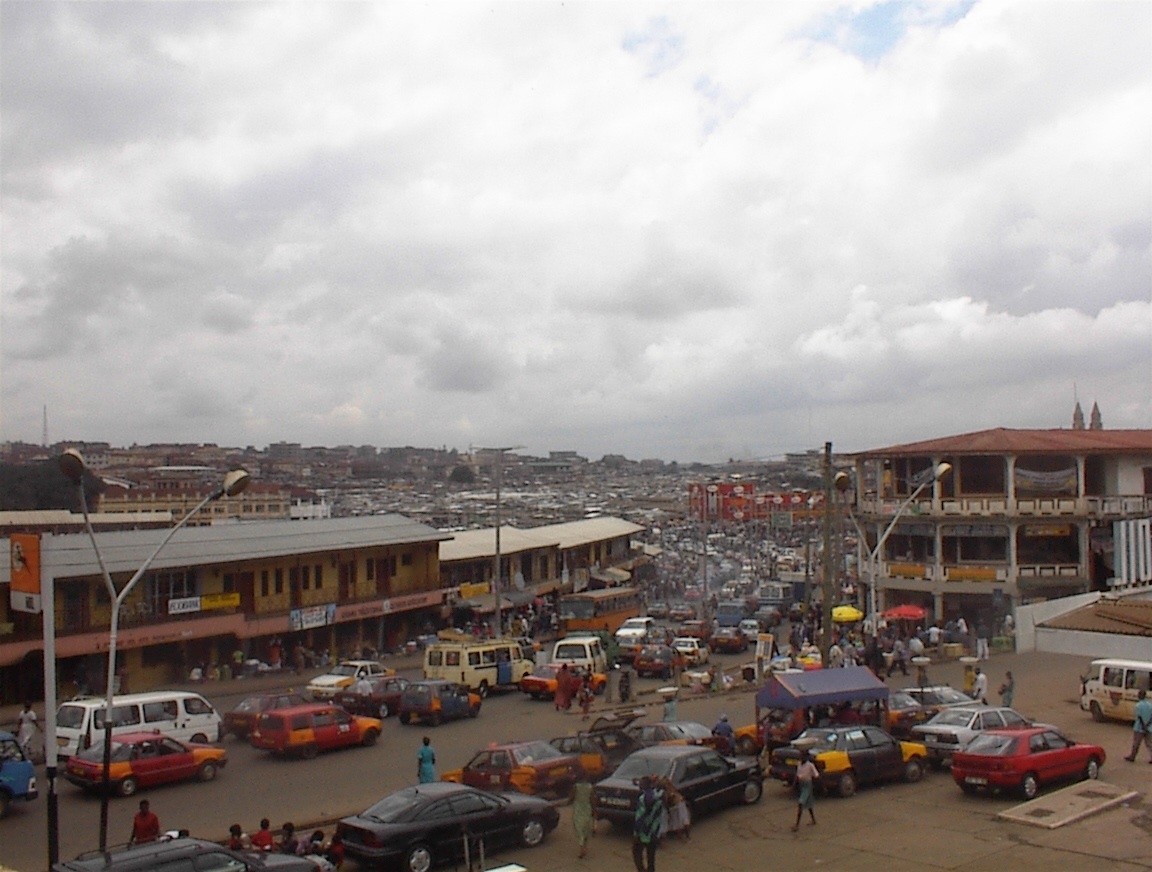
Kumasi Central Market isn’t just a place to shop—it’s where the city reveals itself in its most unfiltered, vibrant form. There’s no polished tourist facade here, just the raw pulse of Ashanti life, where history, tradition, and daily routines intertwine in a way that feels both timeless and immediate. The air hums with energy, thick with the scent of spices, fresh produce, and the faint tang of woodsmoke from street food stalls. This is Ghana as it truly is: loud, colorful, and unapologetically alive.
Sprawling across several blocks in the heart of Kumasi, the market is a labyrinth of commerce on a staggering scale. Some call it the largest in West Africa, and it’s easy to see why. Tens of thousands of people pass through its alleys daily, where goods spill from hundreds of stalls, shops, and makeshift tables. You’ll find everything here—from bolts of handwoven kente cloth and intricately carved wooden stools to sacks of yams, bundles of dried fish, and stacks of enamel basins. The spice section alone is a sensory overload: piles of fiery red pepper, golden turmeric, and fragrant cloves compete for attention, their aromas mingling into something rich and intoxicating.
The market’s architecture is unassuming, even rough around the edges, but that’s part of its charm. Most of the buildings are low-slung concrete structures topped with corrugated metal roofs, their walls painted in faded blues, greens, and yellows. Some stalls look like they’ve stood for generations, their signs peeling, their counters worn smooth by decades of use. Others are newer, hastily assembled to accommodate the ever-growing crowd of traders. The whole place feels organic, as if it grew naturally over time rather than being planned. Yet despite its haphazard appearance, the market is far from stagnant—it evolves constantly, with old sections being rebuilt and new ones springing up to meet demand.
Kumasi has always been a trading hub, and this market has been at its core for centuries. Long before Ghana existed as a nation, the Ashanti Empire thrived on commerce, and the market was where deals were struck, alliances formed, and news exchanged. In the 18th century, merchants from across West Africa gathered here, bringing goods from the Sahel, the coast, and beyond. Today, little has changed in spirit. The market remains a melting pot where people of different ethnicities, religions, and backgrounds come together. For many locals, it’s more than just a workplace—it’s a community, a place where everyone knows your name, your business, and probably your family’s history too.
Stepping into the market is like entering a world with its own rhythm and rules. Mornings are the busiest, with traders unpacking their wares, shoppers haggling over prices, and children darting between stalls. The noise is constant: voices rise and fall in rapid Twi, laughter erupts from a group of women sorting tomatoes, and the tinny sound of highlife music drifts from a radio somewhere in the distance. By midday, the pace slows slightly, but the market never truly quiets. One of the most fascinating things to watch is the art of negotiation. Bargaining isn’t just expected—it’s a performance. A buyer might feign shock at a price, a seller will counter with a dramatic sigh, and after a few minutes of back-and-forth, both will walk away satisfied, if not exactly happy.
For visitors, the market offers a rare glimpse into everyday Ghanaian life, unfiltered by tourist expectations. There are no staged performances or scripted interactions here—just the raw, unscripted moments that make up daily existence. Women balance towers of fruit on their heads as they weave through the crowd, elderly men sit outside their shops sipping palm wine from calabashes, and young boys offer to carry your purchases for a few coins. If you’re lucky, you might stumble upon a group of drummers playing traditional rhythms or watch a weaver at work on a kente loom, his fingers flying as he creates the intricate patterns that have made Ashanti textiles famous.
That said, the market isn’t for the faint of heart. The sheer scale can be overwhelming, and the sensory overload—heat, noise, the press of bodies—can feel intense, especially in the dry season. The narrow alleys twist and turn, making it easy to lose your bearings, and the smells range from intoxicating to, well, less so. But that’s part of what makes it special. Kumasi Central Market doesn’t exist to be comfortable or convenient. It exists because it has to, because it always has, and because the city wouldn’t function without it.
If you decide to visit, it’s worth bringing along someone who knows their way around—a local friend, a guide, or even a trusted taxi driver. They can help you navigate the maze of stalls and explain the unspoken rules, like why it’s polite to greet a shopkeeper before asking about prices. Don’t be afraid to ask questions; most traders are happy to chat, especially if you show genuine interest in their goods. The key is to take your time. Let the market’s rhythm wash over you, observe the small details, and resist the urge to rush. After all, places like this aren’t just about what you buy—they’re about what you experience. And in Kumasi, those experiences stay with you long after you’ve left.