Cádiz Central Market is where the city reveals itself in its most unfiltered form—no postcards, no staged charm, just the pulse of daily life. Tucked into the heart of the old town, it occupies what was once the Merced Monastery, its walls still echoing with centuries of history. Where monks once gathered in silence, the market now hums with activity from dawn till dusk. Fishermen, farmers, and artisans bring in the day’s catch, the season’s harvest, and handmade goods from the surrounding countryside. This isn’t a place for snapshots; it’s where you step into the rhythm of Cádiz, a city shaped by the sea and the land.
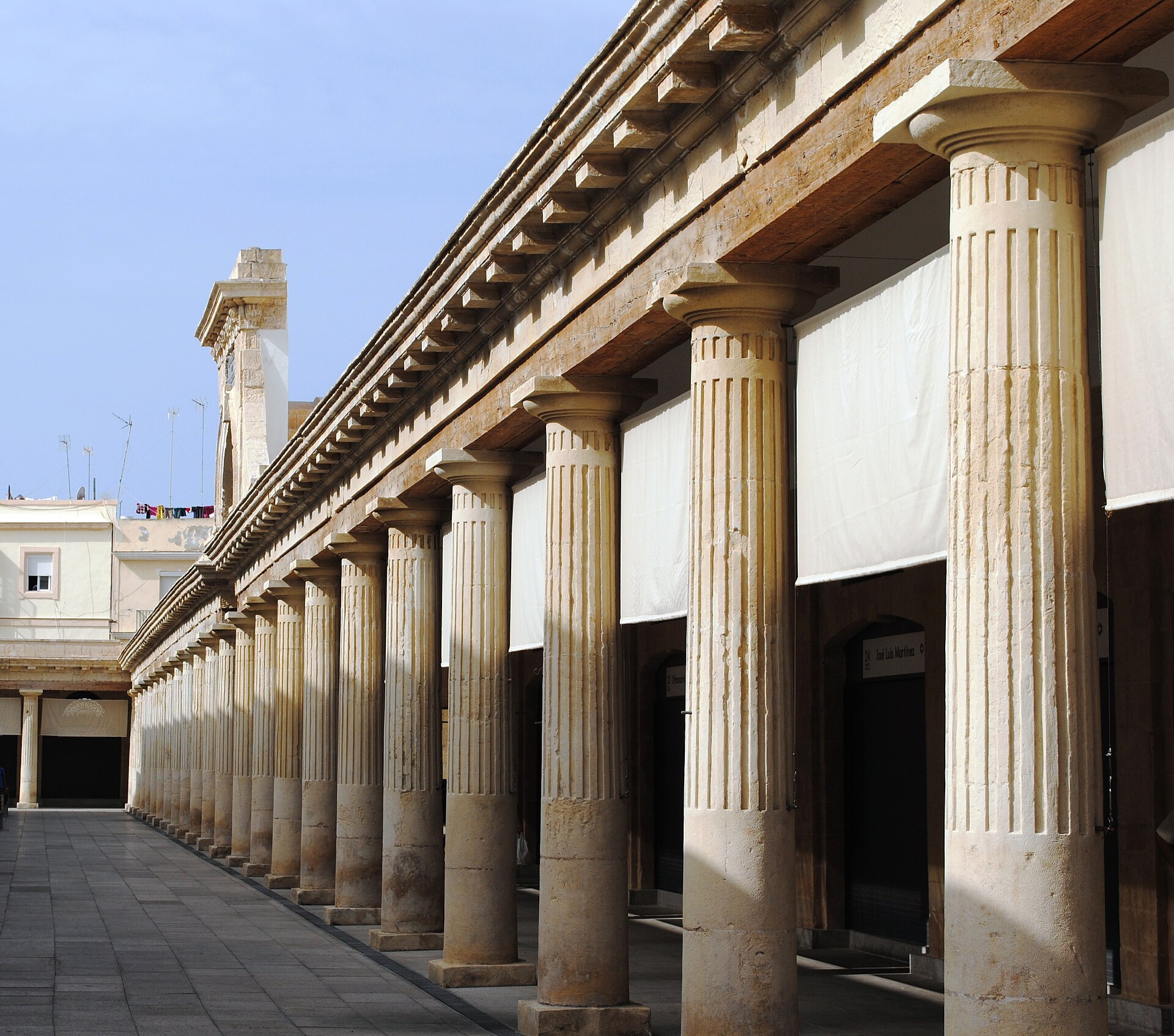
The building itself is a quiet marvel. Designed in the 19th century by architect Torcuato Benjumeda, it blends neoclassical structure with the airy elegance of Andalusian style. Tall arches support the roof, creating a sense of openness, while large windows bathe the stalls in soft, natural light. Inside, the market is divided into sections—seafood, meat, produce, cheeses, olives, and spices—each with its own distinct scent. The air shifts from the briny tang of the Atlantic to the earthy aroma of fresh herbs, the warm yeastiness of bread still steaming from the oven.
The seafood section is where Cádiz’s deep connection to the ocean becomes impossible to ignore. This is a city that has always lived by the sea, and the market reflects that. In the early morning, stalls groan under the weight of the day’s haul: glistening mackerel, plump pink shrimp, octopus tentacles curled like question marks, mussels still clinging to their shells, anchovies packed tight in barrels. Many of these species are unique to the region, and the fishermen who sell them aren’t just vendors—they’re storytellers. They’ll tell you where the fish was caught, how the tides were running, what’s in season. For locals, these conversations are as much a part of the ritual as the shopping itself. For visitors, it’s a rare glimpse into a way of life where the sea isn’t just scenery; it’s livelihood.
Beyond the stalls, small eateries offer a taste of Cádiz as it’s really eaten. There’s no fine dining here, just simple, honest food: fried fish tapas, slices of jamón, wedges of local cheese, olives tossed with lemon and herbs. The most popular order is the *bocadillo*—a crusty roll stuffed with grilled fish or meat, eaten standing at the counter with a glass of chilled sherry or beer. These places aren’t trying to impress; they’re just serving the food that Cádiz has always eaten, the kind you’d find in a family kitchen or a neighborhood bar. The flavors are bold, the portions generous, and the atmosphere unpretentious.
The best time to visit is in the morning, when the market is at its liveliest. By nine o’clock, the aisles are crowded with locals haggling over prices, chefs from nearby restaurants selecting ingredients for the evening’s menu, and curious tourists eyeing unfamiliar sea creatures. The pace is unhurried but energetic—vendors call out to regulars, share cooking tips, trade jokes. If you’re lucky, you might catch a trader humming a tune or spinning a tale about life in the fishing districts. The market has a way of making time feel elastic; an hour can slip by without notice as you wander from stall to stall, soaking in the sounds and smells.
In recent years, the market has expanded beyond just commerce. There are now cooking classes where you can learn to make traditional Andalusian dishes, as well as small fairs showcasing local products. Some evenings, the square outside transforms into an open-air stage for flamenco performances or concerts, the old monastery walls vibrating with music. But even without these events, the market remains a place where Cádiz feels most like itself—loud, fragrant, a little chaotic, but always welcoming.
For anyone who wants to understand Cádiz beyond the guidebook, the Central Market is essential. There’s no performance here, no attempt to cater to tourists. Just the city as it is, shaped by the people who live it. You could spend an hour here or half a day—sitting at a bar, eavesdropping on conversations, watching the market shift from the quiet of early morning to the bustle of midday. And if you’re lucky, you’ll leave with more than just a bag of groceries. You might carry away the feeling, however fleeting, of having belonged here, if only for a little while.