Sepilok is where the wild and the cared-for meet. Tucked into the rainforests of Sabah, not far from the town of Sandakan, this orangutan rehabilitation centre has spent decades giving apes a second chance—those displaced by deforestation, poaching, or life in captivity. There are no cages here, no crowds in the usual sense. The orangutans live in vast stretches of forest, while visitors observe from raised walkways and viewing platforms, careful not to disrupt their routines. The place feels less like a tourist attraction and more like a quiet corner of the jungle where humans are allowed to watch, but never intrude.
The story of Sepilok began in 1964, when a patch of forest was set aside as a reserve under British colonial rule. Back then, no one imagined it would grow into one of the world’s most respected orangutan sanctuaries. The first arrivals came in the late 1960s—orphaned infants left behind when their forest homes were cleared for plantations. Since then, the centre has expanded beyond rehabilitation, conducting research to better understand these primates and their needs. It’s a place where science and compassion intersect, though the focus has always been on the animals, not the people who come to see them.
The design of Sepilok is deliberately unobtrusive. Wooden boardwalks wind through the trees, blending into the surroundings, while small signs offer facts about orangutan behaviour without fanfare. There are no flashy exhibits or performances—just a carefully maintained space where visitors can observe the apes in conditions as close to the wild as possible. Sometimes the orangutans wander near the walkways, but more often they stay high in the canopy, building nests, foraging, or simply resting. They don’t perform; they just are.
The best time to visit is during the morning and afternoon feeding sessions. Fruit is laid out on platforms, and the orangutans descend from the trees to eat. This isn’t a show—it’s part of the rehabilitation process. Younger apes learn to find food on their own, while those nearing release gradually reduce their dependence on humans. Occasionally, other forest creatures turn up—gibbons, macaques, even wild pigs—adding to the sense that this is a living, breathing ecosystem, not a staged display.
Sepilok isn’t a zoo. It’s a temporary home for orangutans who, for one reason or another, can’t survive in the wild without help. Some stay for years before being released; others never leave. Those too accustomed to humans or too injured to return remain at the centre, cared for by staff and volunteers. There’s no pity here, just respect. Each orangutan has its own personality, and the approach is one of quiet understanding rather than sentimental affection.
For locals, Sepilok is more than a tourist spot—it’s part of their heritage. Many who work here grew up in nearby villages, raised with an awareness of how vital the forests and their inhabitants are. In recent decades, Malaysia has faced serious environmental challenges. Deforestation for palm oil and rubber plantations has halved the orangutans’ natural habitat. Sepilok has become a symbol of conservation efforts, a reminder that even small actions can make a difference in protecting biodiversity.
Visiting the centre isn’t just about seeing orangutans up close. It’s a chance to reflect on how fragile the natural world is. There are no grand speeches or moralising, but the atmosphere of the place lingers. The forest hums with life—the calls of birds, the rustle of leaves, the distant whoop of a gibbon. The orangutans, even those used to humans, remain wild. They don’t pose for photos or seek attention. This is their home, and visitors are merely passing through.
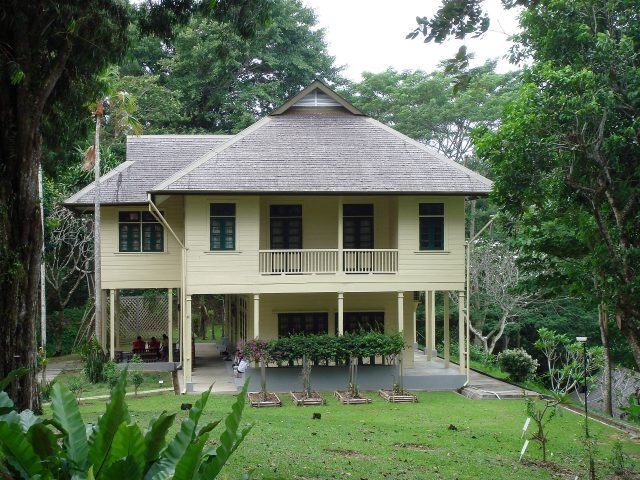
If you’re planning a trip, it’s worth remembering that Sepilok operates as a rehabilitation and research facility, not an entertainment venue. There are no cafes, no overstuffed gift shops, no bright signs. Everything is simple and purposeful—a small information centre, a few trails leading to viewing areas, and the quiet sounds of the jungle. For those expecting the comforts of a zoo, it might come as a surprise, but that’s part of what makes Sepilok special. The lack of frills keeps the focus where it should be: on the orangutans and the forest they call home.
In recent years, the centre has faced new challenges. Climate change, shrinking forests, and poaching continue to threaten orangutan populations. Sepilok is adapting—expanding rehabilitation programs, collaborating with other reserves, and educating local communities. But its core mission remains unchanged: to give a fighting chance to those who can’t defend themselves. In that sense, Sepilok is more than just a place on a map. It’s a small pocket of hope in a world where wild spaces are increasingly rare.