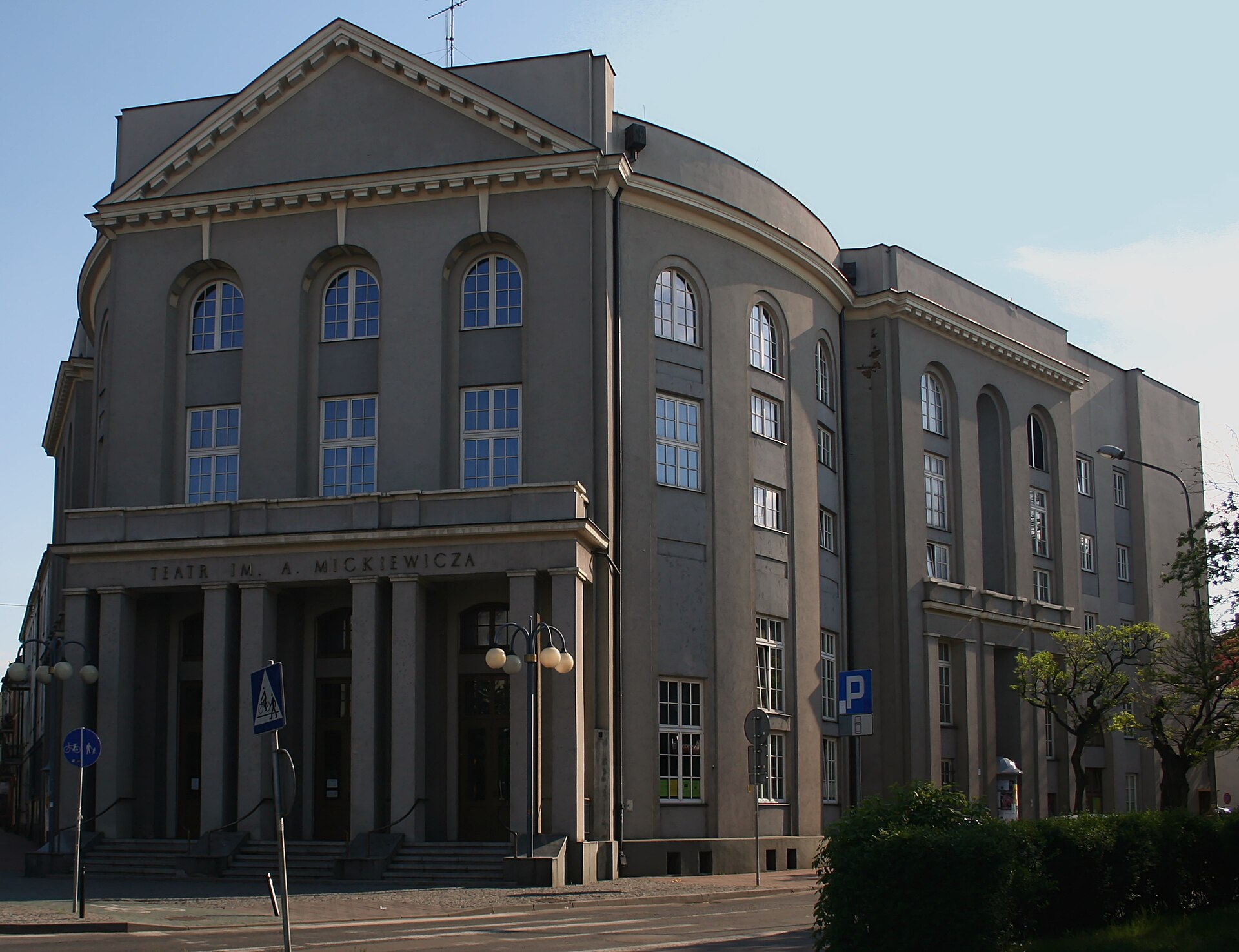
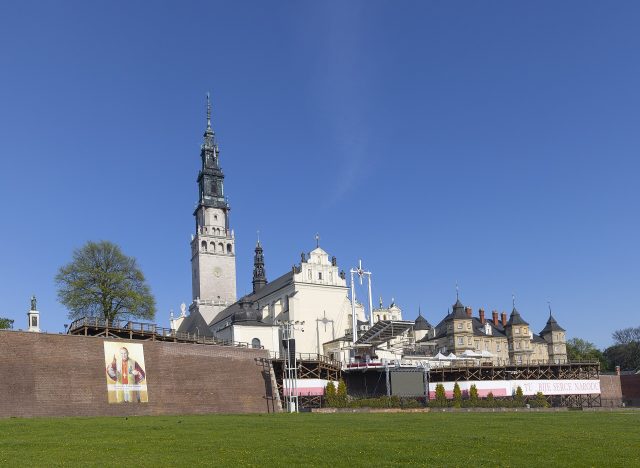
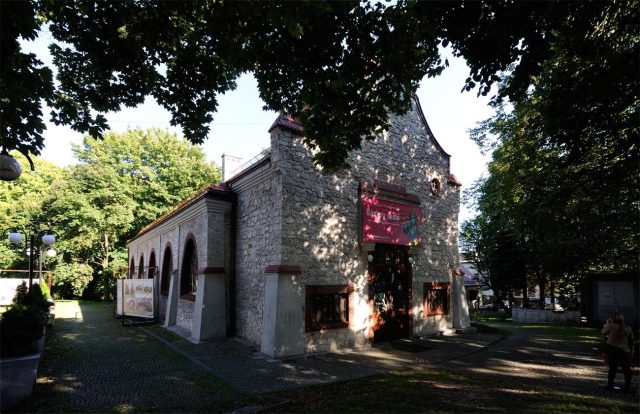
Częstochowa’s Adam Mickiewicz Theatre is one of those places that doesn’t immediately demand attention, yet quietly becomes part of the city’s character. Tucked away on Krakowska Street in the heart of the city, just a short walk from Jasna Góra Monastery, it stands as a modest but enduring presence in Częstochowa’s urban landscape. The building itself doesn’t rival the grand opera houses of Europe—there are no sweeping staircases or gilded interiors—but its understated charm has a way of drawing people in. The façade, with its tall windows and classical columns, is a classic example of 19th-century provincial theatre architecture, a style that still dots many Polish towns. Inside, the atmosphere is warm and unpretentious, the kind of place where an evening at the theatre feels less like an event and more like a natural part of life.
The theatre takes its name from Adam Mickiewicz, Poland’s national poet, whose work has long been tied to the country’s identity. Though Mickiewicz never set foot on this stage—the building opened decades after his death—his spirit lingers here in a way that feels entirely fitting. The theatre was founded in 1909, a time when Częstochowa was a small but rapidly growing industrial city. Back then, cultural life was just beginning to take shape, and the arrival of a permanent theatre marked a turning point for the community. The early years of its existence were anything but quiet, spanning the upheavals of World War I, Poland’s struggle for independence, and the devastation of World War II. The theatre endured it all, though not without scars, and today it stands as a quiet witness to the city’s resilience.
The building’s architecture is a product of its time, blending elements of Neo-Renaissance and Neo-Baroque styles in a way that was typical for European theatres of the era. Inside, some original details remain: delicate plasterwork on the ceilings, wooden panels in the foyer, and antique chandeliers that cast a soft glow over the space. The main auditorium seats a few hundred people, modest by modern standards, but the acoustics are surprisingly intimate, making every performance feel immediate. The stage has been updated with modern technology, yet the theatre has managed to retain its historic character through careful renovations. The goal has always been to preserve the building’s original soul, ensuring that each visit carries a sense of continuity with the past.
The theatre’s repertoire is broad, though it always makes room for the classics. Polish and international works share the stage, from Shakespeare and Molière to contemporary playwrights. Polish literature holds a special place here, with productions often drawing from the works of Słowacki, Wyspiański, and Gombrowicz, among others. The theatre collaborates with established directors and actors while also nurturing new talent, striking a balance between tradition and innovation. Each season brings premieres, guest performances, and a mix of genres, ensuring there’s something for different tastes. For locals, the theatre is more than just entertainment—it’s a cultural hub, a place where stories come to life and ideas are shared.
Beyond performances, the Adam Mickiewicz Theatre serves as a gathering place for the community. The foyer and halls often host literary evenings, concerts, lectures, and even art exhibitions. Schools and universities frequently organize visits, using the theatre as a space to introduce young people to the arts. The walls are lined with photographs of actors who have graced the stage over the decades, along with posters from past productions, creating a living archive of the theatre’s history. There’s a sense that the building itself remembers everyone who has walked through its doors, from the performers to the audience members, and that history is still being written with each new event.
For visitors to Częstochowa, the theatre offers a different perspective on the city. Most tourists flock to Jasna Góra Monastery, and understandably so—its significance and grandeur are undeniable. But stepping away from the well-trodden path and into the theatre reveals another side of Częstochowa, one that’s less about pilgrimage and more about everyday life. There are no crowds of souvenir vendors here, just the quiet hum of a place that has been part of the city’s rhythm for over a century. Even if you don’t understand Polish, the energy of a live performance—whether it’s a play, a concert, or a recital—transcends language. The atmosphere in the auditorium, the way the actors connect with the audience, and the shared experience of the moment create a sense of connection that’s hard to replicate.
The theatre is also a reflection of Częstochowa’s own evolution. When it first opened, the city was little more than a provincial town, but today it’s a regional cultural center with a growing reputation. The theatre has weathered wars, political changes, and economic shifts, adapting without losing sight of its purpose. It doesn’t aim for international fame, but for those who live in Częstochowa, it’s a source of pride and a symbol of the city’s cultural vitality. It’s where people celebrate milestones, seek inspiration, and simply enjoy an evening out. The building may not be flashy, but its significance runs deep.
If you find yourself in Częstochowa, take a moment to explore beyond the monastery. Wander through the city center, stop by the theatre, and glance at the schedule. You might get lucky and catch a performance, or perhaps just soak in the atmosphere of a place that has been a cornerstone of local life for generations. Even if you don’t step inside, the building itself tells a story—one of quiet endurance, community, and the enduring power of art. It’s the kind of place that doesn’t shout for attention but leaves a lasting impression all the same.