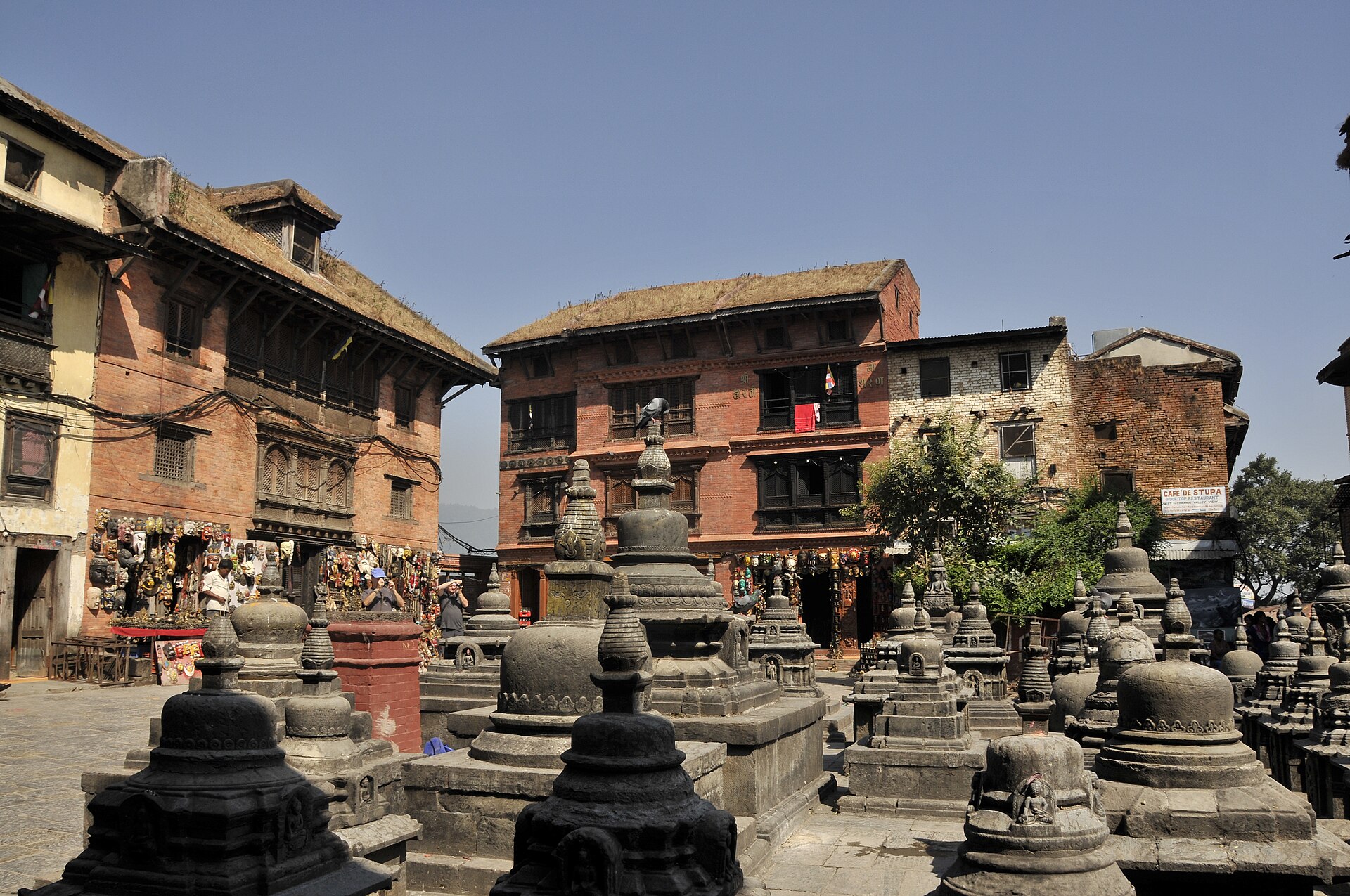
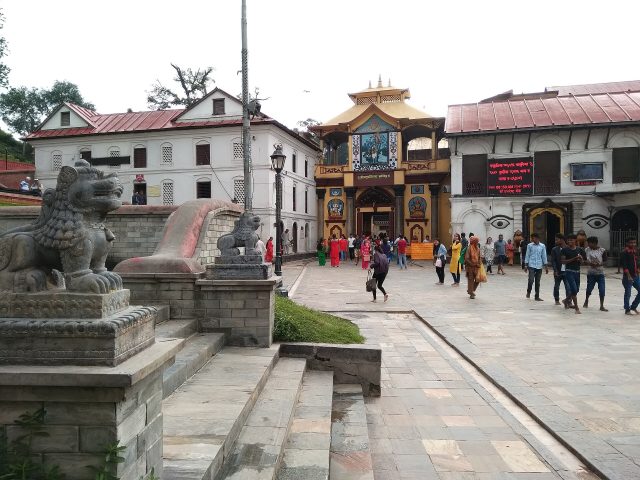
Gokarna is one of those quiet places that most travelers pass by without a second thought, tucked away on the edges of Kathmandu Valley. It’s a small village where the hills roll gently into terraced rice fields, and where the air carries the scent of damp earth and woodsmoke. Here, away from the well-trodden paths of Swayambhunath and Boudhanath, stands the Gokarna Buddha Stupa—a place that doesn’t announce itself with grandeur but instead offers something far more subtle. There are no crowds here, no vendors pressing trinkets into your hands, no tour groups shuffling past in a hurry. Just the quiet hum of the wind through the trees, the weight of ancient stones beneath your feet, and the sense that time moves differently in this corner of the valley.
The stupa’s origins are woven into the early days of Buddhism in the Himalayas, though much of its history has softened with time. Locals say it once served as a resting place for pilgrims traveling between Tibet and India, a quiet refuge where weary travelers could pause to pray or simply catch their breath. The details of those journeys have faded, but the stupa itself remains, its weathered surface holding the weight of centuries. It’s smaller than the more famous stupas in the valley, its presence unassuming, yet there’s a quiet strength in its simplicity. It doesn’t demand attention; it invites contemplation.
Like many Newar Buddhist shrines, the Gokarna Stupa follows a familiar architectural form—a whitewashed dome crowned with a gilded spire, surrounded by prayer wheels and small shrines. There are no elaborate murals or ornate carvings here, just the clean lines of stone and wood, the play of light through wooden lattice windows. The structure feels organic, as if it grew from the earth rather than being built upon it. The best time to visit is at dawn, when the first light touches the spire and the stupa seems to wake slowly, casting long shadows across the ground. The air is cool then, the world still half-asleep, and the silence feels deeper than at any other time of day.
This isn’t a place that exists for tourists. It belongs to the people who live nearby, who come here to spin prayer wheels, leave offerings, or sit beneath the old trees in quiet reflection. On full moon days and during festivals, the stupa comes alive with rituals—monks in maroon robes chanting, the scent of incense drifting through the air, the murmur of prayers. But even on ordinary days, there’s a sense of continuity here, a thread connecting the present to the past. You might see an elderly man reciting mantras under the shade of a bodhi tree or a group of women arranging flowers at the base of the stupa. These moments feel unscripted, as if you’ve stumbled into someone’s private devotion.
Getting here is part of the experience. From Kathmandu, you can take a bus or a taxi, but the last stretch is always on foot, winding through the village past houses with intricately carved windows and small shrines tucked into corners. The path climbs gently, and with each step, the noise of the city falls away. By the time the stupa comes into view, the world feels lighter, slower. There are no signs pointing the way, no crowds jostling for space—just the open sky and the quiet promise of stillness.
The surrounding hills are a patchwork of forests and terraced fields, especially lush during the monsoon season when the valley turns a vibrant green. It’s an ideal place for unhurried walks, where the only sounds are the rustle of leaves and the occasional call of a bird. From the higher ridges, you can look down on Kathmandu Valley—a sprawl of rooftops, temples, and patches of green, all framed by distant mountains. But you don’t need to climb far to feel the space around you. Sometimes, it’s enough to sit at the base of the stupa and watch the light shift across the stones, the prayer flags fluttering in the breeze, the slow dance of shadows on the ground.
Gokarna isn’t the kind of place that makes it into glossy travel brochures. There are no museums here, no guided tours, no carefully curated experiences. It doesn’t offer dramatic views or Instagram-worthy backdrops. What it does offer is something far more elusive—a sense of peace that feels increasingly rare in a world that moves too fast. This is Nepal without the noise, without the expectations, without the performative spirituality that sometimes clings to more famous sites. It’s a place where you can simply be, where the weight of history feels present but not overwhelming, where the silence speaks louder than any words.
Those who find their way here often return. Not because there’s anything particularly extraordinary about the stupa itself, but because places like Gokarna remind us of what travel can be when it’s stripped of its distractions. It’s a quiet invitation to slow down, to listen, to notice the small things—the way the light catches the edge of a prayer wheel, the sound of a bell ringing in the distance, the cool touch of stone beneath your fingers. In a world that constantly demands our attention, Gokarna offers something far more valuable: the chance to step away, if only for a little while, and remember what it feels like to simply exist.