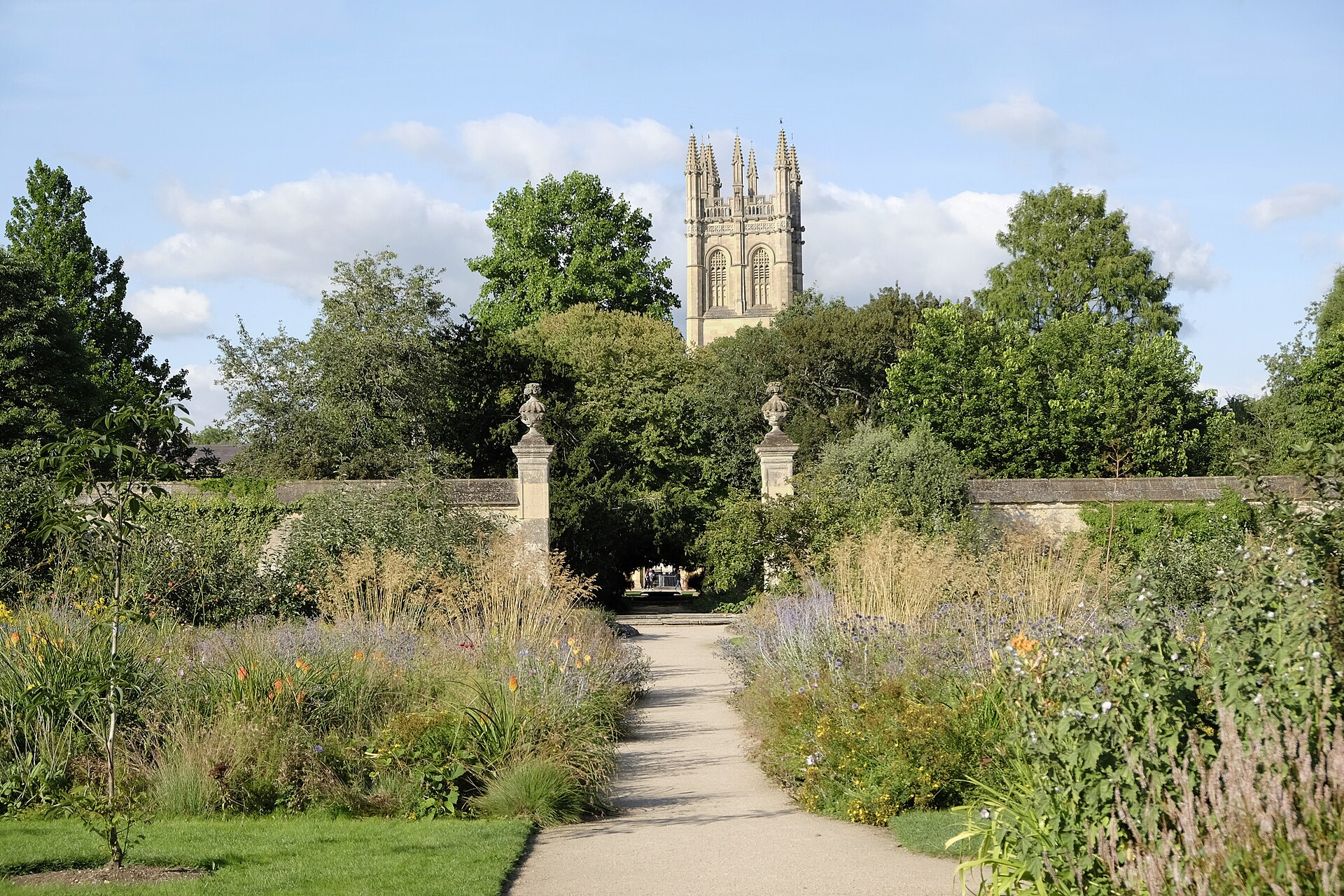
Oxford’s Botanic Garden is one of those rare places where time feels different. It isn’t just a collection of plants—it’s a living record of curiosity, patience, and discovery spanning four centuries. Founded in 1621, it holds the distinction of being the oldest botanic garden in Britain, and nowhere else in Oxford does the connection between past and present feel quite so tangible. This is where scientists whose names are now taught in classrooms around the world once walked, where plants that transformed medicine and agriculture were first cultivated, and where, for centuries, people have come simply to wonder at the natural world.
Tucked along the banks of the River Cherwell, the garden occupies a modest plot, but its small size only makes its layers of meaning more concentrated. The main entrance, framed by a weathered limestone arch, opens into a scene that could have been lifted from an 18th-century painting: manicured lawns, symmetrical flowerbeds, glasshouses filled with exotic specimens, and shaded paths winding between them. Yet this isn’t a museum piece. The garden remains an active research site, where students train, experiments unfold, and some of the oldest plants—like the yew tree planted in 1645—still stand as silent witnesses to history.
The garden’s story is inseparable from Oxford’s own. In the 17th century, botany wasn’t just an academic pursuit; it was a matter of survival. Plants were medicine, dye, and the key to expanding colonial agriculture. Early directors like Jacob Bobart risked their lives on expeditions to collect seeds and cuttings from across the globe. Some of those early introductions still thrive here, their roots tangled with the university’s history. The yew, for instance, has seen civil wars, revolutions, and two world wars come and go, yet it endures, as unassuming as ever in its corner of the garden.
The architecture of the garden tells its own quiet story. The oldest section, the Walled Garden, is enclosed by high brick walls built in the 1600s to shield delicate plants from wind and thieves. Inside, the space is divided into geometric plots, each dedicated to a different category of plants—medicinal, poisonous, ornamental. At the heart of it all stands the Danby Gate, a grand entrance designed by Nicholas Stone, one of the leading architects of his day. Its baroque flourishes, adorned with the coats of arms of the garden’s founders, give it the air of a palace gateway, while nearby, a small lily pond reflects the sky, its edges often dotted with students reading or watching the fish.
The glasshouses are worlds unto themselves. The Palm House, built in the 1830s, still shelters towering palms and rare orchids, its humid air thick with the scent of earth and growth. The Conservatory, meanwhile, is a year-round refuge for cacti and succulents, their spiny forms casting intricate shadows on the glass. In summer, the glasshouses hum with activity—students revising for exams, visitors photographing vibrant blooms, locals seeking respite from the heat. Even in winter, the garden has its own stark beauty, with frost tracing patterns on evergreen leaves and the glasshouses offering warmth against the cold.
Yet the garden is more than its history and science. In a city that often feels crowded with noise and movement, it remains a place of quiet. There are no tour groups here, no rush, just the chance to wander without purpose, sit by the river, or watch the squirrels darting between the trees. The garden has its rhythms—concerts in summer, Christmas markets in winter—but even without these, it feels alive. The plants grow, bloom, and fade as they have for centuries, indifferent to the passage of time.
From the beginning, the garden was never meant to be exclusive. Though access wasn’t always free, it was always open to the public, and that tradition continues today. There’s no pressure here, no expectation—just the invitation to slow down and notice. It’s a place where you can think, or not think at all, where the only requirement is attention, and the only reward is a sense of stillness. That might be why it’s so cherished by those who live in Oxford. It asks for nothing and gives back something rare: a moment of peace.
In recent years, the garden has also become a place where the future is discussed. Lectures on climate change, exhibitions on biodiversity, and workshops on sustainable gardening all find a home here. The plant collections continue to grow, with some once-common species now listed as endangered. The garden evolves, but its essence remains the same—a place where science and beauty intersect, where the past meets the present, and where people can step away from the world for a little while. That, perhaps, is its greatest gift.