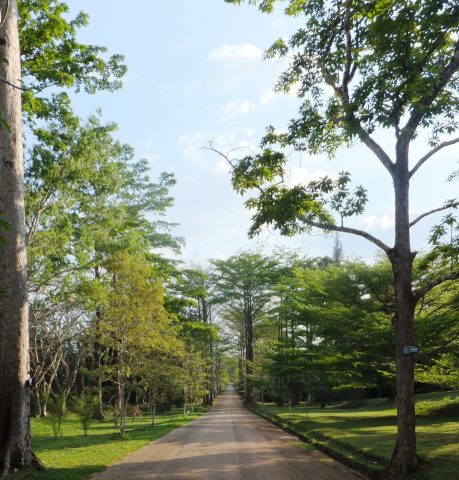
Hôpital Saint-Joseph doesn’t stand out with grand facades or crowds. It sits quietly on the edge of town, where low hills meet groves of palm and banana trees. The buildings, with red-tiled roofs and pastel walls, blend into the landscape. Around them, a garden thrives—rows of medicinal plants, shaded benches, and patients resting under the trees.
The hospital began in the early 1900s, when Belgian missionaries built it as a medical outpost in what was then the Belgian Congo. They wanted to provide care and education, and it soon became one of the region’s first major healthcare centers. European nuns and doctors staffed it at first, but over time, local practitioners took over. The hospital has survived political upheavals and economic shifts, but its purpose hasn’t changed.
The architecture shows its practical roots. The main building, designed in a colonial style, has wide verandas to block the heat and high ceilings for airflow. Later additions kept the same simple look, with little decoration except for wooden doors or tiled floors. Some tiles still show their European origins. Inside, the spaces feel functional yet lived-in, with age adding a quiet dignity.
Hôpital Saint-Joseph does more than treat patients. It’s a lifeline for communities far beyond Kisantu, drawing people from remote villages and neighboring provinces. Resources are often limited—equipment fails, medicines run out, and power cuts happen. But people keep coming because they trust the care here. The hospital also sends mobile clinics and outreach programs into the countryside to help those who can’t travel.
The garden around the buildings is a working pharmacy. Traditional healers and modern doctors grow plants used in both herbal and conventional treatments. For many, the garden is more than medicine. It’s a place to rest, where the scent of leaves and rustling branches ease the weight of illness. Some come just to sit, to listen to the quiet, or to share a moment with family in the shade.
The hospital brings together cultures and eras. In its corridors, you’ll hear Lingala, Kikongo, French, and lesser-known dialects. Patients wear brightly patterned fabrics, while doctors in scrubs move between wards, mixing Western medicine with local traditions. Many staff members have worked here for decades, passing down knowledge that connects old and new.
For visitors, the hospital is an unexpected find. There are no tours or gift shops, no effort to package its story. It exists as it always has, focused on its work. If you walk through the garden or pause in the courtyards, you won’t find grand narratives—just the steady rhythm of a place that has healed for over a century.
Time moves slowly here. Mornings start with birdsong and sunlight breaking through the mist. By evening, as the heat fades, courtyards fill with patients and families—some talking, others sitting quietly in the fading light. The hospital doesn’t rush. It doesn’t have to.
Over a century after it opened, Hôpital Saint-Joseph remains vital. People come not just for treatment but for something less tangible: a sense of care that goes beyond its limitations. In a country where so much has changed, the hospital stays the same, rooted in the land and the lives it serves.