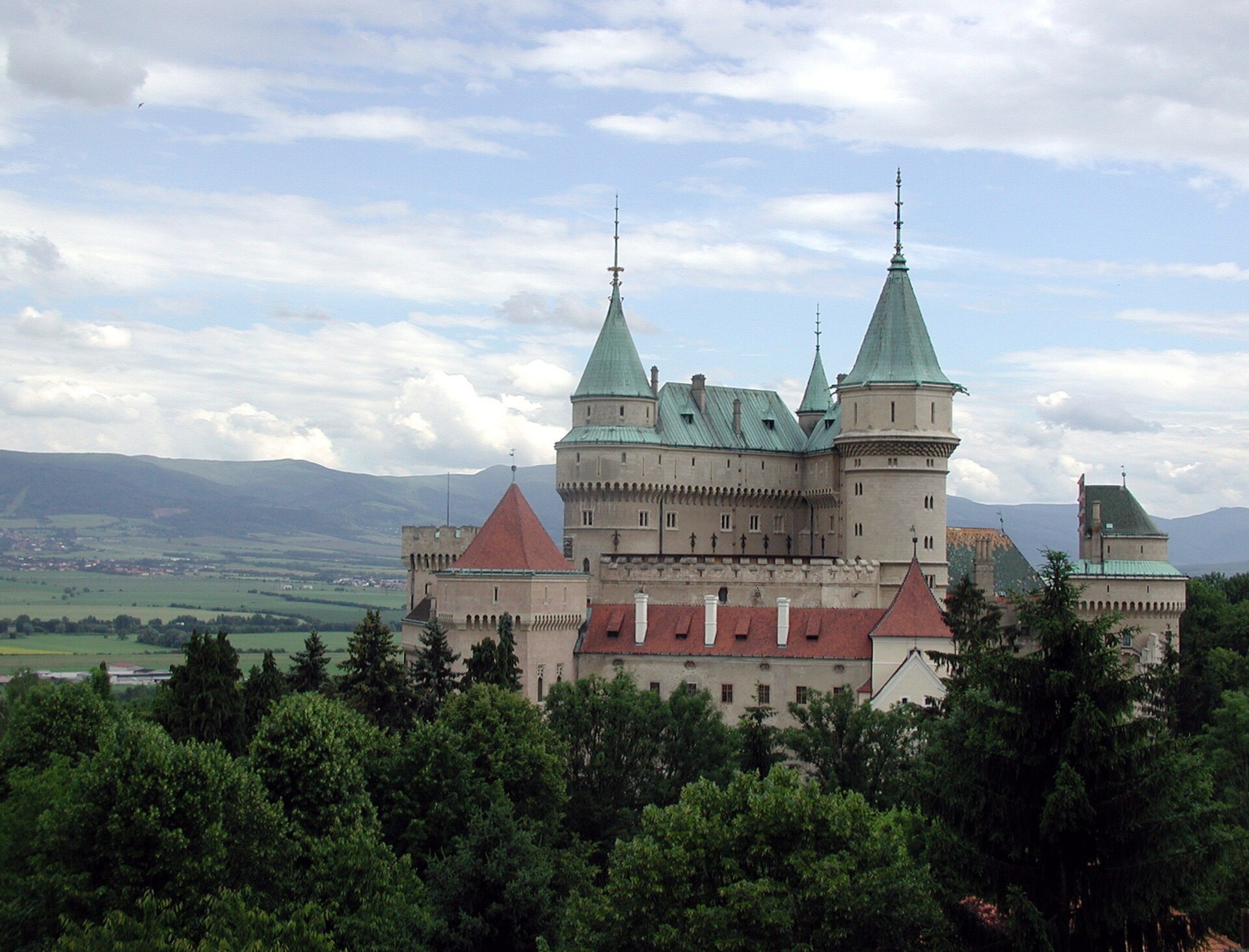
Perched on a hill above the quiet town of Bojnice, the castle feels like a place plucked from the pages of a storybook. Its slender towers, delicate balconies, and graceful silhouette stand out against the sky, especially striking in the soft light of dusk. More than just an architectural landmark, Bojnice Castle is a living piece of history, shaped by centuries of power, art, and legend. Its walls have witnessed the rise and fall of noble families, the echoes of battles, and the careful hands of restorers, yet they still carry the weight of the past, drawing those who seek a glimpse of something timeless.
The castle’s origins trace back to the 12th century, when a wooden fortress first stood on this spot. Over time, it evolved into a stone stronghold, becoming part of the defensive network of the Kingdom of Hungary in the 13th century. Back then, it was a far cry from the romantic structure we see today—its thick walls and narrow slits for archers were built for war, not beauty. The transformation came in the 16th century, when the Thurzó family, its owners at the time, decided to turn the fortress into a lavish residence. It was during this period that the castle gained its signature elegance: the intricate galleries, soaring spires, and inner courtyards that echo the grandeur of Italian palazzos.
The 19th century marked another pivotal chapter in the castle’s history, when Count Ján František Pálffy acquired it. A passionate collector and patron of the arts, Pálffy turned Bojnice into a treasure trove of culture. Under his guidance, the castle became a museum of sorts, filled with rare books, antiques, and works of art. He brought in the finest architects and craftsmen to restore it, blending Gothic, Renaissance, and Baroque elements into a harmonious whole. The result was a residence that felt both opulent and refined, a place where history and artistry coexisted. After Pálffy’s death, the castle passed through several hands before being nationalized and opened to the public.
Inside, the castle is just as captivating as its exterior. The rooms preserve the authentic interiors of different eras, from medieval halls with massive fireplaces and oak paneling to the lavish 19th-century salons adorned with frescoes, stucco work, and antique furniture. The library is a particular highlight, housing rare manuscripts and books that whisper of scholarly pursuits and quiet afternoons spent in study. Nearby, the Knight’s Hall displays an impressive collection of armor and weapons, each piece telling a story of battles fought and honors won. Every corner of the castle feels alive with the past—whether it’s the countess’s bedroom, with its intricately carved four-poster bed, or the count’s study, where the air still seems thick with the weight of old decisions and whispered conversations.
Beyond the castle walls lies a sprawling park, a masterpiece in its own right. Designed in the 19th century as an extension of the castle’s interiors, it was meant to be a place of reflection and leisure. Ancient trees shade winding paths, leading to hidden sculptures, fountains, and gazebos. The most enchanting spot is the pond, where swans glide across the water, their reflections mirroring the castle’s towers. The park is a quiet retreat, where the only sounds are the rustling of leaves and the distant call of birds. It’s easy to imagine nobles strolling these paths centuries ago, lost in thought or engaged in quiet conversation.
Like many old castles, Bojnice has its share of legends, the most famous being the tale of the White Lady. According to local lore, her ghost wanders the halls, searching for a lost love. Some visitors claim to have seen her silhouette near the windows on moonlit nights or heard the faint rustle of her dress in empty corridors. Whether or not the stories are true, they add a layer of mystery to the castle, making it feel even more alive with history.
Today, Bojnice Castle is more than just a museum—it’s a vibrant cultural hub. Throughout the year, it hosts exhibitions, concerts, and festivals that bring the past to life. In the summer, the courtyards echo with the clatter of knights’ armor during medieval tournaments, while winter transforms the castle into a fairy-tale wonderland, adorned with lights and garlands. Despite its popularity, the castle hasn’t lost its charm. Perhaps that’s because it doesn’t try to be just a tourist attraction; it remains a place where history feels tangible, where the past and present coexist.
Visiting Bojnice Castle isn’t just about seeing a historic site—it’s about stepping into another time. You can almost hear the clink of goblets in the grand hall, the murmur of guests in the drawing room, or the distant sound of hooves on the cobblestones. Or perhaps you’ll simply find yourself lost in the beauty of the stonework, the play of light through the windows, or the quiet majesty of the park. The castle doesn’t demand much from its visitors—just an open mind and a willingness to see beyond the surface. That’s why, after all these centuries, it still feels like a place where magic lingers.