On the slopes of Mount Aragats, near the village of Byurakan, a park spreads across thirty hectares. It was established in the mid-20th century at the initiative of Viktor Ambartsumian, an astrophysicist who also founded the nearby Byurakan Observatory. He wanted more than a collection of plants—he saw it as a place to study how species adapt to high-altitude conditions. Today, it remains a scientific site and a retreat where visitors walk among trees from around the world.
The landscape here is a mix of forested hills, meadows, and small streams. The plants grow as they would in the wild, not in manicured rows. Oaks, maples, and junipers share the space with Himalayan pines, North American spruces, and Japanese cherry trees. The conifer collection stands out, with specimens from botanical gardens in Europe and Asia. Some trees are rare, nearly lost in their native habitats, making the park a living record of biodiversity.
The park’s history is tied to Byurakan’s role as a scientific hub. In the Soviet era, researchers tested how foreign plants could survive Armenia’s climate. Ambartsumian, who loved nature as much as science, chose the plants and designed the layout himself. He believed science should preserve beauty, not just explain it. That idea still shapes the park, where students take tours and climate research continues.
Spring brings magnolias and rhododendrons in bloom. Summer offers shade from tall trees. In autumn, the park turns red and gold. Winter covers everything in snow, and frost clings to the evergreens. Locals sometimes picnic here, but the park is best for quiet walks.
The air is always cool at 1,500 meters above sea level. From some spots, you can see Aragats’ snow-capped peak and the Ararat Valley. On clear days, Yerevan appears in the distance. The park has no fences, and entry is free. Some areas close during scientific work. There are no crowds—just trails, rustling leaves, and birdsong.
It doesn’t feel like a museum. There are no plaques on every tree, and details matter mostly to those who study plants. For most, it’s a place to escape the city. Benches sit by viewpoints, and a small pond draws ducks in warmer months. Sometimes, workshops or lectures happen, but the atmosphere stays peaceful.
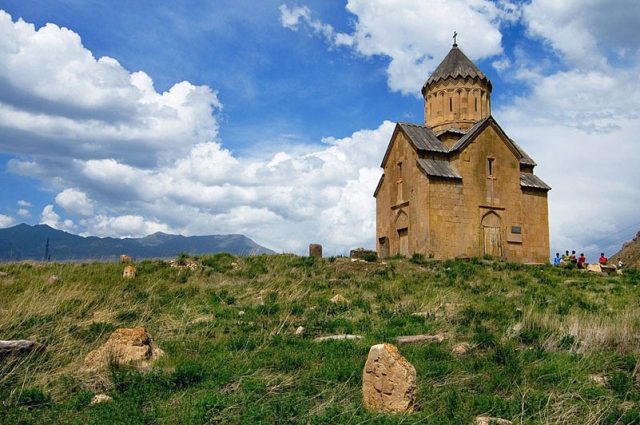
The park is part of a landscape rich in history. Nearby, the Byurakan Observatory watches the stars. The villages around it hold ancient churches and khachkars. Byurakan itself is quiet, with traditional Armenian houses. After visiting, you might explore, buy handmade souvenirs, or sit under a tree.
There are no souvenir stands or tour groups here. It’s for those who like silence and solitude. Maybe that’s why it draws people tired of noise—it shows that beauty doesn’t need to be loud, and that science lives in the slow growth of trees under the sky.