Perched on a hill in the heart of San Sebastián’s old town, the Basilica of Santa María del Coro overlooks the crescent sweep of La Concha Bay, its presence a quiet testament to the city’s layered past. This is where San Sebastián began—not as the polished resort town it is today, but as a fortified settlement in the 12th century, when King Sancho the Wise chose this strategic rise above the sea to establish a community. The basilica, like many churches in northern Spain, was built slowly, its stones absorbing centuries of change. The structure we see now took shape in the 18th century, after a fire destroyed the medieval church that once stood here. The city, determined to rebuild, created something grander, a place that would reflect both its resilience and its devotion.
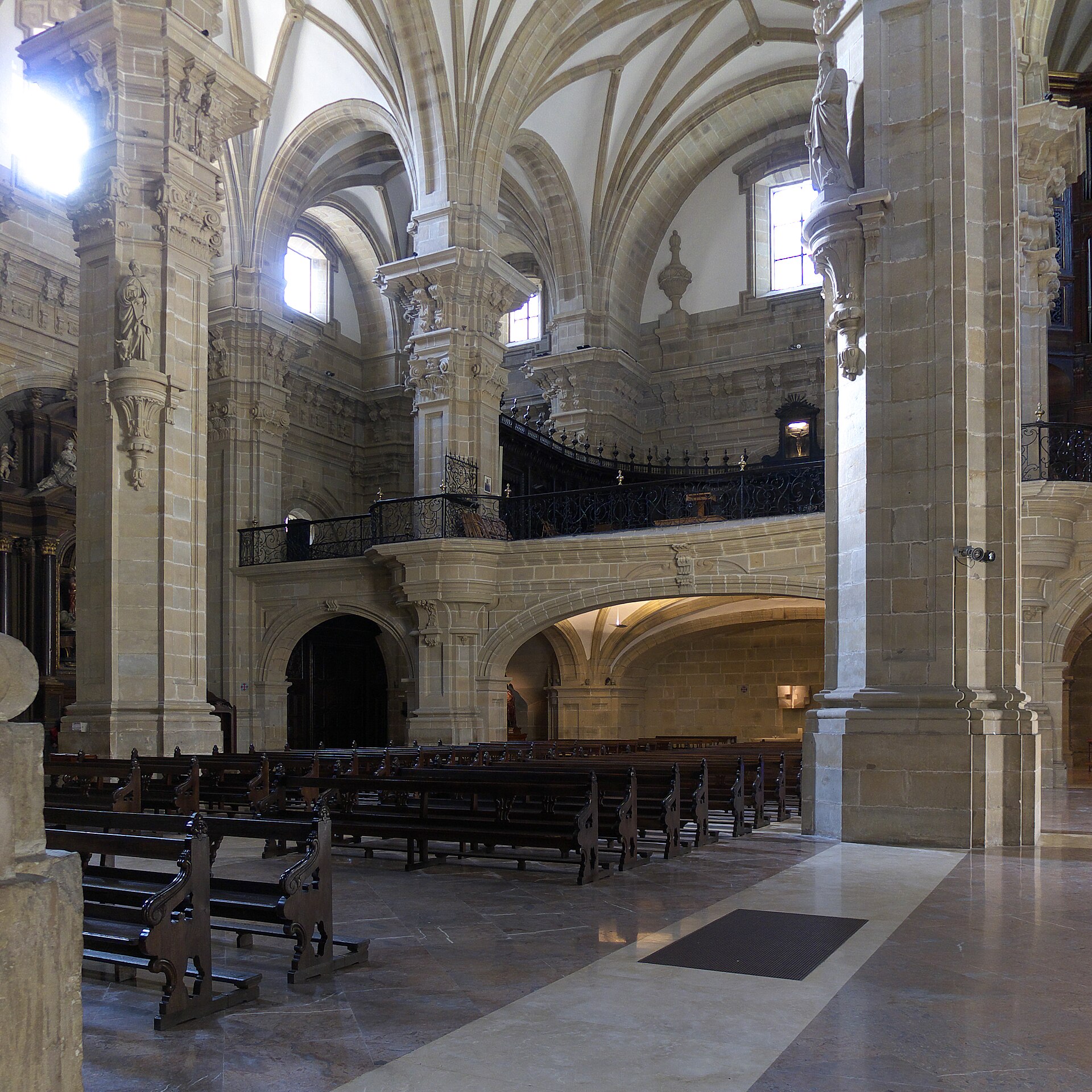
The architecture of Santa María del Coro blends late Baroque and Neoclassical elements, a style common in Basque churches of the era. The façade, with its twin towers and tall windows, strikes a balance between solemnity and grace. The pale stone, warmed by the sun, softens the building’s lines, while the sculpted details—floral motifs, cherubs, and saints—add a touch of lightness. Inside, the church feels unexpectedly spacious. High vaulted ceilings, a wide nave, and side chapels create an airy openness, though the original design was meant for a much smaller congregation. The most striking feature is the main altarpiece, carved from dark wood and gilded with gold. Its intricate reliefs and figures of saints speak to the deep faith of a coastal community that once relied on the sea’s mercy for survival.
For centuries, the basilica was more than a place of worship. In the Middle Ages, its walls formed part of the city’s defenses, a bulwark against pirates and invaders who preyed on the vulnerable port. Even after San Sebastián outgrew its military role, the church remained a symbol of its identity. It housed relics tied to local saints, and during festivals, its halls echoed with the voices of townspeople celebrating everything from naval victories to the end of plagues. Today, while visitors come for the view over the bay, the basilica still serves as a living archive of the city’s history, a place where the past lingers in the cool stone and flickering candlelight.
Inside, a few details stand out. The 19th-century organ, still in use, fills the church with music during services and occasional concerts. The faded frescoes in the side chapels depict scenes from the life of Christ and local saints, their colors muted by time. The Chapel of Saint Sebastian, the city’s patron, is particularly striking. Its altarpiece features the saint pierced by arrows, a reference to the legend that gave San Sebastián its name. The interior isn’t overly ornate, but every element—the stained glass filtering sunlight, the worn wooden pews, the quiet hum of prayer—carries weight. There’s a sense that this space has been shaped by generations of hands and voices, each leaving a mark.
Santa María del Coro isn’t just a monument; it’s a place that still breathes. Services are held regularly, and during religious festivals like the Feast of Saint Sebastian or Holy Week, the church becomes a focal point for locals and pilgrims alike. In summer, classical music concerts transform the acoustics, the notes of the organ or a choir swelling through the nave, turning the space into something almost sacred in a different way. Even if you’re not religious, the basilica offers a rare stillness in the heart of the city, a chance to step away from the bustle of the streets below.
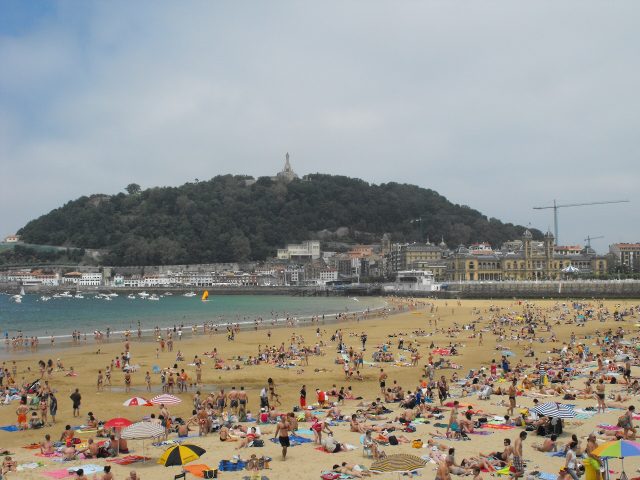
From the steps outside, the view over San Sebastián is one of the best in the city. The curve of La Concha Beach stretches out below, its golden sand meeting the gentle waves of the bay. Beyond it, the old town’s red-tiled roofs cluster together, framed by the green hills that cradle the water. On clear days, the tiny island of Santa Clara is visible in the distance, a speck of land in the middle of the bay. Locals often come here not just for mass, but to sit on the steps, watching the light change over the water or the city come to life below. It’s a place that invites you to pause, to look beyond the immediate and take in something larger.
Unlike the grand cathedrals of Madrid or Seville, Santa María del Coro doesn’t overwhelm with opulence. Its charm lies in its unassuming presence, in the way it fits into the rhythm of daily life. There are no crowds jostling for the perfect photo, no guided tours rushing through. The church exists as it always has, a steady presence in a city that has seen so much change. If you find yourself in San Sebastián, it’s worth the climb up the narrow streets of the old town to reach it. Not just for the view, though that alone is reason enough, but for the chance to sit quietly in a place where time moves differently. Here, the past isn’t something to be observed from a distance—it’s something you can almost touch.