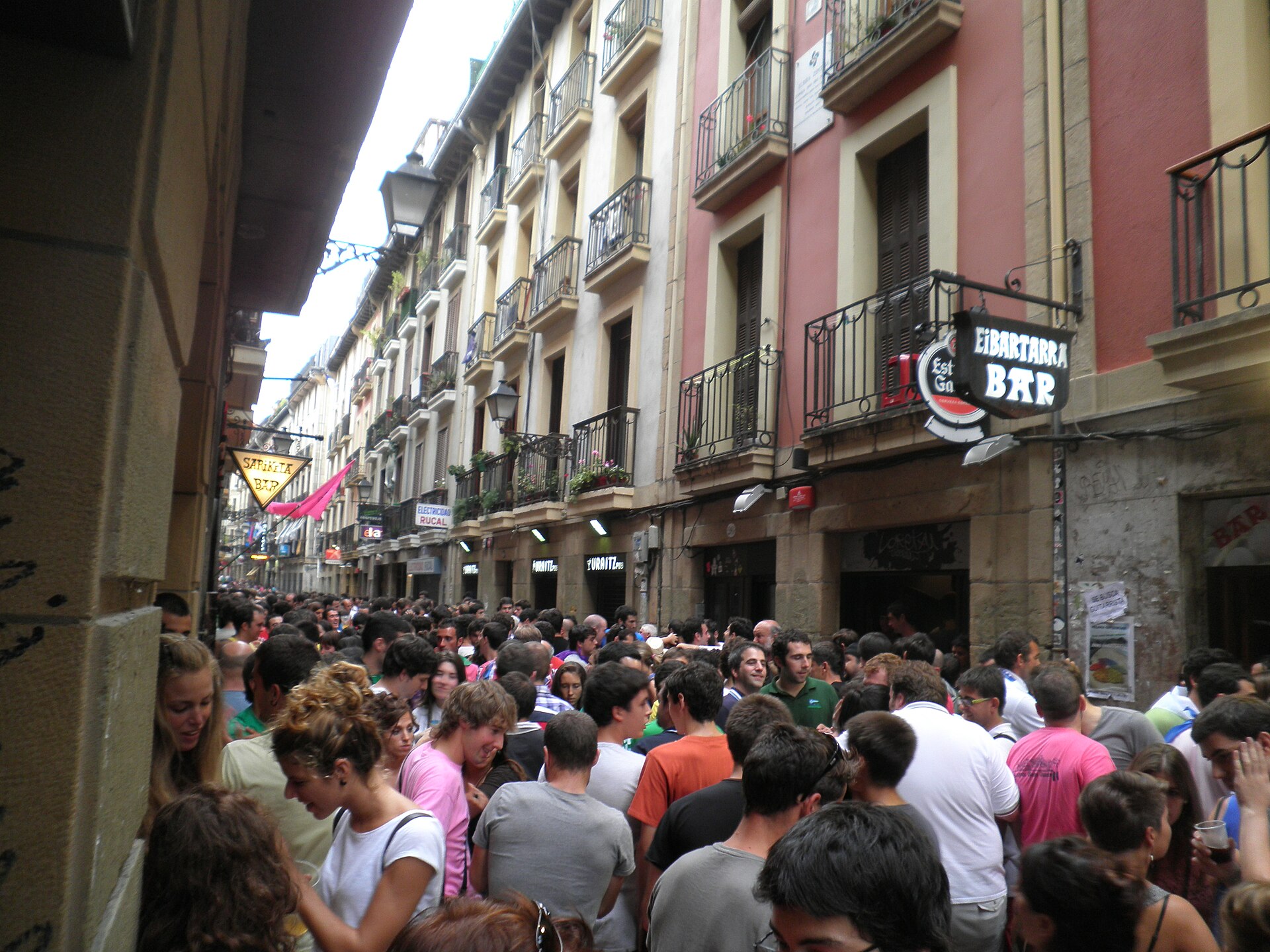
San Sebastián’s Old Town, or Parte Vieja, is where the city’s story began—and where its spirit still lingers. Winding cobblestone streets twist between low-slung houses with wooden balconies, some draped with drying laundry, others brightened by pots of geraniums. There are no grand boulevards here, no sleek modern facades, just a maze of narrow alleys that invite you to lose yourself in their charm. Despite being at the heart of one of Spain’s most popular coastal resorts, Parte Vieja has held onto the soul of an old Basque village, untouched by time in the best possible way.
The history of the Old Town stretches back to the Middle Ages, when San Sebastián was little more than a fishing hamlet clinging to the edge of the Bay of Biscay. In the 12th century, King Sancho the Wise granted the town its charter, setting it on a path to become a key trading and military outpost. But much of its medieval past was erased in 1813, when a devastating fire swept through during the Peninsular War. British and Portuguese forces, trying to oust the French, left the area in ruins. Only fragments of the old city survived, like the 16th-century Gothic church of San Vicente, which somehow withstood the flames. After the fire, the town was rebuilt, though with a more orderly layout that still preserved the essence of its medieval streets.
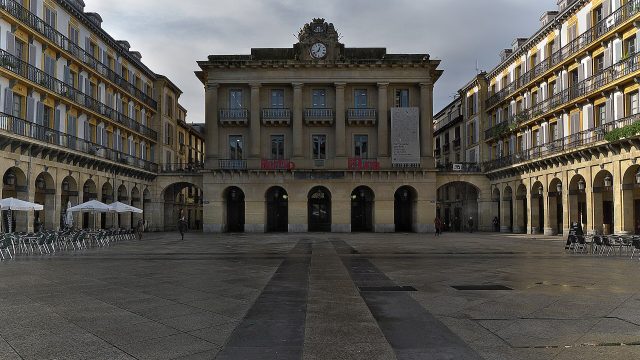
The architecture of Parte Vieja is a patchwork of styles, each layer telling a different part of the city’s story. Baroque facades with ornate balconies and carved doorways stand alongside modest, whitewashed houses typical of Basque tradition. The heart of the Old Town is Constitution Square, once a bullring where spectators watched from numbered boxes still visible on the surrounding buildings. Today, the square is the stage for festivals, concerts, and markets, filling with locals and visitors who linger at café tables long into the evening.
Food is as much a part of the Old Town’s identity as its buildings. Nowhere else in Spain will you find such a concentration of bars and restaurants in such a small space. The real stars here are pintxos—small, inventive bites served with wine or cider. Some are simple, like crusty bread topped with anchovies, while others are elaborate creations of seafood, meat, or mushrooms. Many bars have been family-run for generations, their recipes unchanged for decades. The tradition isn’t to order a full meal but to hop from one spot to another, sampling a little at each.
The Old Town’s fish market, La Bretxa, may not be as vast as Barcelona’s La Boqueria, but it has its own quiet charm. Early mornings bring the scent of the sea and the hum of bargaining as fishermen unload their catch straight from the boats. Locals and visitors alike come here for the freshest seafood, often heading to nearby taverns to have their purchases cooked on the spot—grilled hake or steamed mussels, still glistening from the water.
Life in Parte Vieja moves at its own unhurried pace. Mornings start with small shops selling Idiazábal cheese, jamón, olives, and Rioja wine. By midday, the streets fill with tourists browsing for Basque berets, ceramics, and leather goods. But as evening falls, the Old Town comes alive in a different way. The ritual of *poteo*—bar-hopping with drinks and pintxos—begins, and the air fills with laughter, clinking glasses, and the occasional burst of live music. Even late at night, the streets stay animated, the glow of lanterns reflecting off wet cobblestones as the sound of waves mixes with distant conversation.
What makes Parte Vieja special is that it hasn’t been polished into a tourist attraction. Despite its popularity, it retains the rhythm of a real neighborhood, where people know each other by name. Walking these streets, it’s easy to imagine how life unfolded here a century ago—the same narrow lanes, the same houses, the same traditions. The past isn’t just preserved in stone; it’s woven into daily life, from the morning trip to the bakery to the evening gathering with friends at a favorite bar.
If you visit San Sebastián, the Old Town deserves more than a quick glance. Spend a day wandering its alleys, ducking into bars on a whim, and watching the city breathe. Parte Vieja isn’t a living museum—it’s a place that grows and changes while staying true to itself. That’s why it draws those who seek more than just pretty views; it offers a slice of history that’s still very much alive.