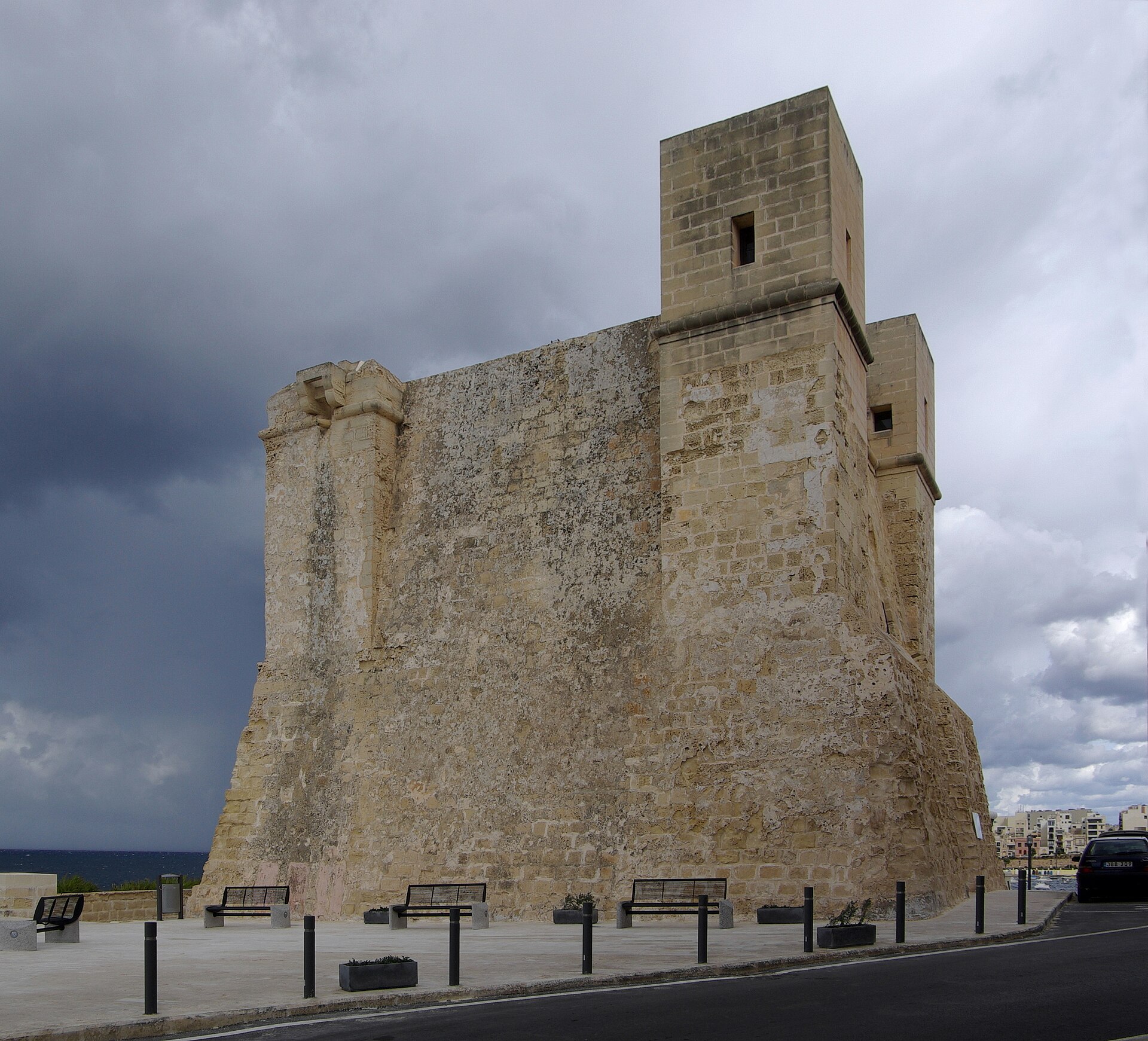
St. Luke’s Tower stands on a low hill above the harbor of Kalkara. Built in the mid-1600s, it was part of a network of fortifications constructed by the Knights of Malta to defend the island from pirate raids and Ottoman fleets. Malta was then a crucial stronghold of the Christian world in the Mediterranean, and St. Luke’s Tower is one of the few that has survived nearly intact, though salt-laden winds have worn its walls.
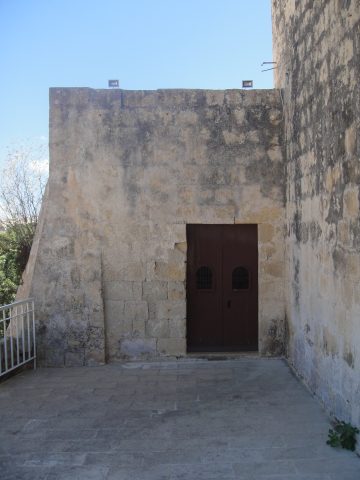
The architecture is typical of Maltese defensive structures from that era—low but solid, with thick walls made of local limestone. Inside, a small chamber with a vaulted ceiling is reached by a narrow stone staircase. The high, narrow windows were once arrow slits. A moat once surrounded the tower, and entry was possible only via a drawbridge, though little remains of these features today.
Unlike many of Malta’s other fortifications, St. Luke’s Tower was never the site of major battles. From its vantage point, there was a clear view of Marsaxlokk Bay and the approaches to the Grand Harbour. Signal fires lit on its summit would warn neighboring forts of approaching danger. Standing there now, you can imagine the flicker of firelight cutting through the night.
Over time, the tower’s military significance faded, and it passed into private hands. It served as a storage space, a lookout for the coast guard, even a temporary home. In the mid-20th century, fishermen took shelter inside during storms, and children played near its walls. Today, the interior remains off-limits, but the exterior is kept in decent condition.
Kalkara is a small town where life moves at an unhurried pace. The tower rises above low, flat-roofed houses and narrow streets where fishing nets dry in the sun. The surrounding fields grow vegetables and grapes, and in the distance, other towers and forts dot the coastline. For locals, the tower is a familiar presence.
The real reason to visit is the view from the hill. On a clear day, the southern coast unfolds before you—Marsaxlokk with its colorful luzzu boats, rocky coves, and the distant outline of Filfla Island. In the evening, as the sun sets, the tower’s walls take on a golden hue.
St. Luke’s Tower isn’t a major tourist attraction. There are no crowds, no souvenir stalls, no guides. Just the wind, the sea, and the stone, which has witnessed an era when Malta was a battleground for empires. For those who come to the island seeking more than beaches, it offers a quiet glimpse into history.
Kalkara is a town where life follows the rhythm of the sea and the seasons. Visit in the early morning, when the sun first warms the stone, or in the late evening, when the last light plays across the walls, and the tower might feel like a living piece of the past.