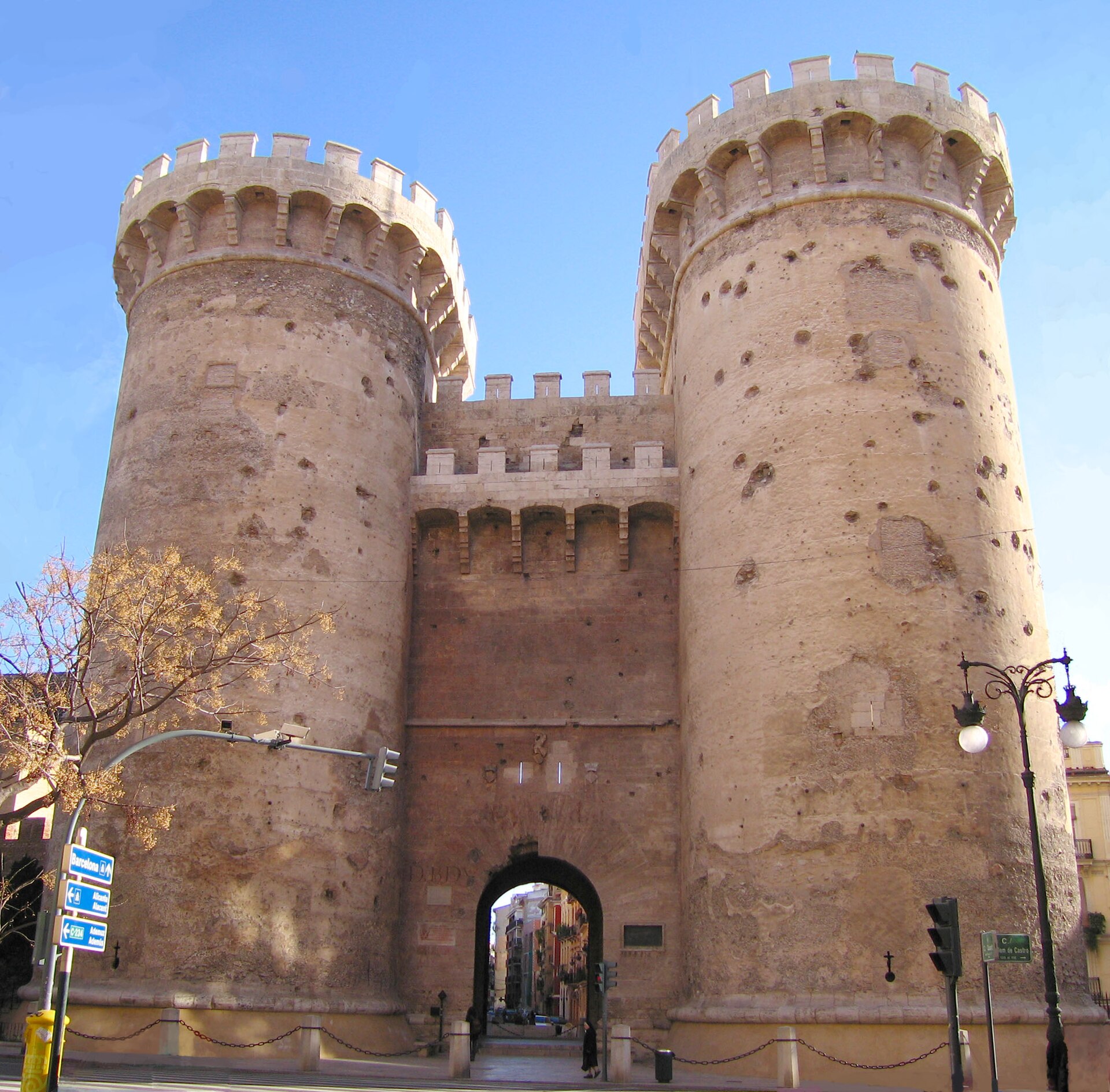
The Torres de Quart, or Quart Towers, stand quietly at the intersection of Guillem de Castro and Quart streets, a pair of unassuming sentinels guarding Valencia’s old quarter. Unlike the city’s more flamboyant landmarks, they don’t demand attention, yet their weathered stone holds centuries of stories. Built in the 15th century, these twin towers were once part of Valencia’s medieval fortifications, their thick walls and narrow arrow slits a testament to a time when the city needed protection from invaders. Today, they retain a certain stern dignity, as if still performing their ancient duty—only now for curious visitors rather than enemies.
Constructed during Valencia’s golden age as a thriving trade and cultural hub, the towers were among the last major defensive structures added to the city’s walls. Their Gothic architecture, with dark stone and imposing bulk, reflects the era’s military pragmatism. The name "Quart" comes from the road leading to Quart de Poblet, a nearby town, and for centuries, these gates welcomed travelers, merchants, and pilgrims into Valencia. The towers’ design is simple but effective: square in shape, with walls over two meters thick in places, built to withstand sieges and assaults.
Inside, the towers are sparse but evocative. Vaulted ceilings and spiral staircases hint at their past function, where guards once kept watch from the upper levels. The lower chambers, once used as dungeons, now lie empty, though occasionally they host temporary exhibitions or cultural events, breathing new life into the ancient stone. The absence of modern clutter makes it easier to imagine the towers as they were—busy with soldiers, prisoners, and the constant hum of a city under threat.
The Torres de Quart bore witness to some of Valencia’s most turbulent moments. During the War of the Spanish Succession in the early 18th century, the city found itself at the heart of a brutal conflict. The towers became a key defensive point, and their walls still bear the scars of cannon fire—deep pockmarks left as a reminder of the siege. These marks haven’t been smoothed over or repaired; they remain as a tangible connection to the past, a silent testament to the battles fought here.
By the 19th century, Valencia’s walls were no longer needed for defense, and much of the fortifications were dismantled to make way for the growing city. The Quart Towers survived, perhaps because they stood on the outskirts of the old town or simply by chance. Today, they stand slightly apart from the main tourist routes, which only adds to their appeal. There’s no crowd here, no souvenir stalls—just the quiet presence of history, untouched by commercialization.
The area around the towers feels like a step back in time. The streets are narrow and lined with old houses, their wrought-iron balconies casting shadows in the afternoon light. Small bars nearby offer a place to sit with a coffee or a glass of local wine, watching the city go by at its own unhurried pace. In the evening, the towers are bathed in soft light, their silhouettes stretching across the cobblestones, as if whispering stories of the past to anyone who lingers.
For Valencians, the Torres de Quart are more than just a historical monument—they’re a symbol of the city’s resilience. They remind locals of the challenges Valencia has overcome, from medieval sieges to modern transformations. For visitors, the towers offer a different perspective on the city, one that contrasts with the sleek modernity of the City of Arts and Sciences. Here, history isn’t just preserved; it’s alive, woven into the fabric of everyday life.
If you find yourself in Valencia, take a detour from the usual sights and spend a moment with the Quart Towers. Stand at their base, run your fingers over the rough stone, and let your imagination wander to the days when these walls echoed with the sounds of battle and trade. In these quiet moments, the city reveals itself not as a museum, but as a living place where the past and present coexist.