Hólar is one of those rare places in Iceland where history doesn’t just exist in books—it lingers in the air, in the quiet rustle of the wind through the valleys, in the way the low hills seem to hold the weight of centuries. Tucked away in the northern part of the island, far from the well-trodden paths of Reykjavík or the Golden Circle, this small settlement was once the beating heart of Iceland’s religious and cultural life. Today, it feels like a place suspended in time, where the past isn’t just remembered but still very much alive. At its center stands the Hólar Diocese Archive, a collection that is far more than just a repository of old documents—it’s a portal to the island’s formative years.
The archive’s origins trace back to the 16th century, a turbulent period when Iceland was caught between the fading influence of Catholicism and the rise of Lutheranism. Hólar itself had been established as a bishop’s seat in 1106, making it one of the two most important religious centers in the country, alongside Skálholt in the south. When the Reformation swept through Europe, Hólar found itself at the crossroads of change. The archive became a sanctuary for records that documented not just church affairs but the very fabric of Icelandic society—laws, treaties, personal correspondence, and even early attempts to preserve the oral traditions of the island. Many of these documents survived against the odds, enduring fires, floods, and the slow erosion of time.
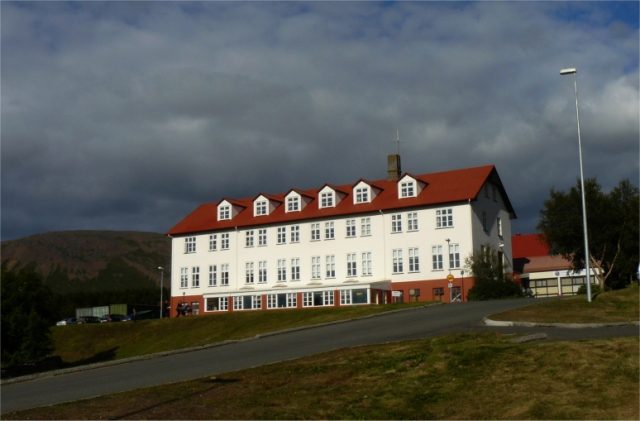
The building that houses the archive is unassuming yet striking in its simplicity. Constructed in the traditional Icelandic style, its thick stone walls and sod-covered roof blend seamlessly into the landscape. Such structures were once common in rural Iceland, but few remain today. Inside, the atmosphere is one of quiet reverence. Wooden shelves hold yellowed manuscripts, their pages brittle with age, while glass cases display ancient seals, parchments, and carefully preserved letters. The most captivating items are the handwritten books, some in Latin, others in Icelandic, their pages adorned with intricate initials and delicate illuminations that hint at the craftsmanship of medieval scribes.
Among the archive’s most prized possessions is the Hólar Bible, printed in the 16th century. It was one of the first books ever produced in Iceland, a landmark achievement in a country where, until then, every book had been painstakingly copied by hand. The Bible was printed in a workshop established by Bishop Guðbrandur Þorláksson, a towering figure in Iceland’s Reformation. His efforts to promote literacy and education left an indelible mark on the island, and the archive holds countless documents tied to his work. The Hólar Bible isn’t just a religious text—it’s a symbol of Iceland’s determination to preserve its language and identity during a time of upheaval.
Yet the archive offers more than just rare books and religious artifacts. Its shelves are filled with documents that paint a vivid picture of daily life in Iceland across the centuries. Court records reveal the disputes and judgments that shaped communities, while parish registers document births, marriages, and deaths with stark simplicity. There are contracts for land sales, petitions from farmers struggling through harsh winters, and accounts of trade with European merchants who exchanged grain, cloth, and metal tools for Icelandic fish and wool. These records serve as a reminder that, even in the Middle Ages, Iceland was never entirely cut off from the wider world.
Visiting the Hólar Diocese Archive is a different kind of experience from walking through a conventional museum. There are no flashy exhibits or interactive displays—just the quiet hum of history waiting to be discovered. Researchers and curious travelers alike can request to view original documents, some of which have shaped the lives of generations. The lack of modern distractions only deepens the sense of connection to the past. For those with an interest in Icelandic history, the archive is a treasure trove, holding materials that can’t be found anywhere else.
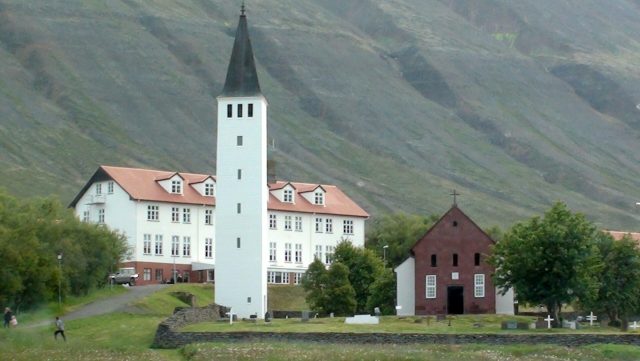
Beyond the archive, Hólar itself feels like a place where time moves at its own pace. The surrounding landscape—rolling green hills, small lakes, and distant snow-capped peaks—has changed little over the centuries. It’s easy to imagine the scene in the 16th century, when bishops and scholars gathered here to debate theology and politics, or when local farmers came to the church for services and blessings. The archive isn’t just a collection of documents; it’s a living thread in the story of Iceland, one that continues to resonate with anyone who takes the time to listen.
What makes Hólar and its archive so compelling is the way they bridge the gap between the past and present. The documents stored here aren’t relics of a forgotten era—they’re part of an ongoing narrative, one that still shapes Icelandic identity today. Whether it’s the handwritten records of a long-ago bishop or the faded ink of a farmer’s complaint, each piece tells a story that feels strangely immediate. In a world where history is often reduced to dates and facts, Hólar offers something far more rare: a chance to step into the past and feel its presence all around you.