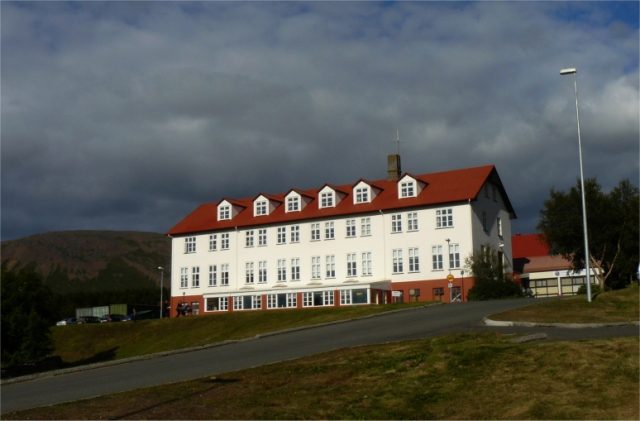
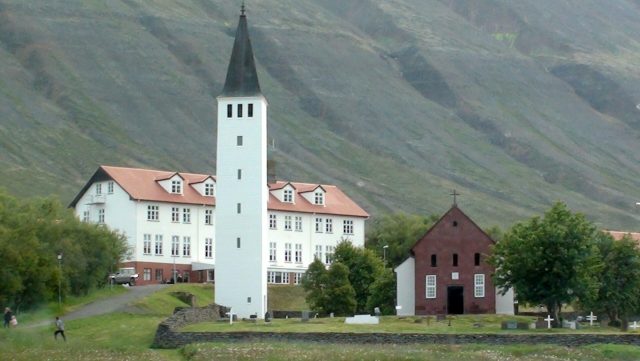
Hólar is one of those places that feels like a quiet secret, tucked away in Iceland’s northern hills where the landscape rolls into fjords and the wind carries the scent of damp earth and wild grasses. It’s not the kind of spot you stumble upon by accident—most travelers pass it by, drawn instead to the more famous sights of Reykjavík or the dramatic waterfalls of the south. But for those who make the journey, Hólar offers something far more enduring than fleeting scenery. This small settlement was once the heart of Iceland’s spiritual and intellectual life, and today, its museum stands as a testament to that legacy.
The Bishopric Museum at Hólar isn’t just a collection of artifacts; it’s a doorway into medieval Iceland, a time when this remote corner of the world was a center of learning and faith. Founded in 1106, Hólar became one of the country’s two major episcopal seats, alongside Skálholt in the south. For centuries, it was here that Iceland’s first chronicles were written, sacred texts were translated, and young scholars trained for the priesthood. The museum preserves fragments of that era—delicate manuscripts, weathered church vessels, and everyday objects that hint at the lives of those who once called this place home. Walking through its exhibits, you begin to understand how a community so far from the rest of Europe managed to shape its own identity.
The architecture of the museum itself tells a story. The main building is a reconstruction of the bishop’s residence, built in the traditional Icelandic style with rough-hewn stone and timber, materials that have endured the harsh northern climate for generations. Nearby stands the old church, constructed in the 18th century and still in use today. Inside, the air is thick with the scent of aged wood, and the simple beauty of the space—unadorned pews, a carved altar, the soft glow of stained glass—feels like a quiet conversation with the past. It’s easy to imagine the voices of worshippers echoing through the centuries, their prayers mingling with the sound of the wind outside.
One of the museum’s most compelling figures is Bishop Guðbrandur Þorláksson, who led the diocese in the late 16th and early 17th centuries. His influence was profound: under his guidance, Hólar became a stronghold of Lutheranism in Iceland, and he oversaw the publication of the first complete Icelandic Bible, a monumental achievement for a nation with a language as isolated as its geography. The museum holds copies of this book, along with personal items belonging to the bishop—his robes, his manuscripts, the tools of his trade. These objects aren’t just relics; they’re reminders of how faith and scholarship could flourish even in a place where survival itself was a daily challenge.
What makes Hólar’s museum different from so many others is its sense of living history. The exhibits aren’t locked behind glass in a way that feels distant or clinical. Instead, there’s an effort to make the past feel tangible—interactive displays of medieval homesteads, audio recordings that bring the voices of bishops to life, and even the occasional local visitor who stops by not as a tourist, but as someone reconnecting with their own heritage. For many Icelanders, Hólar isn’t just a museum; it’s a place where their ancestors’ stories are still alive.
The landscape around Hólar is as much a part of its story as the museum itself. The settlement sits in a valley surrounded by low hills, where sheep graze on the sparse grass and Icelandic horses wander in small herds. A river cuts through the land, its waters clear and cold, and on clear days, the distant mountains remain capped with snow even in summer. It’s a place that feels both timeless and fragile, where the past isn’t just preserved in books but written into the very earth. In the Middle Ages, pilgrims would have traveled here not just for spiritual guidance, but for the sheer beauty of the journey—the way the light slants across the hills, the way the silence settles over the land like a second skin.
Today, Hólar remains one of those rare places where the modern world feels far away. There are no crowds, no souvenir shops, no rush to move on to the next attraction. The museum isn’t trying to dazzle visitors with spectacle; it’s simply offering a chance to step into a slower, quieter rhythm. That’s part of its power. In a country often celebrated for its dramatic landscapes, Hólar reminds you that some of the most profound experiences come from the places that have shaped people’s lives in ways that can’t always be seen or photographed. It’s a place where history isn’t just something you learn about—it’s something you feel.
Visiting Hólar isn’t like ticking another destination off a list. It’s more like stumbling upon a conversation that’s been going on for centuries, one that you’re suddenly invited to join. The museum, the church, the land itself—they all speak to a resilience that’s uniquely Icelandic. This was a place where, against all odds, a small community managed to preserve its language, its faith, and its culture. And in doing so, it became a kind of anchor for a nation that has always existed on the edge of the known world. That’s the real draw of Hólar: not just the chance to see history, but the chance to understand what it means to carry it forward.