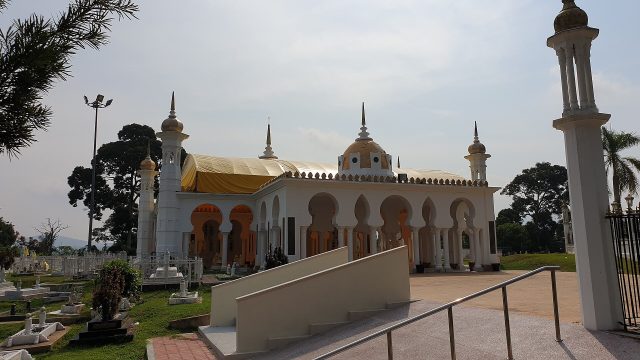
Lenggong Valley sits quietly in the heart of Perak, a place where the weight of human history presses gently against the soles of your feet. Unlike the grand ruins of ancient empires or the towering monuments of lost civilizations, this valley offers something far more intimate—the traces of everyday lives lived tens of thousands of years ago. Here, beneath the low hills and dense jungle canopy, the earth has preserved fragments of our distant past: stone tools, skeletal remains, and the faint echoes of early human existence. There are no colossal structures to marvel at, no gilded relics to dazzle the eye. Instead, the value of Lenggong lies in its understated revelations, the way it speaks not of kings and conquests, but of the quiet, persistent struggle of early humans to survive, adapt, and endure.
The most significant discoveries in the valley are tied to its prehistoric settlements, where archaeologists have unearthed tools crafted from quartzite and animal bones. Among these, the Kota Tampan site stands out, offering a glimpse into the lives of hunter-gatherers who roamed these lands some 70,000 years ago. Their tools, scattered across the ground, hint at a world where survival depended on skill, patience, and an intimate knowledge of the land. But perhaps the most compelling find is the Perak Man, a nearly complete skeleton of a Homo sapiens dating back 11,000 years. Discovered in Gua Gunung Runtuh, a cave whose walls still bear the marks of its ancient inhabitants—charcoal from fires, faint traces of ochre—this skeleton has become a key piece in understanding the migration patterns of early humans across Southeast Asia. The cave itself feels like a time capsule, its cool, dim interior preserving the atmosphere of a place that once sheltered generations of people.
The archaeological sites of Lenggong are spread across the valley, each offering a different perspective on the past. The Lenggong Valley Archaeological Museum serves as a gateway to these discoveries, housing a carefully curated collection of artifacts. The exhibits are modest in scale but rich in detail, from reconstructed Stone Age dwellings to interactive displays that illustrate how early humans lived, hunted, and created. The museum doesn’t just present objects; it tells a story, bridging the gap between academic research and the curiosity of visitors. Outside, the landscape itself becomes part of the narrative. The valley’s rolling hills and dense vegetation create a sense of isolation, as if the modern world has faded into the background, leaving only the land and its ancient secrets.
One of the most striking aspects of Lenggong is its remoteness. Far from the well-trodden paths of Malaysia’s tourist hotspots, the valley retains a sense of untouched tranquility. There are no crowds here, no souvenir stalls or bustling cafes—just the quiet rustle of leaves and the occasional call of a bird. The roads winding through the area often pass through small villages, where life moves at a slower pace. Traditional Malay houses on stilts dot the landscape, their wooden frames weathered by time but still standing strong. Nearby, rubber and oil palm plantations stretch across the hills, a reminder of the region’s more recent agricultural history. The contrast between these modern industries and the ancient sites nearby is striking, a testament to the layers of time that have shaped this land.
In 2012, UNESCO recognized Lenggong Valley as a World Heritage Site, acknowledging its significance as one of the most important archaeological landscapes in Southeast Asia. The designation wasn’t just about the individual discoveries—though the Perak Man and the Kota Tampan site are undeniably remarkable—but about the valley’s ability to tell a continuous story of human presence spanning tens of thousands of years. For Malaysia, this recognition was more than an accolade; it was a reaffirmation of the deep, ancient roots that connect the country to its prehistoric past. Lenggong serves as a reminder that the history of this region didn’t begin with the rise of kingdoms or the arrival of colonial powers, but with the first footsteps of early humans who called these hills home.
Visiting Lenggong is less about ticking off a list of attractions and more about stepping into a different rhythm of time. The local guides, many of whom have been involved in excavations, bring the past to life with a passion that makes even the most technical details feel vivid and immediate. They demonstrate how stone tools were crafted, explain which plants were used for food and medicine, and describe how caves like Gua Gunung Runtuh provided shelter from storms and predators. Walking the same paths that early humans once trod, or standing in the cool darkness of a cave where ancient fires once burned, it’s impossible not to feel a connection to those who came before. The experience is immersive in a way that few modern attractions can replicate, offering a rare chance to engage with history on a deeply personal level.
For those willing to venture off the beaten path, Lenggong offers a unique kind of reward. There are no luxury resorts or fine-dining restaurants here, just the simple pleasures of a landscape steeped in history. The journey from Kuala Kangsar takes about an hour, winding through rural roads before arriving in a place where time seems to slow down. Many of the sites are accessible only by foot, so sturdy shoes and lightweight clothing are essential. The effort, however, is well worth it. Few places in the world allow you to stand where early humans once stood, to touch the same rocks they shaped into tools, or to imagine the world as they saw it—wild, untamed, and full of possibility.
Lenggong is a place that challenges the way we think about history. It doesn’t deal in grand narratives of empires or legendary battles, but in the quiet, persistent stories of ordinary people who lived, worked, and died in these hills long before the concept of civilization took shape. The valley reminds us that history isn’t just about the famous or the powerful; it’s also about the small, everyday moments that define what it means to be human. Here, the past isn’t confined to textbooks or museum displays. It’s alive in the land itself, in the layers of earth that hold the tools, bones, and traces of those who came before us. For Malaysia, Lenggong is more than just a tourist destination—it’s a place where the country’s ancient heritage is preserved, not as a relic of the past, but as a living part of its identity.