Tucked away on the edge of modern Yavne, Tel Yavne is a quiet hill where layers of earth guard the remnants of a settlement that has stood here for millennia. Unlike the crowded tourist hubs elsewhere in Israel, this place doesn’t announce itself with fanfare. There are no souvenir stalls, no flashy signs—just the occasional rustle of wind through the grass and the distant murmur of archaeologists at work. The site doesn’t demand attention at first glance, and that’s precisely what makes it special. History here isn’t displayed; it lingers beneath the surface, waiting to be uncovered.
Yavne’s story begins in the Bronze Age, when it was a Canaanite settlement, but its name first enters the broader historical record as a key Philistine stronghold. The Philistines, a seafaring people who arrived from the Aegean, made Yavne one of their fortified cities, part of the Pentapolis—a league of five powerful Philistine city-states that included Ashkelon, Ashdod, Gath, and Ekron. The Old Testament mentions Yavne as the place where the Philistines briefly held the Ark of the Covenant after defeating the Israelites, a moment that marked its significance in ancient conflicts. The city thrived as a trade and military center, its strategic location near the coast ensuring its importance for centuries.
With the arrival of the Romans, Yavne’s military role faded, but its spiritual legacy grew. After the destruction of the Second Temple in Jerusalem in 70 CE, the Sanhedrin—the supreme Jewish religious council—relocated here. It was in Yavne that the canon of the Hebrew Bible was finalized, and the city’s academy became a center for Torah study. According to tradition, Rabbi Yohanan ben Zakkai established the first yeshiva here, laying the groundwork for rabbinic Judaism. These events cemented Yavne’s place in Jewish history, though today, little remains to mark its past beyond a few artifacts and the quiet explanations on informational plaques.
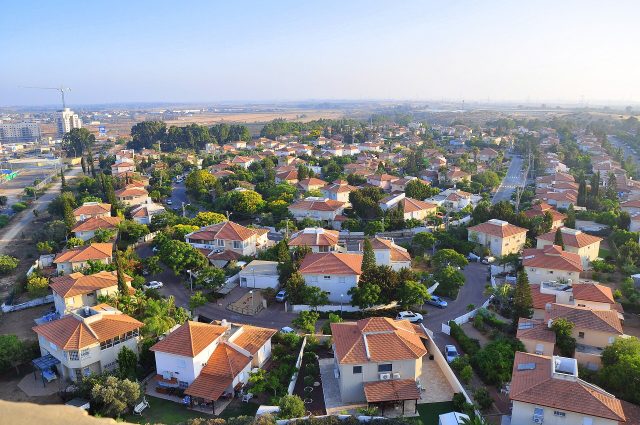
The archaeological park at Tel Yavne isn’t a typical open-air museum. There are no reconstructed buildings or polished exhibits, just the exposed foundations of ancient structures, fragments of walls, and the faint outlines of streets that hint at the city’s former life. At the top of the hill, the ruins of a Crusader fortress from the 12th century stand as a reminder of the region’s medieval past. Built to defend the road from Jaffa to Jerusalem, the fortress is now little more than low stone walls and a grassy ditch. From this vantage point, the view stretches over modern Yavne—its apartment blocks and industrial zones—and beyond, to the Mediterranean Sea, just a few kilometers away.
One of the most intriguing features of the site is an ancient well carved into the rock, dating back to the Philistine era. Remarkably well-preserved, it still shows the steps leading down to the water source, a vital resource for the city’s inhabitants. Around the well, archaeologists have uncovered the remains of residential neighborhoods, workshops, and even a cemetery, offering glimpses into daily life in ancient Yavne. Water was always precious here, and the well likely served as a communal gathering spot, where people traded goods, shared news, and went about their routines.
Despite its historical importance, Tel Yavne remains largely unknown, even to many Israelis. Visitors are rare, which only adds to the site’s sense of quiet solitude. You can spend hours wandering the hillside, picking up fragments of pottery or imagining what the streets looked like in Philistine or Roman times. Time seems to slow here, allowing a deeper connection to the layers of history beneath your feet. In summer, the heat is intense, and the land feels parched, but in winter, the hill turns green, and the ruins take on a softer, more picturesque quality.
For those with an interest in archaeology, Tel Yavne offers a chance to see how excavations unfold. Work isn’t constant, but if you’re lucky, you might witness the careful uncovering of an artifact. Occasionally, archaeologists lead tours, sharing insights into recent discoveries and the stories behind them. Even without a guide, the informational signs in Hebrew and English provide context, helping visitors piece together the site’s past. It’s a place where history feels alive, not because of grand reconstructions, but because of the quiet persistence of the past.
Tel Yavne doesn’t try to impress. There are no grand palaces or towering temples, just the raw, unfiltered traces of a city that has seen empires rise and fall. What makes it compelling is its authenticity—a quality that’s hard to find in more polished tourist destinations. This is a place where history isn’t over; it’s merely paused, waiting for the next discovery. For those willing to look closely, Tel Yavne can be one of the most rewarding stops in Israel—not for its spectacle, but for the quiet conversation it offers with the past.