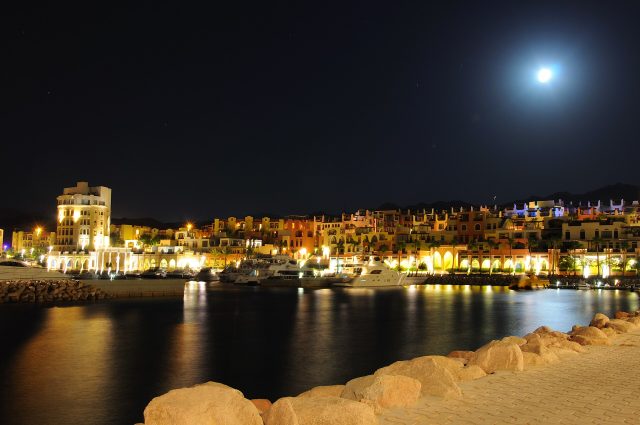
Aqaba Fortress stands where the desert meets the sea, a quiet sentinel overlooking the Red Sea’s shifting tides. Its weathered stones have witnessed centuries of change—empires rising and falling, trade routes flourishing, and the ebb and flow of power along this narrow stretch of coastline. Today, the fortress isn’t just a relic; it’s a place where history feels tangible. The rough texture of its walls, the cool shade beneath its arches, and the salt-laced breeze carry whispers of the past, as if the very air holds memories of those who once stood here.
The origins of the fortress trace back to the 12th century, when Crusaders first fortified the site, calling it Helim. Back then, it served as a strategic outpost, guarding the vital trade corridors linking Egypt to the Levant. But its most significant transformation came under Ottoman rule in the 16th century, when the fortress was rebuilt into the imposing structure that still dominates the skyline. The Ottomans reinforced its walls, added a central courtyard, and constructed a mosque that remains one of its most striking features. By that time, Aqaba had become a bustling port, funneling spices, textiles, and goods from India, Africa, and the Arabian Peninsula. The fortress was the linchpin of this trade, a symbol of control over the region’s wealth.
The architecture of Aqaba Fortress blends practicality with a stark, enduring beauty. Built from local sandstone, its thick walls and buttresses were designed to withstand sieges, though time has softened their edges. Inside, the remnants of living quarters, storage rooms, and even a prison hint at the fortress’s dual role as both a military stronghold and a self-sufficient community. The mosque, with its simple yet elegant minaret, dates back to the 17th century and is still in use today, a rare continuity in a place shaped by so many hands. The entrance, marked by a towering arch, once flew the Ottoman flag; now, it stands as a silent testament to the empire’s long reach.
The fortress played a pivotal role in one of the most dramatic chapters of the early 20th century. In 1917, it became the stage for the Battle of Aqaba, a turning point in the Arab Revolt against Ottoman rule. Led by T.E. Lawrence—better known as Lawrence of Arabia—Arab forces captured the city, a victory that reshaped the region’s political landscape. Bullet holes and shell marks still scar the fortress walls, reminders of the fierce fighting that once raged here. The battle’s legacy is woven into the fortress’s identity, a tangible link to the struggle for Arab independence.
From the top of the fortress, the view is worth the climb. Below, the modern city of Aqaba sprawls along the coast, its whitewashed buildings and palm-lined streets contrasting with the deep blue of the sea. Beyond the harbor, the waters stretch toward the mountains of Jordan and Saudi Arabia, their outlines shimmering in the heat. At sunset, the fortress is bathed in golden light, the sea and sky merging into a seamless horizon. It’s easy to imagine the sentries who once stood here, scanning for approaching ships or the dust clouds of caravans on the horizon.
Today, Aqaba Fortress is more than just a tourist attraction. Locals gather in its courtyard, seeking shade and conversation, while children play among the ancient stones. Small exhibitions occasionally fill the interior, offering glimpses into the fortress’s layered history. In the evenings, the space sometimes hosts concerts or cultural events, blending the old with the new. The atmosphere is surprisingly lively, a mix of reverence and everyday life that keeps the fortress from feeling like a museum.
The fortress is a reminder that Aqaba is more than just a beach destination. Its history stretches back millennia, shaped by the Egyptians, Nabateans, Crusaders, Ottomans, and modern Jordanians. Walking through its gates, you can’t help but wonder about the countless lives that passed through here—the merchants, soldiers, and travelers who once called this place home. There’s a sense that the fortress holds stories still untold, a silent witness to the ebb and flow of civilizations.
If you find yourself in Aqaba, take a moment before heading to the beach. Climb the fortress’s worn steps, run your fingers along its walls, and breathe in the air thick with history. There are no flashy attractions here, no luxury resorts—just the quiet weight of the past. Aqaba Fortress isn’t just a collection of stones; it’s a living piece of history, a place where the past feels close enough to touch. And in a world that moves too fast, that’s something worth slowing down for.