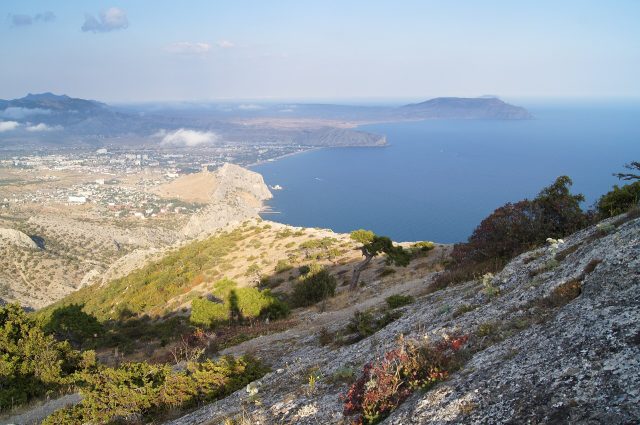
Perched on the slopes of Mount Ai-Petri, the Vorontsov Palace in Alupka feels like a place where time has settled into stillness. Unlike fortresses or grand public buildings, this palace was never meant to impress with power or scale. It was built as a private retreat, a personal vision of harmony between man and nature. Count Mikhail Vorontsov, who commissioned its construction in the mid-19th century, wanted more than just a home—he sought a sanctuary where architecture and landscape could exist as equals. The result is a place that feels intimate, almost secretive, as if the walls themselves are keeping the stories of those who once lived here.
The palace’s architecture is a deliberate blend of styles, a conversation between eras and cultures. At first glance, the main building resembles a medieval castle, with its pointed arches and battlements. But look closer, and the details reveal a different story. The intricate wooden ceilings, the mosaic floors with their elaborate patterns, the delicate ironwork—all hint at influences far beyond Europe. There’s something almost playful in how these elements coexist, as if the architect couldn’t decide between Gothic grandeur and Moorish elegance and chose both. Inside, the rooms feel lived-in, not just preserved. Original furniture, paintings, and even personal belongings of the Vorontsov family remain, turning each space into a snapshot of the past. The library, with its thousands of books, and the winter garden, filled with exotic plants, suggest a household that valued both intellect and beauty.
The park surrounding the palace is as much a part of its identity as the building itself. Designed alongside the structure, it was crafted with the same care, blending natural beauty with deliberate artistry. Winding paths lead to viewpoints overlooking the Black Sea, while hidden grottos and small waterfalls add a sense of mystery. One of the most striking features is the Great Chaos—a natural formation of boulders that was incorporated into the landscape as if it had always been part of the design. In summer, the park is a lush, green world; in autumn, it glows with golden hues. Even in winter, when the trees are bare, the place retains a quiet magic, as if waiting for spring to return.
The palace has witnessed much of Crimea’s history. Russian emperors, writers, and artists have walked its halls, each leaving their mark. Alexander II stayed here during his visits to the peninsula, and in Soviet times, the building became a retreat for the political elite. During World War II, it survived bombardment, though not unscathed. After the war, it was restored and opened to the public as a museum. Today, the rooms still carry the echoes of their past inhabitants, from the clink of tea cups in the drawing room to the rustle of papers in the study. It’s easy to imagine the conversations that once filled these spaces—discussions of politics, art, or the latest news from St. Petersburg or Paris.
Visiting the Vorontsov Palace is less about ticking off a tourist attraction and more about stepping into another era. There’s no rush here, no crowds jostling for the best view. The silence of the park, the slow pace of a stroll through the rooms, the distant sound of the sea—all combine to create a sense of timelessness. Early mornings or late afternoons are the best times to visit, when the light is soft and the palace feels almost private. Standing on one of the terraces, looking out over the coastline, it’s not hard to picture the Vorontsovs doing the same, perhaps discussing the day’s events or simply enjoying the view.
The palace is more than just a historical monument; it’s a testament to an era when Crimea was a haven for Russia’s creative and aristocratic circles. Pushkin, Chekhov, and Gorky all spent time here, each drawn to its unique atmosphere. Pushkin mentioned Alupka in his letters, while Chekhov, who lived nearby, often retreated to the park to write in peace. Today, the palace remains a living space, hosting exhibitions, concerts, and even weddings. Yet its greatest charm lies in its unchanging beauty—a place where the past feels present, not as a relic, but as something still alive.
If you find yourself in Yalta, resist the urge to head straight to the beach. Instead, take the time to visit the Vorontsov Palace. Walk through its park, linger under the ancient trees, and let the place reveal itself slowly. This is what draws people to Crimea—not just the sun and the sea, but the sense of history that lingers in the air. The palace doesn’t demand attention; it simply exists, offering something different to each visitor. And perhaps that’s its greatest gift—the ability to make you feel, just for a moment, as if you’ve stepped into a story that’s still being written.