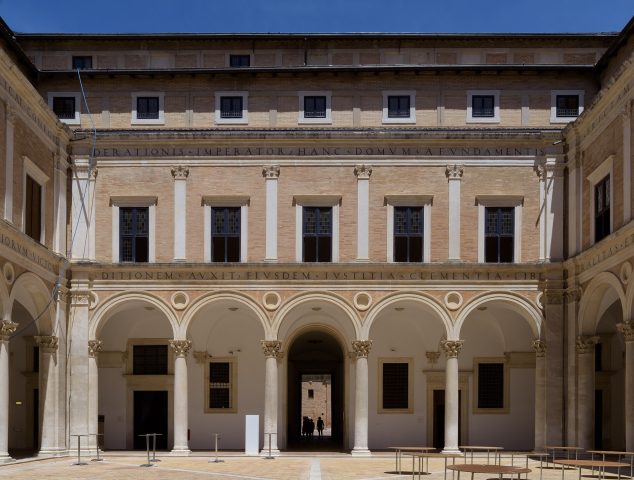
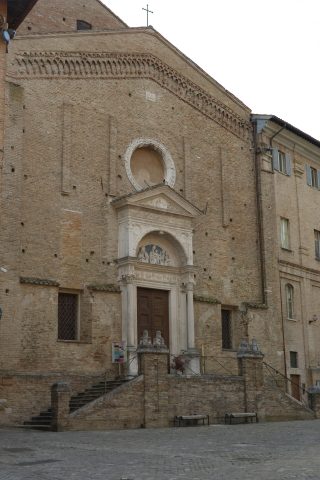
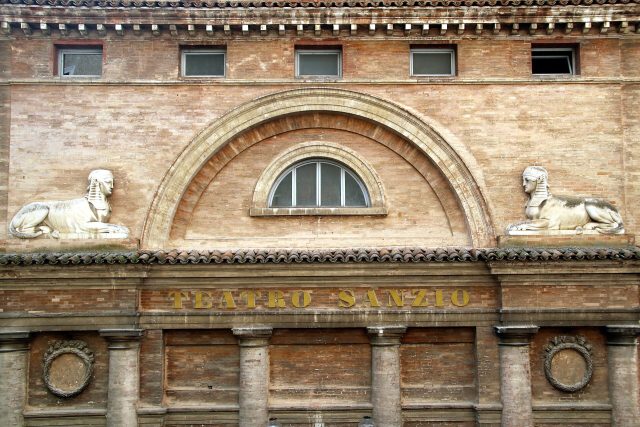
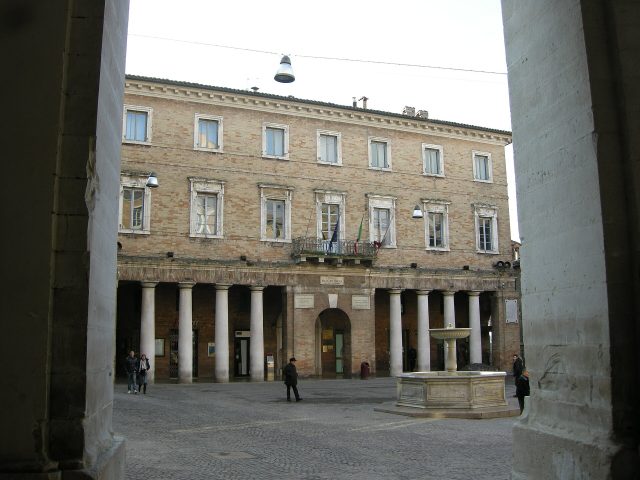
In the quiet heart of Urbino, there’s a place where time seems to slow down. The Alley of Girolamo Gigi begins at the foot of the hill crowned by the Ducal Palace, winding along the ancient city walls before descending toward the valley. The narrow path is lined with cypress trees and low stone parapets, offering glimpses of the rolling green hills of Le Marche at every turn.
This alley is named after Girolamo Gigi, a local artist and architect from the 16th century whose work, though less celebrated than that of Raphael or Bramante, left a subtle mark on the city. It was Gigi who designed this path as a place for contemplation and leisure, a retreat where Renaissance nobles and scholars once strolled, debating philosophy or simply savoring the view. The stone steps lead downward, past the old city gates that once welcomed merchants, with the pale walls of the Ducal Palace on one side and terraced vineyards on the other.
The light here changes with the seasons. In spring, almond trees bloom along the path, their delicate blossoms softening the rugged stone. Summer brings relief from the heat, the cypress trees casting long shadows that make the alley feel like a cool corridor. Autumn turns the vineyards into a patchwork of gold and crimson, while winter wraps the scene in a quiet mist, lending the place an almost dreamlike quality.
During the Renaissance, such spaces were more than just scenic walkways. They were where ideas were exchanged, deals were struck, and courtiers escaped the intrigues of the palace. Today, the Alley of Gigi remains a place where history isn’t confined to museums but lives in the very fabric of the city. The worn stones underfoot, the weathered parapets, the way the light filters through the trees—all of it carries the weight of centuries.
From the highest point of the alley, the entire old town unfolds below: the labyrinth of narrow streets, the piazzas, the domes of churches. Beyond the city walls, the valley stretches out, dotted with farms and vineyards where wine is still made using age-old methods. Look closely, and you might spot traces of the past—fragments of Roman roads, the crumbling remains of medieval towers, or the ruins of long-abandoned monasteries half-hidden in the greenery.
The alley has its own rhythm. In the mornings, locals walk their dogs along the path, while students gather on the parapets for impromptu picnics. In the evenings, elderly residents sit on the benches, watching the sunset paint the hills in shades of pink and gold. There’s no grand spectacle here, just the quiet persistence of a place that has seen generations come and go.
What makes this alley special isn’t any single feature, but the way it invites you to pause. In a world that moves too quickly, it offers a reminder that beauty often lies in the simplest things—the play of light on stone, the scent of damp earth after rain, the rustle of cypress branches in the wind. It doesn’t demand attention; it simply waits, patient and unchanging, for those who choose to notice.
If you find yourself in Urbino, don’t rush straight to the palace or the cathedral. Take a moment to walk this alley first. It won’t give you a history lesson or a list of must-see sights, but it will tell you something deeper about the city—something that lingers long after you’ve left.