
Ulaanbaatar
Mongolia · 30 places
Photo: Orgio89, CC BY-SA 4.0
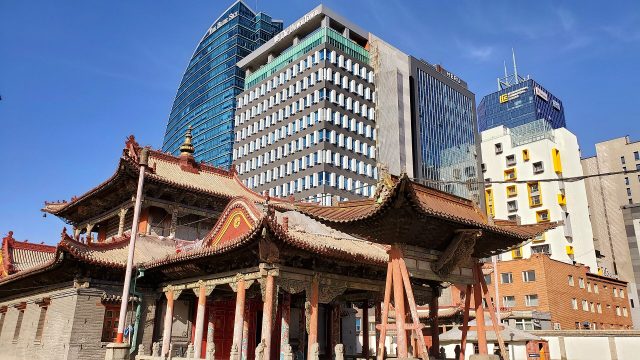
Ulaanbaatar is a city that doesn’t reveal itself at first glance. It’s not the kind of capital you find in glossy brochures, with polished boulevards and centuries of history neatly arranged in museum halls. Instead, it feels like a place caught between moments—where Soviet-era buses rumble past gleaming SUVs, where the scent of grilled meat and fermented mare’s milk drifts through bustling markets, and where the air hums with the quiet, relentless pulse of change. The city sprawls across a valley framed by low mountains, and if you climb one of the surrounding hills, you’ll see a sea of gers pressed between Soviet-style apartment blocks, as if two eras decided to coexist without bothering to blend.
The story of Ulaanbaatar begins with nomads who, for once, chose to stay. In the 17th century, a Buddhist monastery took root here, and over time, a trading settlement grew around it. For centuries, the city—then called Urga—served as the winter camp for Mongol khans, a crossroads where caravans from China and Russia converged. By the early 20th century, it had become the capital of an independent Mongolia, and under Soviet influence, it transformed into an industrial hub with factories, wide avenues, and monuments to revolutionary leaders. Today, traces of that era linger in the city’s orderly habits—traffic lights, sidewalks, even a single metro line that, against all odds, runs smoothly. But beneath the surface, the old rhythms persist: the clatter of hooves on dirt roads, the murmur of prayers in temples, the unhurried pace of a culture that has spent millennia on the move.
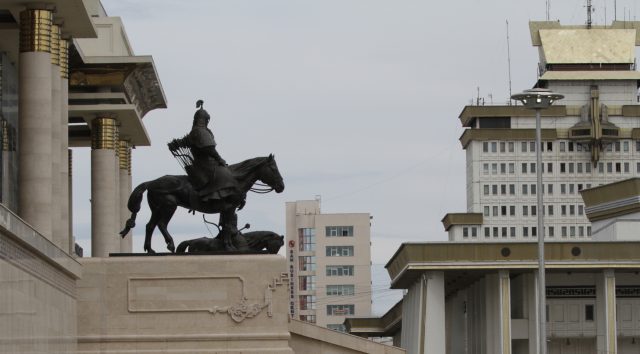
Life in Ulaanbaatar moves at its own tempo, unhurried but never dull. Mornings begin with the deep tones of prayer wheels spinning in monasteries and the honking of cars weaving through the streets. By midday, Sukhbaatar Square fills with students debating over textbooks, old men hunched over chessboards in the open air, and visitors puzzling over the looping script of Mongolian signs. As evening falls, the city shifts again—gers glow with warm light, families gather around stoves, and the sound of throat singing spills from restaurants. It’s a place where Europe and Asia, past and present, collide without fanfare. Step into one of the city’s museums, and you’ll find artifacts that tell of Genghis Khan’s empire, Buddhist rituals, or the Soviet years, each layer adding to the sense that this is a city built on stories, not just streets.
Ulaanbaatar doesn’t cater to tourists in the way other capitals do. There are no luxury hotels with flawless service, no polished tourist trails. Instead, you’ll find simple guesthouses with views of bustling streets or quiet courtyards where laundry flaps in the breeze. The food is hearty and unpretentious—steamed dumplings called buuz, sizzling lamb, salty milk tea, and airag, the fermented mare’s milk that locals drink as much for tradition as for taste. The city isn’t overrun with visitors, which means you can wander without the sense of being on a conveyor belt. It’s messy, sometimes chaotic, but that’s part of its charm. There’s no pretense here, just the raw, unfiltered rhythm of a place that has always been a crossroads.
Beyond the city limits, the landscapes that draw travelers to Mongolia unfold in all their vastness. An hour’s drive takes you to Gorkhi-Terelj National Park, where jagged rock formations rise from the steppe and wild horses graze against a backdrop of endless sky. Stay overnight in a ger, and you’ll fall asleep to the sound of wind howling across the plains. Ulaanbaatar is also the gateway to the Gobi Desert, where dunes stretch beside rocky plateaus, and to the boundless steppes where herds of sheep and camels dot the horizon. The city doesn’t try to be beautiful—it simply is, alive and unapologetic, a place where the past and present coexist in a way that feels both ordinary and extraordinary.
See & Do
30 places





Places on the map
Marker colour follows the categoryClimate and weather
Detailed weather: Ulaanbaatar- Average temperature
- 0 °C
- Precipitation per year
- 301 mm
- Sunshine hours per day
- 8.3 h
Average air temperature
°C
-23
-17
-4
4
10
17
19
16
11
0
-12
-21
Jan
Feb
Mar
Apr
May
Jun
Jul
Aug
Sep
Oct
Nov
Dec


