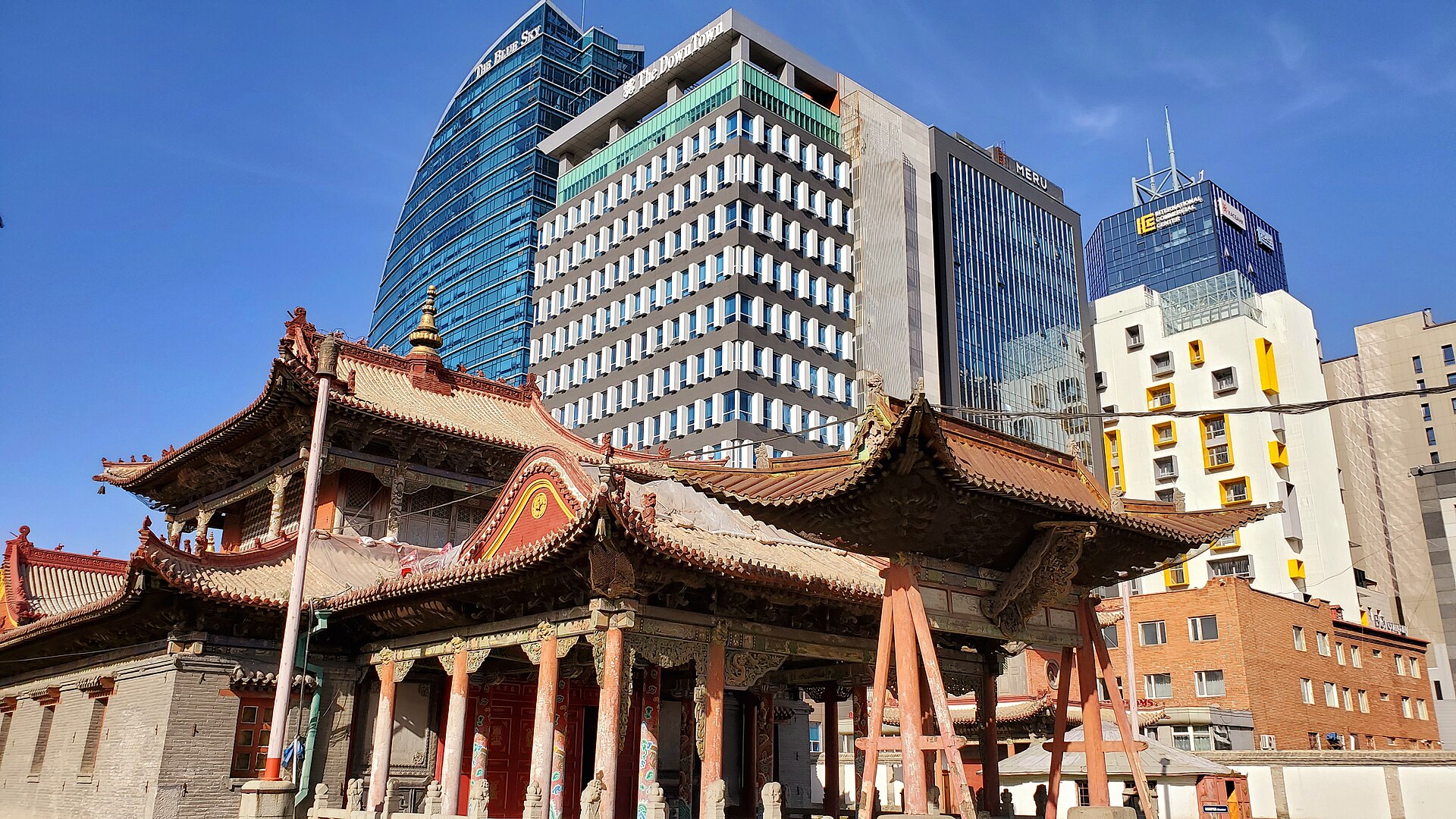
In the heart of Ulaanbaatar, where the city’s modern pulse beats strongest, there’s a place where time seems to slow. The Choijin Lama Temple Museum isn’t just another historical site—it’s a quiet witness to Mongolia’s spiritual past, a fragment of a world that once thrived behind these walls. Built in the early 20th century, the temple complex was more than a place of worship; it was a center of learning, prophecy, and ritual, where the line between the sacred and the everyday blurred.
The temple was commissioned by the eighth Bogd Gegeen, Mongolia’s last theocratic ruler, for his younger brother Luvsankhaidav, a revered seer whose predictions shaped the decisions of both commoners and nobility. Completed in 1908, the complex became a hub of Buddhist scholarship and mysticism. Lamas here weren’t just religious figures—they were advisors, healers, and keepers of ancient knowledge. Their influence extended beyond the temple’s gates, making this place a cornerstone of pre-revolutionary Mongolian society.
Architecturally, the temple blends Mongolian and Tibetan styles, a reflection of the broader cultural exchange that defined Buddhism in the region. The main building, modest in scale but rich in detail, is surrounded by smaller structures, each serving a specific purpose in the temple’s rituals. Inside, the air is thick with the scent of aged wood and incense, though the latter now lingers only in memory. The walls are adorned with vibrant murals depicting Buddhist deities and scenes from the life of the Buddha, their colors still vivid despite the passage of time. Carved wooden columns, intricate roof ornaments, and the occasional flutter of prayer flags outside add to the sense of stepping into another era.
What makes the temple truly remarkable is its collection of artifacts. Among the most striking are the ritual masks, some fierce, others serene, used in ceremonies to invoke protective spirits. There are also ancient Tibetan manuscripts, their pages filled with sacred texts, and robes worn by high-ranking lamas, their fabric still holding the faintest trace of the incense that once perfumed them. One of the most revered pieces is a gilded bronze statue of Sakyamuni Buddha, its expression one of quiet compassion. Then there are the more unsettling relics—human bones used in rituals, a reminder of the temple’s role in practices that blurred the line between the living and the divine.
The temple’s history took a dark turn after the 1921 revolution, when Mongolia embraced socialism. Like many religious institutions, it was shuttered, its monks dispersed or worse. For decades, the complex stood neglected, its walls bearing silent witness to the country’s shifting fortunes. It wasn’t until the late 20th century that restoration efforts began, transforming the temple into the museum it is today. Walking through its halls now, it’s hard to imagine the fear and upheaval that once gripped this place. Instead, there’s a sense of resilience—the quiet triumph of a culture that refused to be erased.
Visiting the Choijin Lama Temple is a different experience from the crowded tourist spots elsewhere in Ulaanbaatar. There are no jostling crowds here, no hurried snapshots. The atmosphere is one of contemplation, the kind that invites you to linger over the details—the way the light filters through the windows, casting shadows on the murals, or the faint creak of the wooden floors underfoot. It’s easy to picture the temple as it once was: lamplight flickering against the walls, the murmur of prayers, the scent of burning juniper filling the air.
The temple sits just off Ulaanbaatar’s main square, yet it feels worlds away from the city’s bustle. A small park nearby offers a place to sit and reflect, its trees providing shade for locals who come to escape the noise of the streets. In the mornings, elderly men and women practice tai chi or simply stroll along the paths, their movements unhurried. The contrast between the temple’s stillness and the city’s energy is striking, as if this small patch of land exists in its own time.
Today, the temple serves as more than just a museum. It’s a living space for cultural preservation, hosting exhibitions on Buddhist art, lectures on religious history, and workshops where visitors can try their hand at traditional Mongolian painting. For many Mongolians, the temple is a touchstone of national identity, a reminder of a time when spirituality was woven into the fabric of daily life. Even for outsiders, it offers a glimpse into a world where faith wasn’t just a personal matter but a guiding force for an entire society.
There’s something deeply human about the way the temple has endured. In an age where traditions often feel fragile, the Choijin Lama Temple stands as proof that the past isn’t so easily discarded. It’s all there—the craftsmanship, the stories, the quiet dignity of a place that has seen empires rise and fall. And perhaps that’s the real reason to visit: not just to see history, but to feel its weight, to understand that some things, no matter how much the world changes, refuse to fade away.