
Entebbe
Uganda · 4 places
Photo: Sarah Nakaweesi, CC BY-SA 4.0
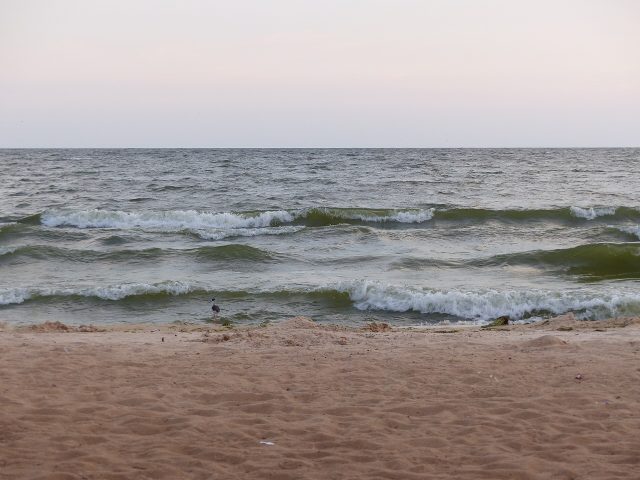
Entebbe feels like a place where two worlds meet without quite merging. To the south, Lake Victoria stretches out, its vast waters catching the light like a sheet of hammered silver. It’s the largest lake in Africa, the second-largest freshwater lake in the world, and from Entebbe’s shores you can watch the sun rise over its distant, hazy edges. To the north, the land rises into savannah, where acacia trees stand like sentinels and the occasional elephant or giraffe moves between the heat shimmers. The town itself sits on a peninsula, its streets winding toward the water, where fishing boats bob at anchor and men mend nets in the shade of mango trees. There’s no rush here, no skyline of glass and steel—just the slow rhythm of a place where the day begins with the call of fish eagles and ends with the lake turning gold at dusk.
Once the capital of Uganda, Entebbe still carries the quiet elegance of its colonial past. The streets are narrow, lined with low-slung houses draped in bougainvillea, their verandas shaded by jacaranda trees. Old government buildings, with their high ceilings and wide porches, stand as relics of British rule, their faded grandeur softened by time. The former governor’s residence, now the president’s official home, dominates a hill overlooking the lake, its white columns and manicured gardens a reminder of another era. Nearby, the Entebbe Botanical Gardens—one of the oldest in East Africa—offer a cool retreat beneath towering fig trees, where monkeys chatter in the branches and butterflies drift between the flowers. The gardens are also a haven for birdwatchers, with species flitting through the undergrowth that you won’t find anywhere else in the country.
History lingers in Entebbe, sometimes quietly, sometimes dramatically. In 1976, the town became the stage for one of the most daring hostage rescues in modern memory, when Israeli commandos stormed a hijacked plane at the airport, freeing passengers held by militants. A small memorial near the runway marks the event, though for most locals, Entebbe’s past is woven into everyday life. Fishermen haul in their catch at dawn, children play on the sandy beaches, and in the evenings, families gather along the waterfront to talk and watch the sunset. On weekends, the town comes alive with the hum of markets, where vendors sell everything from fresh mangoes and fiery red chilies to handwoven baskets and carved wooden masks. The coffee here is strong and dark, grown on the slopes of nearby hills, and it’s best enjoyed slowly, with no particular place to be.
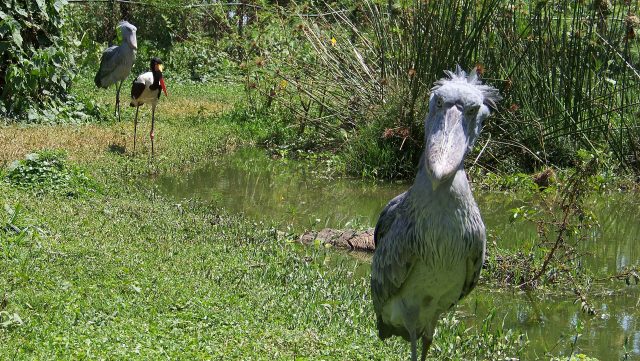
For many travelers, Entebbe is just a stopover on the way to Uganda’s famous national parks, where gorillas and chimpanzees live in misty forests. But the town itself is a gateway to wildlife in its own right. Just a short drive from the center, the Uganda Wildlife Education Centre offers a glimpse of animals that have been rescued from poachers or displaced by human settlement. Lions pace behind enclosures, leopards nap in the shade, and rhinos—including the rare southern white rhino—graze on the grass. The center isn’t a zoo; it’s a place where injured or orphaned animals are rehabilitated, and where visitors can walk along trails that wind through thickets alive with birdsong. Entebbe is a paradise for birders, with species like the shoebill stork and the great blue turaco making appearances in the wetlands and forests around the lake.
Despite its proximity to nature, Entebbe isn’t stuck in the past. There are universities and hospitals, restaurants serving everything from Ugandan stews to Italian pasta, and even a few small galleries showcasing local art. Yet it retains the feel of a town where people know their neighbors, where life moves at the pace of the lake’s gentle waves. That’s probably why so many visitors end up staying longer than they planned. Entebbe doesn’t dazzle you all at once. It unfolds slowly, like a story you want to savor, where each day brings something new—whether it’s the sight of a kingfisher diving into the water, the taste of fresh passion fruit juice at a roadside stall, or the quiet pleasure of watching the sun dip below the horizon from a lakeside bench.
See & Do
All of them

Places on the map
Marker colour follows the categoryClimate and weather
Detailed weather: Entebbe- Average temperature
- 23 °C
- Precipitation per year
- 1454 mm
Average air temperature
°C
23
24
24
23
23
23
23
22
23
23
23
23
Jan
Feb
Mar
Apr
May
Jun
Jul
Aug
Sep
Oct
Nov
Dec


