Entebbe’s National Botanical Gardens is one of those rare places where nature doesn’t need grand gestures to make an impression. Stretching across fifty hectares along the shores of Lake Victoria, the gardens blend wild thickets, carefully tended pathways, and an extraordinary collection of plants gathered from across Uganda. Established in the early 1900s under British colonial rule, the gardens were originally intended as a scientific repository for the country’s native flora. Over time, they evolved into something far more inviting—a place where visitors can wander, observe, and simply exist alongside the birds, butterflies, and small creatures that call this green expanse home.
Entebbe itself is a town shaped by its surroundings, quiet and unhurried, its rhythm set by the lake’s gentle waves. The botanical gardens feel like a natural extension of the town, a seamless transition from urban life to something wilder and more serene. There are no crowds here, even on weekends, and it’s easy to find a secluded spot where the only sounds are the rustling of leaves and the distant call of a bird. The paths wind beneath towering trees, their canopies offering shade even in the midday heat, while smaller trails meander through ferns and flowering shrubs. During the rainy season, the gardens come alive in a burst of color, the air thick with the scent of damp earth and blossoms.
One of the gardens’ most striking features is its collection of orchids, gathered from Uganda’s forests and highlands. Many of these delicate flowers thrive here in the humid climate, carefully nurtured by the staff. Some species are so rare they can only be found in these gardens, drawing botanists from around the world. But even for those who don’t consider themselves plant enthusiasts, the sight of orchids clinging to branches or pushing through the undergrowth is mesmerizing. Nearby, other unusual plants grow in abundance—giant fig trees with aerial roots that twist toward the ground, or towering palms that sway in the breeze.
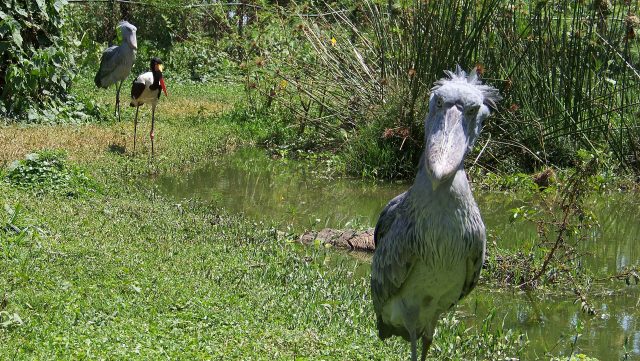
The gardens are as much a haven for wildlife as they are for plants. Uganda is home to over a thousand bird species, and many of them can be spotted here. Brightly colored weavers dart between the branches, their intricate nests hanging like ornaments, while the long-tailed turacos flash through the treetops. Chameleons blend into the foliage, and small lizards scuttle across the paths. Along the lake’s edge, pelicans and herons occasionally appear, wading through the shallows in search of fish. For birdwatchers, the gardens offer a quiet, unhurried setting where hours can pass unnoticed as you listen to the chorus of calls and the whisper of leaves.
The history of the gardens is deeply tied to Uganda’s botanical and agricultural development. During the colonial era, the site served as both a research center and a testing ground for crops that would later become staples of the local economy, like coffee and tea. After independence, the gardens came under Ugandan management, and today they continue to play a role in conservation efforts. Some sections of the gardens are designed to mimic the country’s diverse ecosystems, from dense rainforests to open savannas, offering visitors a glimpse of Uganda’s natural variety without leaving Entebbe.
A walk through the gardens is also a chance to experience the unhurried pace of life in this lakeside town. There are no rigid routes here—visitors are free to explore at their own pace, whether that means strolling along the main avenue that leads to the lake or venturing into the wilder, more tangled parts of the gardens. The shoreline of Lake Victoria is lined with sandy stretches where locals sometimes gather for picnics or to relax after work. The water is warm, though swimming isn’t always advisable due to strong currents, so most people come simply to enjoy the view of the vast lake, which stretches out like an inland sea.
Unlike many tourist attractions, the botanical gardens don’t cater to visitors with cafes, gift shops, or entertainment. There’s nothing here but the land itself and the people who come to spend time in it. Entry is inexpensive, with the small fee going toward maintenance. The staff work quietly, tending to the plants and keeping the paths clear without disrupting the natural atmosphere. Occasionally, school groups or university students visit for guided tours, learning about the significance of the plants and the ecosystems they represent. But more often than not, the gardens remain a peaceful retreat, a place where you can wander without purpose and let the surroundings dictate the pace.
For travelers who come to Uganda seeking more than just safaris and mountain gorillas, the botanical gardens offer a different kind of experience. There are no dramatic landscapes or exotic wildlife here, but there is something just as valuable: a sense of stillness and connection to the natural world. It’s a place where time seems to slow down, where you can sit on a bench and watch sunlight filter through the leaves, or follow the flight of a butterfly as it flits between flowers. Perhaps that’s why the gardens are so beloved by locals—they serve as a reminder that beauty doesn’t need to be loud or extravagant. Sometimes, it’s enough to simply stand beneath the trees and listen.