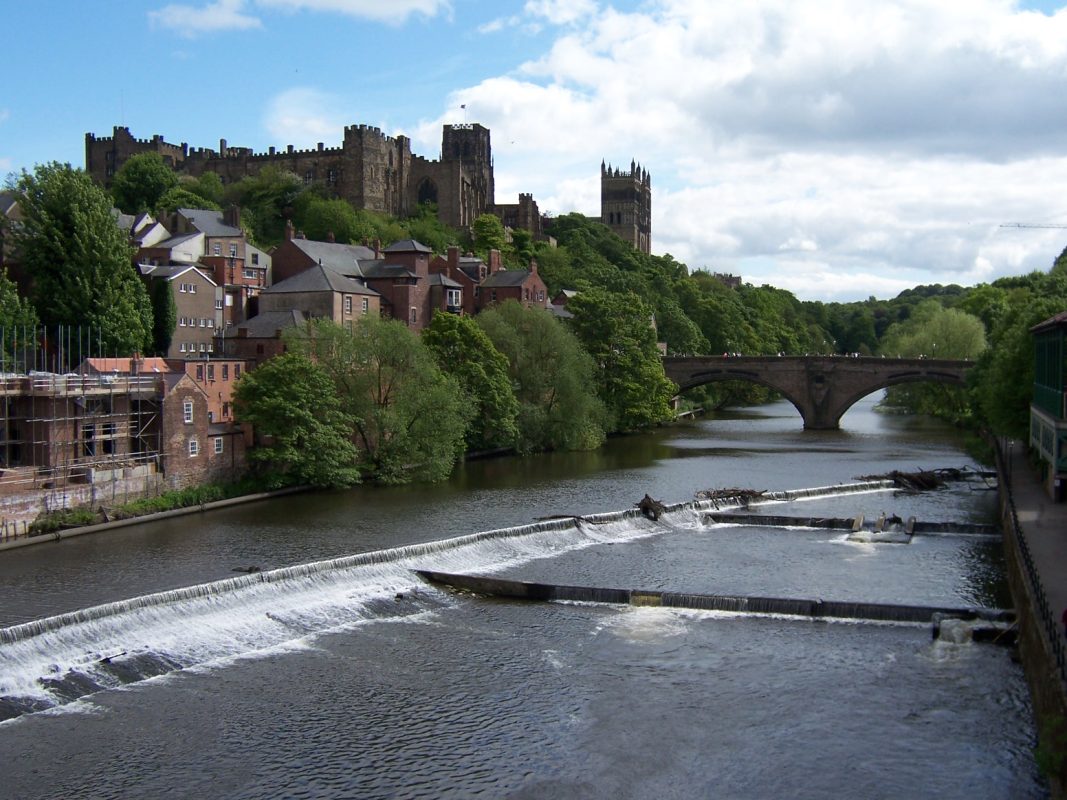
Weather overview
Durham’s weather follows the classic rhythm of northern England, with mild summers and cool, damp winters. The city rarely sees extremes, but the seasons bring noticeable shifts in daylight and conditions. January and February are the coldest months, while July and August offer the warmest days, though even then temperatures stay modest.
Rainfall is spread across the year, but Durham tends to be driest in February and wettest in July. The city’s mix of historic charm and green spaces means weather plays a role in how you explore—whether wandering the cathedral grounds or strolling along the River Wear. Packing layers is always a good idea, as even summer evenings can feel cool.
Sunshine hours vary widely, from just over two hours a day in December to more than ten in June. This makes late spring and early summer the most pleasant time for outdoor activities, though Durham has its own quiet appeal in autumn, when the surrounding countryside turns golden.
Temperature
Temperatures in Durham hover around +3.6 °C in January, the coldest month, with occasional frosts at night. By April, the city warms up to +7.7 °C, and by June, daytime highs reach +18.1 °C. The peak of summer, July and August, sees averages of +15.3 °C, though heatwaves can push temperatures higher for short spells.
Even in summer, nights in Durham can be chilly, with lows around +11.8 °C in July. The transition into autumn is gradual, with September still feeling mild at +13 °C, but by November, temperatures drop back to +6.3 °C. Snow is rare, but frost becomes more common as winter approaches.
The narrow range between seasonal highs and lows means Durham doesn’t experience dramatic temperature swings. Instead, the city’s climate is defined by steady, moderate changes, making it a place where a light jacket is useful year-round.
| Month | Minimum | Maximum |
|---|---|---|
| January | 1.4 | 6 |
| February | 3 | 8.2 |
| March | 2.8 | 9.4 |
| April | 4.2 | 11.4 |
| May | 7.8 | 15.5 |
| June | 10.3 | 18.1 |
| July | 11.8 | 18.9 |
| August | 11.9 | 19 |
| September | 9.9 | 16.5 |
| October | 7.6 | 13 |
| November | 3.9 | 8.7 |
| December | 3.8 | 8 |
Precipitation
Rainfall in Durham is fairly consistent, with no month completely dry. February is the driest, with around 44 mm of rain, while July is the wettest at 111 mm. The city sees rain on roughly half the days of the year, though downpours are usually light and short-lived.
Autumn brings the most persistent wet weather, with October and November each recording around 90 mm of precipitation. Even in summer, Durham can have rainy spells, particularly in July, so carrying a compact umbrella is wise. The city’s humidity stays high year-round, averaging 82%, which can make damp days feel cooler than the thermometer suggests.
Despite the rain, Durham rarely feels gloomy for long. The city’s mix of indoor attractions—like its cathedral and museums—and outdoor spaces means there’s always an alternative if the weather turns. Waterproof footwear is a practical choice, especially if you plan to explore the countryside or riverside paths.
| Month | Precipitation |
|---|---|
| January | 78 |
| February | 44 |
| March | 67 |
| April | 74 |
| May | 65 |
| June | 61 |
| July | 111 |
| August | 66 |
| September | 100 |
| October | 97 |
| November | 92 |
| December | 96 |
What to pack
For a trip to Durham in winter, pack warm layers, including a waterproof coat, gloves, and a scarf. Temperatures in January and February often dip near freezing, and the wind can make it feel colder. A sturdy pair of shoes will help navigate wet pavements and occasional frost.
Spring and autumn in Durham call for versatile clothing. A light jacket or fleece is useful for March and April, while September and October may require an extra layer for cooler evenings. Waterproof outerwear is still a good idea, as rain showers can occur at any time.
Summer visitors to Durham should bring light, breathable fabrics for daytime, but also a sweater or cardigan for evenings. While July and August can reach +19 °C, nights often cool down to +11.9 °C. A compact umbrella or rain jacket will prepare you for the occasional summer shower, and comfortable walking shoes are a must for exploring the city’s cobbled streets and hills.
| Month | Wind speed | Direction |
|---|---|---|
| January | 3.4 | 244 |
| February | 2.5 | 228 |
| March | 1.5 | 214 |
| April | 0.7 | 210 |
| May | 0.5 | 327 |
| June | 2 | 240 |
| July | 2 | 253 |
| August | 2.7 | 227 |
| September | 1.4 | 220 |
| October | 2.1 | 227 |
| November | 2.2 | 245 |
| December | 3 | 231 |