Dar es Salaam
Tanzania · 7 places
Photo: Arnold Tibaijuka, CC BY-SA 4.0
Dar es Salaam moves to its own rhythm, a city that refuses to fit neatly into expectations. It’s not the kind of African capital you might imagine—no grand boulevards or meticulously preserved historic districts—but neither is it a sleek, modern metropolis of glass towers. Instead, it sprawls in a way that feels organic, almost accidental. The streets hum with the scent of spices mingling with diesel fumes, colonial-era buildings stand shoulder to shoulder with crumbling shacks, and the port, always restless, sends ships out into the Indian Ocean. There’s no performance here, no attempt to impress visitors. The city simply exists, and that’s what makes it compelling.
Founded in the mid-19th century as a small fishing village, Dar es Salaam’s fortunes changed when its natural harbor drew traders from across the region. Arab merchants were the first to recognize its potential, followed by the Germans, who made it the capital of their East African colony. After World War I, the British took over, leaving their own imprint on the city’s architecture, language, and culture. Walk through the streets today, and you’ll still find traces of each era: German villas with intricate balconies, British administrative buildings with their colonial grandeur, and mosques adorned with traditional Arabic designs. But more than anything, Dar es Salaam owes its identity to the port, one of the busiest in East Africa, the lifeblood of Tanzania’s trade.
Officially, the capital moved to Dodoma in the 1970s, but Dar es Salaam remains the country’s beating heart. Banks, corporate offices, and markets cluster here, while the roads pulse with traffic, a tangle of cars, buses, and motorbikes. The city grows without a master plan, new neighborhoods sprouting on the edges while the center strains under the weight of its own energy. Yet this chaos is part of its charm. One moment, you’re passing a woman in a vibrant kanga, the next, a businessman in a sharp suit. Street vendors sell fried plantains beside upscale restaurants with ocean views. Locals call it simply *Dar*, a nickname that carries warmth, as if the city were an old friend.
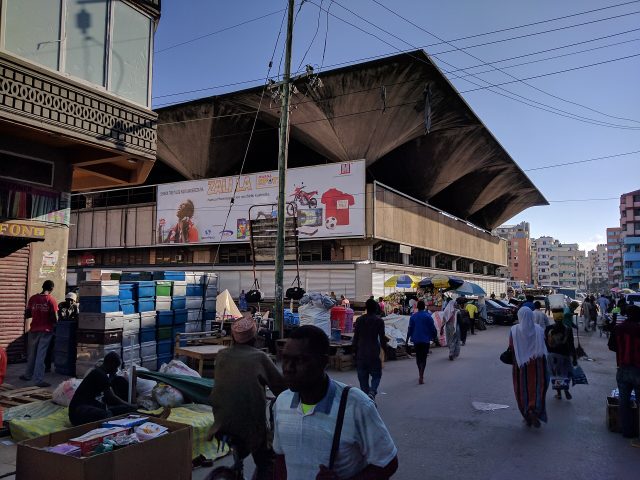
Markets are where Dar es Salaam truly comes alive. Kariakoo, the largest, is a sensory overload—stalls overflowing with fresh fruit, spices, fabrics, and handmade crafts. Haggling is expected, conversations flow freely, and chai is sipped between deals. Then there’s the fish market by the shore, where the day’s catch arrives at dawn and is gone by noon. Unlike the polished tourist spots of Zanzibar, there’s no pretense here, just the raw, unfiltered rhythm of daily life. When the noise becomes too much, the beaches of Kunduchi or Mbezi offer a quiet escape, where the ocean meets white sand and fishermen mend their nets in the shade.
There are no must-see landmarks here, no grand monuments drawing crowds. What Dar es Salaam offers instead is something harder to define—a feeling, a pulse. It’s in the unhurried Swahili conversations drifting from open-air cafés, the music spilling onto the streets, the way the city exhales as the sun dips below the horizon. It’s not a place that tries to be beautiful; it just is. And sometimes, that’s enough.
See & Do
7 places



Places on the map
Marker colour follows the categoryClimate and weather
Detailed weather: Dar es Salaam- Average temperature
- 27 °C
- Precipitation per year
- 1398 mm
- Sunshine hours per day
- 7.4 h
Average air temperature
°C
28
29
28
27
26
25
24
25
25
26
27
28
Jan
Feb
Mar
Apr
May
Jun
Jul
Aug
Sep
Oct
Nov
Dec