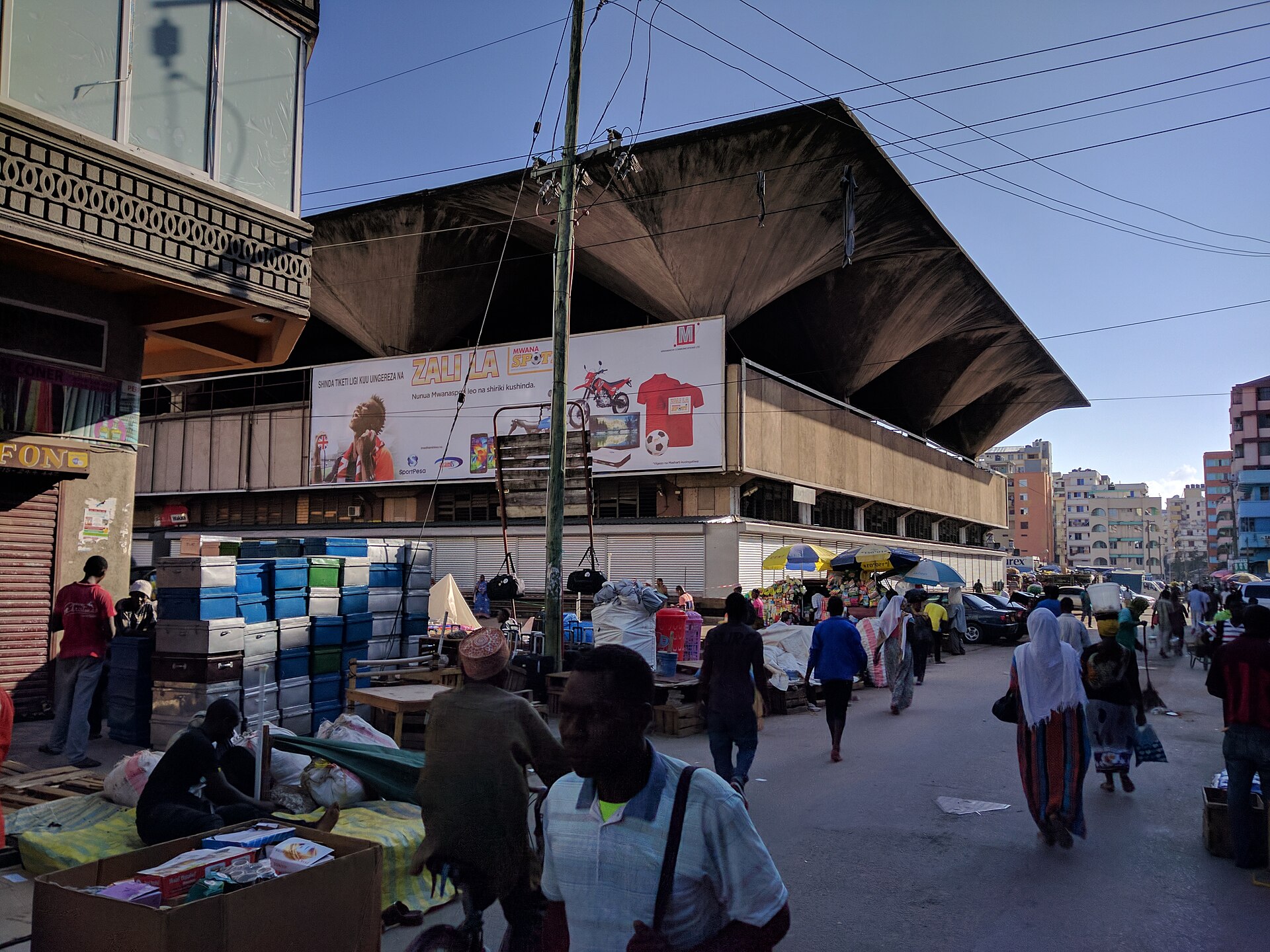
Kariakoo Market is one of those places where Dar es Salaam feels most alive—not in the polished way of a postcard, but in the raw, unfiltered rhythm of daily life. Tucked into the heart of the city, this sprawling market has been a cornerstone of local trade for decades, long before the glossy malls and air-conditioned supermarkets arrived. It’s where the pulse of the city beats strongest, where the scent of spices mingles with the hum of bargaining voices, and where every corner tells a story of necessity, ingenuity, and the quiet resilience of ordinary people.
The market’s origins trace back to the early 20th century, when Dar es Salaam was still a modest port town under German colonial rule. Back then, Kariakoo was little more than a cluster of stalls where farmers and fishermen brought their goods to sell. The name itself is said to come from a British military camp that once stood nearby, though the exact details have faded with time. What hasn’t faded is the market’s role as a lifeline for the city. After independence, as Dar es Salaam grew into Tanzania’s commercial hub, Kariakoo expanded with it, absorbing waves of rural migrants who came seeking work and a foothold in the urban economy. Today, it’s one of the largest open-air markets in East Africa, a maze of narrow alleys and towering stalls where nearly everything imaginable is bought and sold.
Walking through Kariakoo is like stepping into a living organism. The market is divided into sections, each with its own character. Near the entrance, the air is thick with the aroma of fresh produce—mounds of ripe mangoes, bunches of plantains, and sacks of rice and maize that have traveled from farms across the country. Vendors call out prices in Swahili, their voices rising above the clatter of metal basins and the occasional bleat of a goat being led through the crowd. Further in, the stalls shift to household goods: plastic basins, enamel pots, and stacks of brightly colored kitenge fabric, the wax-print cloth that’s a staple of East African fashion. Here, the bargaining is more intense, the negotiations a dance of offers and counteroffers that can last several minutes.
One of the most striking things about Kariakoo is how it reflects the resourcefulness of the city. In a place where many people live on modest incomes, the market is a testament to making do with what’s available. You’ll find stalls selling second-hand clothes, their racks crammed with faded jeans and worn-out sneakers that have been shipped in from overseas. Nearby, repairmen sit at tiny workbenches, fixing everything from broken sandals to old mobile phones with a roll of duct tape and a screwdriver. There’s a sense that nothing is wasted here—if something can be reused, repurposed, or repaired, it will be. Even the market’s architecture speaks to this pragmatism. The main building, a concrete structure with a high, arched roof, was built in the 1970s to bring some order to the chaos. Yet the stalls spill out onto the surrounding streets, where vendors set up makeshift tables or simply lay out their goods on a piece of cloth, adapting to the space they have.
For all its hustle, Kariakoo isn’t just a place of commerce. It’s also a social hub, where people come not just to shop but to connect. In the early mornings, before the heat sets in, groups of women gather to buy ingredients for the day’s meals, their conversations weaving through the market’s noise. Older men sit on wooden stools, sipping tea from chipped mugs as they watch the world go by. On weekends, the market takes on a different energy, with families browsing the stalls, children darting between the crowds, and the occasional street musician adding a soundtrack to the scene. There’s a sense of community here, a shared understanding that this is a place where everyone, regardless of background, comes to meet their needs.
The market’s significance goes beyond its economic role. Kariakoo has been a witness to some of Dar es Salaam’s most pivotal moments. During the socialist era of the 1960s and 70s, when Tanzania’s government sought to build a self-reliant economy, the market became a symbol of the country’s push for local production. Stalls that once sold imported goods were encouraged to stock locally made alternatives, from handwoven baskets to homemade soap. Even today, you’ll find artisans selling traditional crafts alongside mass-produced items, a reminder of the country’s enduring connection to its cultural roots. More recently, Kariakoo has been at the center of debates about urban development, as the city grapples with how to modernize without erasing the places that give it character. Plans to redevelop the market have been met with resistance from vendors who fear losing their livelihoods, a tension that underscores how deeply intertwined Kariakoo is with the lives of those who depend on it.
Visiting Kariakoo can be overwhelming at first. The sheer scale of the market, the density of the crowds, and the intensity of the bargaining can feel like sensory overload. But those who take the time to wander without a fixed agenda often find it rewarding. There’s a certain thrill in getting lost in the labyrinth of stalls, in stumbling upon a hidden corner where a woman is roasting maize over an open flame or a group of men are playing a game of bao, the traditional board game that’s a favorite pastime in East Africa. The market doesn’t cater to tourists—there are no guided tours or glossy brochures—but that’s part of its charm. It’s a place where the city reveals itself on its own terms, unfiltered and unapologetic.
Of course, Kariakoo isn’t without its challenges. The market’s popularity means it’s often crowded, and the narrow alleys can feel claustrophobic, especially during peak hours. The infrastructure, while functional, is showing its age, with uneven pavement and the occasional power outage. And like any large market, it has its share of petty crime, so visitors are wise to keep an eye on their belongings. But these are minor inconveniences compared to the market’s larger role as a microcosm of Dar es Salaam itself. It’s a place where the city’s contradictions—its poverty and its vibrancy, its tradition and its modernity—coexist side by side.
For those who want to experience Dar es Salaam beyond the beaches and the safari brochures, Kariakoo is essential. It’s not a place for passive observation; it demands engagement, whether that means striking up a conversation with a vendor, sampling a piece of fresh coconut from a street-side cart, or simply standing back and watching the ebb and flow of people. The market doesn’t offer the comforts of a curated experience, but it does offer something rarer: a glimpse into the everyday lives of the people who make the city what it is. In a world where so many places are being homogenized by globalization, Kariakoo remains stubbornly, defiantly itself—a reminder that the soul of a city isn’t found in its landmarks, but in the places where its people gather to live, work, and dream.