Tokyo for the First Time: District Itinerary

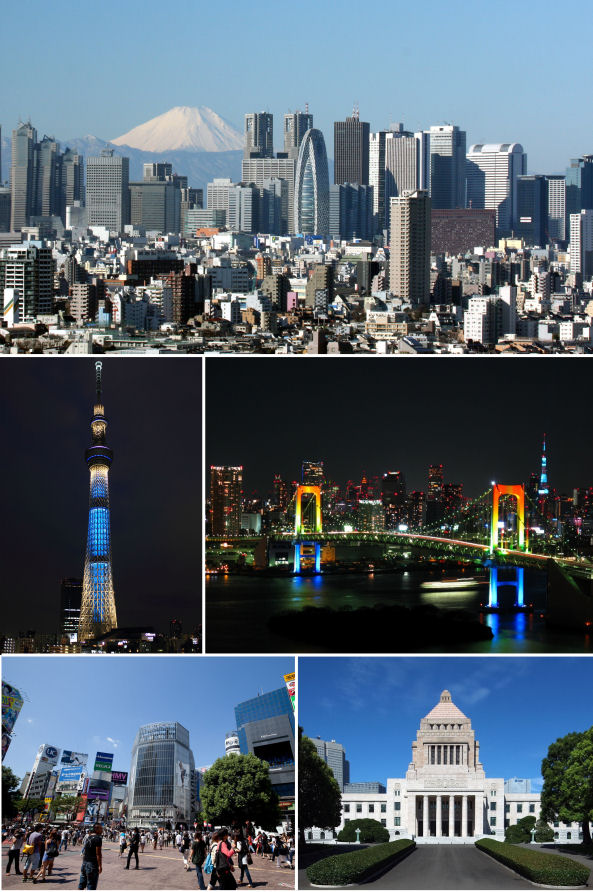
Photo: MatthiasKabel, CC BY-SA 3.0
Logistics and Transport Before Starting
First, figure out movement.
Tokyo is divided into many lines owned by different companies. There is the metro, there are JR city trains, there are private lines. For a tourist, it is most convenient to use a contactless Suica or Pasmo card. It is purchased at a machine at the station. You apply it to the turnstile on entry and exit. The system calculates the cost of the trip itself. This eliminates the need to buy paper tickets for each segment of the journey.
Navigation in the city is built around large hubs. Tokyo Station, Shinjuku, Shibuya, Ueno — these are huge transport hubs. They can have dozens of exits. Before leaving the train, look at the diagram above the door. Find the exit number you need. If you choose the wrong exit, you will have to go up to the surface and go down again, which takes time. During rush hours, morning and evening on weekdays, the cars are completely full. At this time, it is better to avoid trips if you have no urgency. The Internet works stably. Renting a pocket Wi-Fi or buying a SIM card for tourists is solved at the airport upon arrival. Without a map on your phone, it is difficult to navigate, as signs at stations can be small, and line names similar. The map application shows not only walking routes, but also the car number where it is better to sit for a quick exit to the transfer.
Asakusa and Sensoji Temple
Start getting to know the city here.
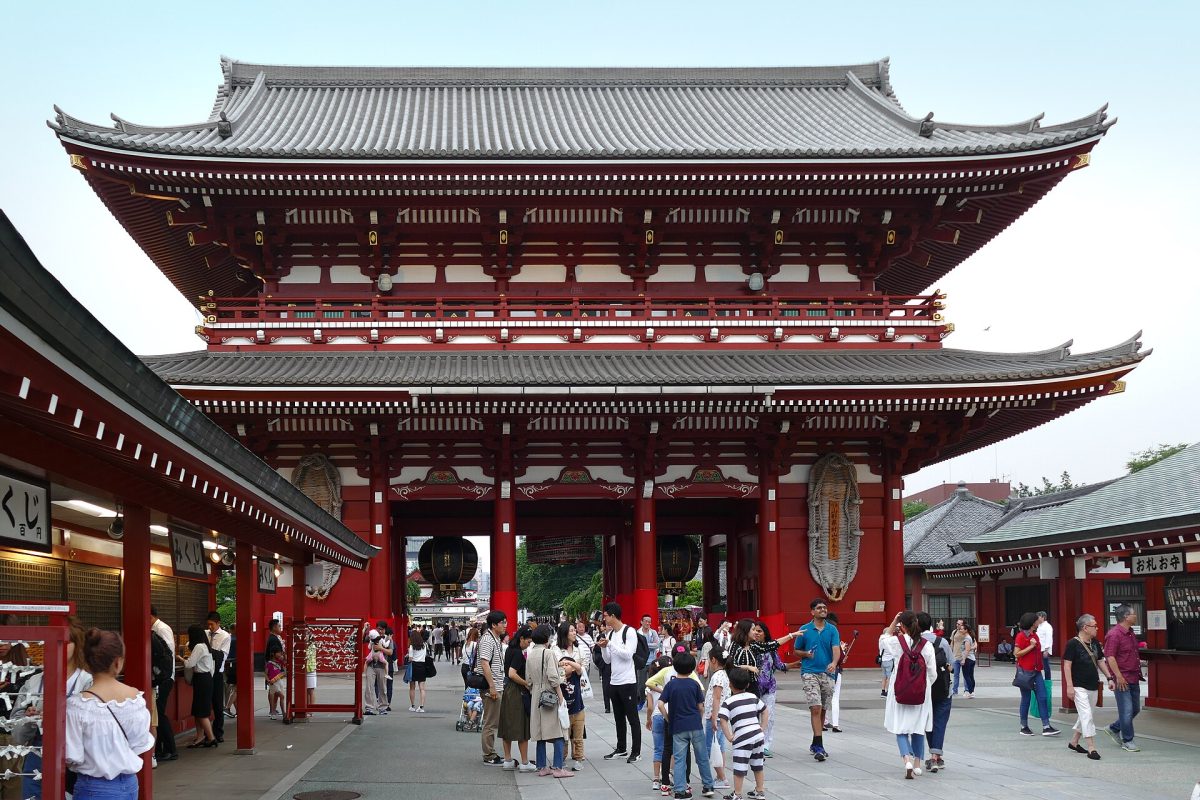
Buildings from the last century have been preserved here. Narrow streets create the feeling of an old city. The main point of attraction is Sensoji Temple. You will get there through the Kaminarimon Gate. A huge red lantern hangs on them. This place is often photographed, so there are many people here during the day. If you come early in the morning, before tourist groups arrive, it will be quieter.
After the gates begins Nakamise shopping street. It leads straight to the main hall of the temple. Stalls stand on the sides. Traditional sweets, fans, kimonos and souvenirs are sold here. You can try fried buns or rice crackers on the go. Although eating on the go is not customary in some places, it is common here. Reaching the temple, you will see a five-story pagoda. It stands to the left of the main hall. In the hall itself, you can pray. For this, incense is purchased in a machine nearby. They are lit and placed in a special container. The smoke is considered cleansing.
Asakusa District is not limited to the temple. There are old restaurants around specializing in tempura and unagi. Buildings here are lower than in the center. The view of the sky is open. It is convenient to get to other points from here. Asakusa Station is served by several lines, which gives flexibility in the route. After inspecting the temple, you can walk to the Sumida River. The bridge across it leads to other districts. A walk along the water takes about half an hour. You will see the city development from a different angle.
Akihabara: Technology and Culture
It is easy to get from Asakusa to the Akihabara district. This is the center of electronics and anime culture. The streets here are straight, built up with multi-story buildings. Household appliance stores are located on the first floors. Above are stores with figures, games and comics. Buildings can have ten or more floors, each dedicated to a separate category of goods. If you are not interested in technology, the area is still worth seeing. Windows glow even during the day. In the evening, neon signs create a bright picture.
Specialized cafes are located here. There are establishments where waitresses are dressed in maid costumes. There are floors dedicated to retro games. You can find consoles and cartridges that have not been produced for decades. Prices vary. New items cost the same as in other places. Used items are valued by condition. The stores are many years old, some have been operating since the middle of the last century. This place shows the technological side of the city. After walking, you can have a snack in one of the restaurants on the upper floors of the buildings. From there, a view opens onto the intersections and trains passing on the overpass.
Imperial Palace and Marunouchi
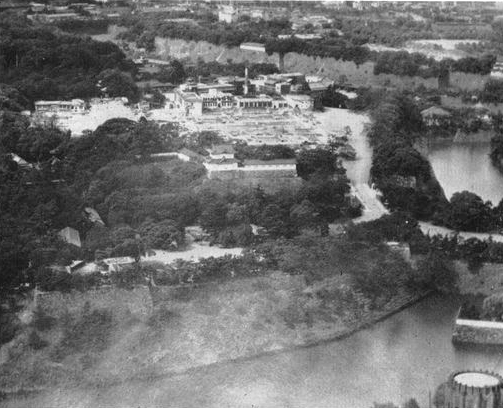
The central part of the city is occupied by the Imperial Palace in Tokyo. The territory is closed for free access. Only family members and staff can live inside. However, the outer gardens are open to visitors. The entrance is located near Tokyo Station. You need to register at the entrance. The walk takes place along a certain route. You will see old walls, moats with water and bridges. The stone in the wall masonry has a specific shape. This is done for stability during earthquakes.
The business district of Marunouchi is located around the palace. Buildings here are strict, made of glass and concrete. On weekends, part of the streets are closed to cars. Pedestrians occupy the roadway. This time is convenient for walking from the palace to the station. Tokyo Station building itself is an attraction. It is built of red brick. In the evening, the lighting changes the color of the facade. Inside the station there are shopping rows with souvenirs and food. You can buy a box with bento for the trip.
Ginza and Tsukiji Market
From Tokyo Station it is a few minutes walk to the Ginza district. This is an area of expensive shops and department stores. Buildings are massive. Brands occupy entire blocks. On weekends, the main street becomes pedestrian. Cars do not pass. People walk in the center of the road. Here you can look at the architecture of buildings from different years. There are modern glass boxes, there are old stone facades. Department stores work until late evening. Restaurants are located on the upper floors. The view from the window onto the intersections is interesting in the evening when the illumination turns on.
Nearby is the Tsukiji Market. The internal wholesale market moved to another place several years ago. The external market remained in the same place. Seafood and kitchen accessories are traded here. Knives, dishes, packaging — all this can be bought in specialized shops. Food is bought and eaten immediately. Sushi, oysters, omelets with seafood are sold in small windows. Queues move quickly. The place is narrow, there are many people. It is better to come in the morning, while the choice of products is maximum. By lunchtime, many popular points close or sell out the goods.
Nearby is located Hamarikyu Garden. This is an old park on the bay shore. Inside there is a pond with seawater. The water level changes with the tides. There is a tea house in the garden. You can go inside, order tea and sweets. The view of the garden from the terrace of the house is calm. It is quiet here, despite the proximity of skyscrapers. The walk takes about an hour. This is a good place to rest from the noise of Ginza.
Shibuya and Shibuya Crossing
This intersection is known throughout the world. When the traffic light switches, car traffic stops. Thousands of people cross the road from all sides simultaneously. The best view of this action opens from the second floor of the Starbucks opposite the station or from the observation decks of neighboring buildings. The intersection itself is located at the exit from the station. Nearby stands the statue of the dog Hachiko. This is a meeting place. People wait for each other at the monument.
Shopping centers are located around the intersection. They are high, with escalators inside. Clothing stores are aimed at young people. Prices are different, there are budget chains and expensive boutiques. In the evening, the district does not sleep. Bars and restaurants work until night. The streets are narrow, densely built up. If you go up above the first floors, you can find small establishments with local cuisine. The district is noisy. If you do not like crowds, spend time here in the evening, when the lights burn brighter, but the movement becomes slightly less dense.
Meiji Shrine and Park Around
From Shibuya you can walk to the Harajuku district and further to the entrance to the park. There is Meiji Shrine. The entrance is marked by huge wooden torii gates. They stand among the trees. The park is an artificial forest. Trees were planted long ago, crowns have closed. It is quiet inside. Asphalt is replaced by gravel. The crunch of stones underfoot is heard well. The main building of the shrine is hidden behind trees. To get to it, you need to walk several hundred meters.
Wedding ceremonies are often held here. Processions in traditional clothes pass along the paths. You can photograph them, but without flash and without blocking the path. The territory is large. You can walk for a long time. The exit from the park leads in different directions. One road leads back to Shibuya, the other — to the Shinjuku district. This is a convenient transition between the noisy center and a quiet zone. On weekends there are many locals with children here. They play on playgrounds or just walk.
Tokyo Tower and Zojo-ji Temple
The red Tokyo Tower is visible from many points of the city. Closest to it is Zojo-ji Temple. This is an operating temple of the Jodo sect. Buildings are dark, contrast with the bright tower in the background. There is a cemetery on the temple grounds. It is well-groomed. Monuments stand in rows. The tower rises directly behind the temple walls. This creates an unusual frame: ancient gates and a modern steel structure.
You can go up the tower. There are two observation decks. One lower, the other higher. Tickets are purchased at the box office at the entrance. Queues can be long, especially on weekends. A view opens onto the city. In clear weather, Mount Fuji is visible. However, often the city is covered by haze or clouds. If the goal is just to see the tower, it is better to look at it from below. In the evening it is illuminated. The color changes depending on the season or event. Nearby there is a shopping complex with restaurants and an aquarium.
Tokyo Skytree TV Tower and Sumida District
Tokyo Skytree TV Tower is located in the Sumida district. It is higher than Tokyo Tower. The structure is modern, white with blue elements. A huge shopping complex is located under the tower. Shops, restaurants, planetarium. You need to go up to the observation deck in advance. Tickets may be sold out for several days in advance. The view from here covers most of the region. You can see the bends of the river and the location of districts.
Around the tower, the district was built recently. Streets are wider than in the old center. There are channels. A walk along the water is pleasant. Bridges across channels have different designs. Some are drawbridges. The schedule needs to be clarified on site. There are fewer historical buildings in this area, more modern architecture. If you have already been to Tokyo Tower, the choice depends on which view you are more interested in. Skytree gives a view further, Tokyo Tower is located closer to the center.
Ueno Park and Museums
Ueno district is concentrated around the station. Here is Ueno Park. This is a large green zone. Ueno Zoo and Tokyo National Museum are located inside. The zoo is known for pandas. The queue to the enclosure can take time. Other animals are kept in standard conditions. The park is popular in spring. During cherry blossom flowering, tents are set up here. People eat and drink under the trees. At other times of the year, they just walk here.
Tokyo National Museum stores a collection of art and artifacts. There are several buildings. The main building is dedicated to the history of Japan. There are galleries with paintings and sculptures. You need to allocate several hours for inspection. Exhibitions change. Before visiting, it is worth checking the website for temporary exhibitions. Nearby there are other smaller museums. They are dedicated to science, Western art, culture of Asian peoples. If you love museums, you can spend a whole day here. Food is available in cafes on the park territory.
Tokyo Metropolitan Government Building Observation Deck
In the Shinjuku district stands the metropolitan government building. These are two skyscrapers. The Tokyo Metropolitan Government Building Observation Deck is located on the upper floor. Entrance is free. This is a rarity for a city where views are usually paid. The elevator ride is fast. There is a cafe and a souvenir shop on the floor. A view opens to the west and east. On a clear day in the evening, city lights are visible to the horizon. If you are lucky, Mount Fuji is visible.
The building works until late evening. You can come after dinner. The Shinjuku district around is very active. Many bars, restaurants, hotels. Streets labyrinthinely go to the sides from the station. There are quarters with nightlife. There are quiet residential streets. The contrast is noticeable immediately. The government building serves as a landmark. It is visible from many points of the district. If you are lost, find the tower with your eyes and move towards it.
Ghibli Museum and Surroundings
The Ghibli Museum is not in the center, but in the city of Mitaka. This is a separate trip by train. Tickets to the museum are purchased in advance. They are sold out quickly. Without a ticket, you will not be allowed inside. The building is decorated in the style of cartoons. You cannot take photos inside. The exposition shows the process of creating animation. There are models, sketches, tools. A robot from the film stands on the roof. There is a park around the museum. You can walk after visiting.
A trip here requires planning. You need to allocate half a day. The road from the center takes about an hour one way. If you are not a fan of animation, priority can be given to other places. But for fans of the studio, this is an important point. Tickets are sold through terminals or online. The system is complex for foreigners, it is better to study the instructions in advance. The surroundings of Mitaka are quiet, residential. Cafes near the museum are thematic.
Mori Art Museum and Roppongi District
In the Roppongi district is the Mori Towers skyscraper. Inside is the Mori Art Museum. The contemporary art exhibition changes regularly. Artists from all over the world present works. After inspecting the exhibition, you can go up to the observation deck of the same building. The view of the city from here is different than from the towers. You are among skyscrapers. Tokyo Tower is visible like a model nearby.
Roppongi district is known for nightlife and embassies. Streets are guarded. There are many foreign cuisine restaurants here. Prices are above average. In the evening, the district comes alive. If you plan dinner after the museum, it is worth booking a table. Walking around the district is safe. Lighting is good. Transport runs frequently. This is a convenient point for ending the day in the center.
Kabukiza Theatre
In the Ginza district is the Kabukiza Theatre. The building is new, the old one burned down several years ago. The facade has preserved traditional elements. Performances go on inside. Shows last long. There is an opportunity to buy a ticket for one act. This is cheaper and takes less time. The language of the performances is Japanese. There are screens with English subtitles. Costumes are bright, makeup is complex. Plots are based on history or legends.
The building also works as a shopping center. Souvenirs related to the theater are sold on the floors. Masks, dolls, postcards. You can go inside without a ticket to the performance. The foyer is decorated in a traditional style. Ceilings are painted. Stairs are wide. If there is no time for the performance, inspecting the building will take half an hour. This shows the cultural side of the Ginza district, in addition to shopping.
Honest Opinion: What Can Be Skipped
Do not try to see everything in one trip. The city is large. If you are traveling with children — skip this point: Shinjuku night districts can be too noisy and tiring for small tourists. Also, do not waste time looking for the internal Tsukiji market. It is not in the old place. The external market is interesting, but it is small. If you do not plan to buy knives or eat raw fish in the morning, you can limit yourself to lunch in a restaurant in another place.
Climbing all observation decks at once makes no sense. Choose one. If you want for free — go to the government building. If you want higher — Skytree. If you want classics — Tokyo Tower. Views are similar, the difference is in the angle. Kabuki is interesting, but if you do not know the language and are not ready to sit for several hours, a ticket for one act may not meet expectations. It is better to watch a recording online in advance to understand the format.
Rules of Conduct and Etiquette
In trains, it is customary to be silent. Phone conversations are prohibited. The phone is put on silent mode. Laughing loudly or discussing the route is not worth it. Trash is not thrown on the street. There are few bins. A bag with trash is carried with you to the hotel or store. In stores, they are polite. Staff bows. A nod is enough in response. Tips are not accepted. They may not even be taken. The price on the tag is final.
In temples, behave quietly. Do not enter closed zones. Photograph only where there are no prohibiting signs. Queues are observed strictly. Do not push in the metro. If you drop something, you will be helped to pick it up. The city is safe. Things can be left on the table in a cafe when you go for a refill. However, vigilance should not be lost. In the crowd at the Shibuya crossing, it is easy to lose companions. Agree on a meeting place in advance.
Seasonality and Weather
Summer is hot and humid. Air conditioners work everywhere. The temperature difference between the street and the room is large. Take a light sweater. Rains are frequent. An umbrella is better to buy on site. It is compact and cheap. In spring there are many tourists due to flowers. In autumn, foliage changes color. Ueno and Meiji parks are beautiful during these periods. In winter it is cold, but snow is rare. Clothing should be layered.
During typhoon season, trains may be canceled. Watch the forecast. If a storm is announced, stay in the hotel. Stores may close earlier. Transport is restored quickly, but delays are possible. Insurance should cover flight cancellations. Pharmacies work long. Medicines are sold without a prescription. Staff speaks basic English. Tablets are packaged conveniently, there are instructions in English.
Money and Payment
Cash is still needed. In small shops, ticket machines and some restaurants, cards are not accepted. ATMs in 7-Eleven stores accept foreign cards. The rate is favorable. You can change money at the airport, but the rate there is lower. Visa and Mastercard cards work widely. American Express is accepted less often. Contactless payment by phone does not work everywhere. Suica card is linked to the phone, but not all models support this function.
Keep receipts. In some stores, you can arrange a tax refund for tourists. A passport is needed. The purchase amount must exceed a certain threshold. Goods are packed in a special package, which cannot be opened before leaving the country. The procedure takes time at the cashier. If the queue is large, it is easier to refuse. Refund is made at the airport or immediately in the store.
Communication and Applications
Without the Internet it is difficult. Maps load slowly. Roaming is expensive. It is better to buy a SIM card or Wi-Fi router. Free Wi-Fi is available at stations and in cafes, but the connection is unstable. Translation applications work well. The phone camera translates text in real time. This helps in menus and on signs. The navigator shows the train arrival time with accuracy to the minute. Delays are rare.
There are applications for ordering taxis. Cars are expensive. Boarding costs a lot, each kilometer adds an amount. Drivers are in white gloves. Doors open automatically. You need to sit in the back seat. Baggage is helped to load. Tips are not given. If you need to go far at night, a taxi is more convenient than the metro, which closes around midnight.
Food and Restaurants
Restaurants often have machines at the entrance. You buy a food ticket, give it to the waiter. Menu with pictures. This simplifies ordering. In sushi bars, plates move on a conveyor. The color of the plate indicates the price. The check is counted at the end. In ramen shops, there are few places. They eat quickly. Standing in line is normal. Tasty places are popular. Water in restaurants is served for free. Lots of ice in the glass. Tea is green, without sugar.
Breakfast at the hotel often includes Japanese dishes. Rice, soup, fish, pickles. You can try local cuisine immediately. In supermarkets, discounts on ready-made food in the evening. Stickers on the package indicate the percentage of reduction. Quality does not suffer. This is a way to save on dinner. Alcohol is sold in stores until late evening. Beer is everywhere. Strong drinks in specialized departments.
Accommodation and Districts
Hotel choice depends on the budget. In Shinjuku and Shibuya it is noisy, but convenient. In Ueno it is quieter, cheaper, near the park. In Ginza it is expensive, but prestigious. In Asakusa it is atmospheric, but further from the center. Capsule hotels offer minimal space for sleep. Shower is shared. Suitable for one night. Business hotels are small, but clean. The room accommodates a bed, table and bathroom. There is nowhere to open a suitcase.
You need to book in advance. During holidays, prices rise. Check-in is strictly on time. Early check-in is paid. Checkout before lunch. Luggage can be left at the reception for free. If the hotel is far from the station, clarify the path. In narrow streets, the navigator may lead through private property. It is better to go along the main road. Taxi drivers will help with luggage to the door.
Final Route Touches
The city does not require haste. It is better to see less, but understand the rhythm. In the morning parks are empty. In the evening lights burn brightly. Lunch on weekdays is cheaper. Dinners on weekends are noisy. Move along lines. Do not try to cross the whole city in an hour. Distance is deceptive. Close on the map, in fact — an hour journey with transfers. Rest in cafes. Watch people. They are dressed neatly. Movements are calm.
Remember station names. They are written in hieroglyphs and Latin. Line color helps to navigate. If you are tired, sit in a train and ride a circle on the ring line. You will see the city from the window. This is also an excursion. Get off where you like the view. Random finds are often more interesting than the plan. A tea shop, a knife store, a quiet temple around the corner. Tokyo consists of such details.


