St. Petersburg in Three Days: A Route You Can Actually Walk

Photo: SmallSonMarex, CC0
St. Petersburg is laid out more conveniently than Moscow: almost everything people come here for fits into one oval between the Neva, the Fontanka, and Nevsky Prospect. You can walk straight through it in an hour. The problem is not distances, but that every second door on this route is a museum with a queue.
Three days is a workable timeframe. Two go to the center, one to a suburb. Trying to fit both the Hermitage, and Peterhof, and Tsarskoye Selo into such a segment is a sure way to spend your vacation on commuter trains.
Day One: Palace Square, Hermitage, Savior on the Blood
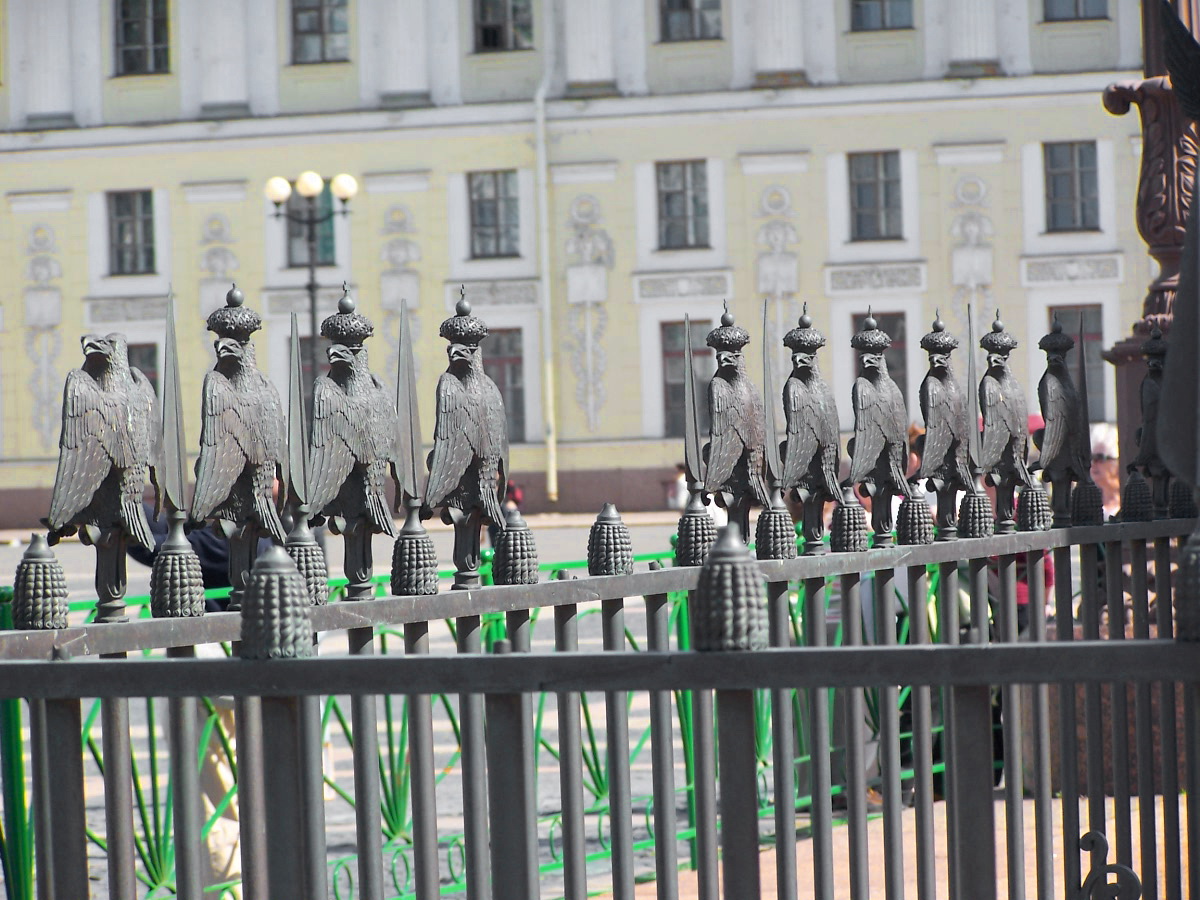
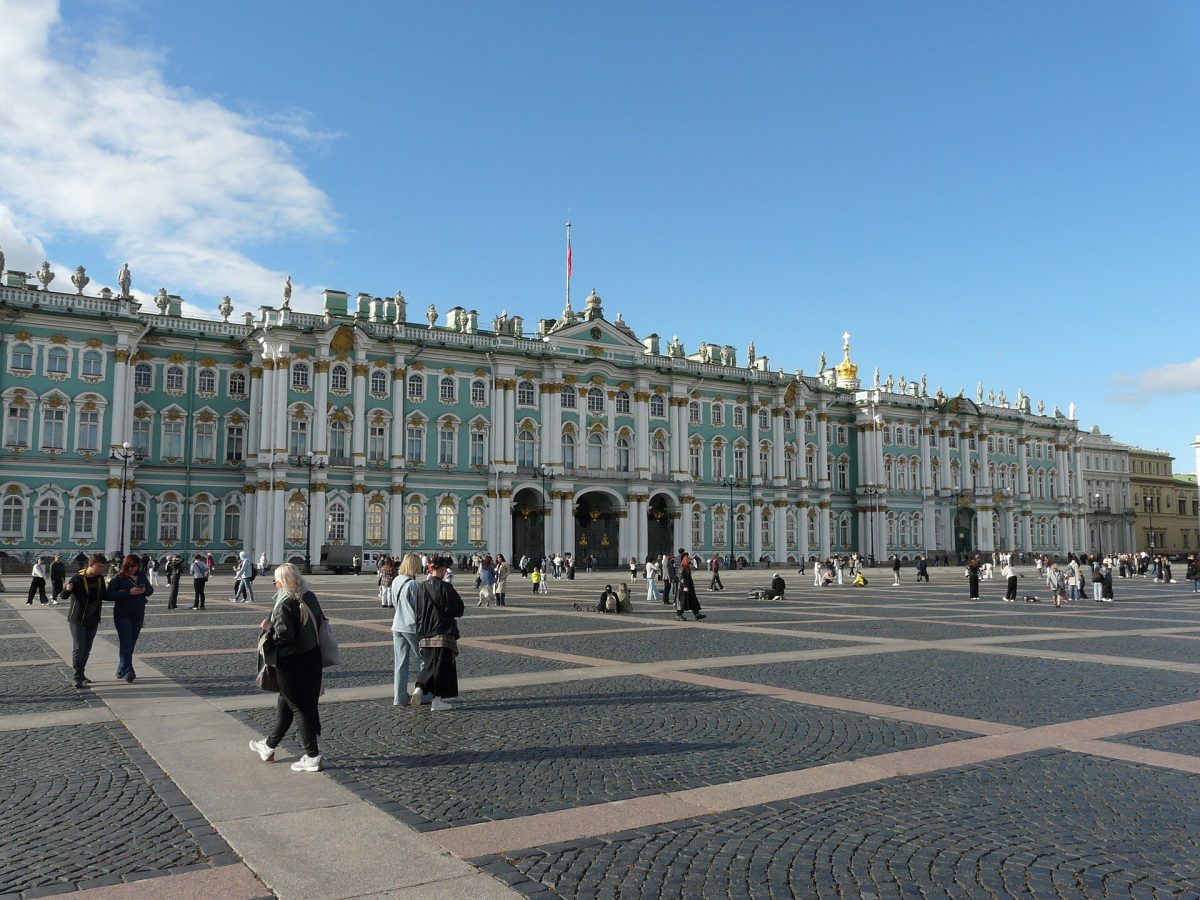
Palace Square is the place from which the city is read immediately. On one side Winter Palace, on the other the semicircle of the General Staff with an arch, in the middle Alexander Column — a granite monolith forty-seven meters high, standing without any fastening, only by weight. It was put up in one hundred minutes by the efforts of two thousand plus people, and since 1834 it has stood there.
Hermitage is taken for the morning and by ticket with a fixed time. You cannot walk around it entirely: if you linger at each exhibit for a minute, it will take several years. A reasonable approach is to choose two or three routes in advance: state halls, little Dutchmen, impressionists in the General Staff Building across the square. Many skip the latter, but there are Matisse and Picasso.
After lunch — Savior on the Blood. Outside it argues with the whole city: St. Petersburg is restrained and European, and this church is deliberately Russian, with onion domes and tiles. It was put up on the site of the assassination of Alexander II, and the section of the pavement where this happened is preserved inside under the canopy. Mosaics cover seven thousand square meters — one of the largest mosaic collections in Europe.
From there five minutes to Summer Garden and Mikhailovsky Castle, where Paul I lived for forty days and was killed. The evening can be finished on Nevsky Prospect, but not for shops, but for facades: Kazan Cathedral with its colonnade, the House of Books with the globe, the Stroganov Palace.
Day Two: Peter and Paul Fortress, Spit, Russian Museum
Peter and Paul Fortress is where the city began in 1703. It never had military significance for a single day: while it was being built, the Swedes were pushed back. But it served as a prison, and the cells of the Trubetskoy Bastion are open. In the cathedral lie all Russian emperors from Peter I to Nicholas II; the spire one hundred twenty-two meters high remains the tallest historical building in the city — new ones higher than it cannot be built in the center.
At noon a cannon fires from the Naryshkin Bastion. The tradition is more than two hundred years old, and by this shot clocks are still checked.
Across the bridge — Spit of Vasilievsky Island with Rostral Columns and the best view of the Neva in both directions. Nearby Kunstkamera, the country's first museum, founded by Peter: the collection of anatomical rarities there is exactly as they tell about it, and children are shown it at their own risk.
For the second half of the day — Russian Museum. It is noticeably calmer than the Hermitage, and the collection of Russian art is the largest in the world: "The Last Day of Pompeii", "The Ninth Wave", Vrubel's panels.
Day Three: One Suburb
Here you will have to choose. Peterhof is fountains, and they operate from the end of April to mid-October; no need to go there in winter. All one hundred fifty fountains and four cascades work without pumps, by gravity, via an eighteenth-century aqueduct. In summer it is better to get there by "Meteor" across the bay: forty minutes on water instead of an hour plus in traffic.
Tsarskoye Selo with the Catherine Palace and restored Amber Room works all year round, but tickets to the palace are snapped up weeks in advance, and the live queue in summer stands for three hours. Pavlovsk and Gatchina are quieter and freer: the palaces are more modest, but the parks are huge and there are times fewer people.
How to Understand What is Near What
The center of St. Petersburg is deceptive: points neighboring on the map may be separated by a river without a nearby bridge. For each place in the catalog, a day around it is suggested under the description — nearest points in order of visit, with distance and time. Open St. Isaac's Cathedral, and you will see what is logical to add on the same day and how much time it will cost.
Distances and time are calculated along real roads, not as the crow flies; where there is no road in the directory, the step is signed separately.
Practical
Bridge drawbridges operate from the end of April to November, approximately from one AM to five AM. If accommodation is on one side of the Neva, and the evening on the other, returning before morning won't work — the metro is already closed, and the detour via the Big Obukhovsky Bridge takes an hour.
White nights are June and early July: it never gets truly dark at all. Prices at this time are the highest, and there are the most people. May and September offer the same city cheaper and calmer, although with rain.
Everything else open in the city is collected on the St. Petersburg page.


