Moscow for the Weekend: A Downtown Route Without the Rush

Photo: E.3, CC0
Two days in Moscow is exactly enough to see the center and not hate it. The mistake almost everyone who comes for the weekend makes is the same: on Saturday they take on the Kremlin, Tretyakov Gallery, VDNH and Sparrow Hills, and by evening it turns out that half the day was spent on the metro. The city is large, and distances in it are deceptive: what seems neighboring on the map is in reality separated by a river, construction, and an underground passage for four hundred meters.
Therefore it makes sense to assemble the weekend differently: give the first day entirely to the spot around the Kremlin, the second — to Zamoskvorechye and one far trip. You will have to walk a lot, but on foot, not in a metro car.
Saturday: Kremlin, Red Square and Zaryadye
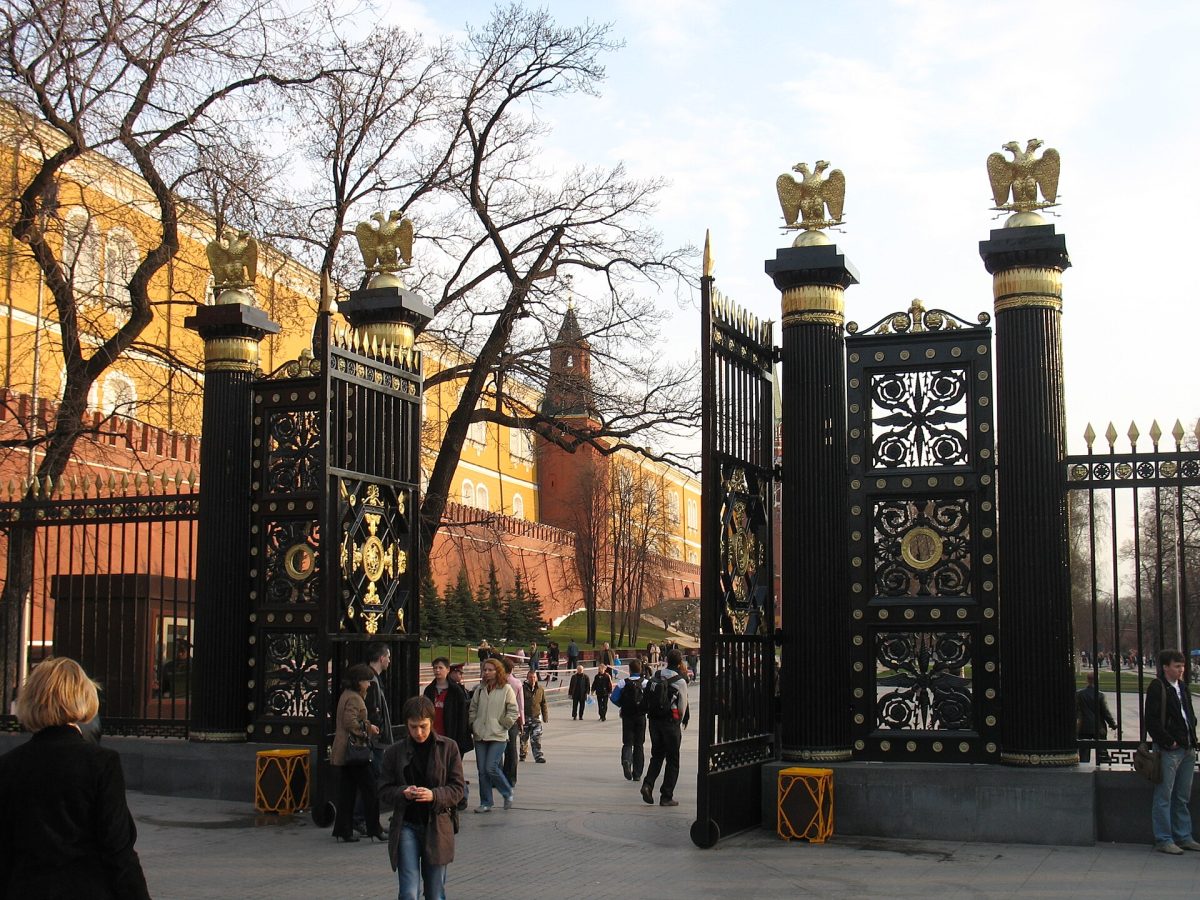
It is reasonable to start with Aleksandrovsky Garden — it opens earlier than museums, and you can calmly wait for the ticket time in it. The garden runs along the western wall, and from it you can see well how the fortress is arranged: Kutafya Tower stands separately, a bridge leads to Troitskaya over the former Neglinnaya river, tucked underground two centuries ago.
Tickets to the Kremlin itself are bought in advance and for a specific time. Cathedral Square and the Armoury Chamber — different tickets, and taking both in one day is heavy: after two hours among gold and brocade you stop distinguishing exhibits. If choosing one, Cathedral Square gives more: three cathedrals of the 15th-16th centuries stand close together, and the difference between them is visible without explanations.
Further — Red Square. It is smaller than it seems on TV: seventy thousand square meters, walked in five minutes. You need to look not around but at details: cobblestones laid in the 1930s, before this the square was paved with boulders, and even earlier — with wood. St. Basil's Cathedral inside is not at all like it looks outside: instead of a big hall — nine separate churches, connected by narrow transitions, where two people cannot pass each other.
From the square it is convenient to descend into Zaryadye. The park opened in 2017 on the site of the demolished Hotel Russia, and the main thing in it is the floating bridge: a concrete loop, extended over the Moskva River without a single support in the water. From there opens a view of the Kremlin from the side, the very one printed on postcards.
Sunday: Zamoskvorechye and one trip
The second day is better started with Tretyakov Gallery. Morning tickets are taken several days in advance, and this is the case when booking is more important than flexibility: in winter the queue for entry stands for an hour. It is not worth bypassing all halls in a row — it takes a whole day for sixty-two halls, and by the end the eye stops seeing. It is smarter to choose one: Old Russian art with Rublev's "Trinity" or the 19th century with the Peredvizhniki.
After the gallery you can just walk through Zamoskvorechye on foot. This is a rare for the center quarter where low construction is preserved: merchant houses two stories high, churches on every third crossroad, courtyards into which you can enter. From there it is half an hour to GUM and Bolshoi Theatre, if you want to return to the parade part.
For the second half of the day remains one far trip — and here you choose by interest, not by list. VDNH is Stalinist architecture and republic pavilions, it needs three hours. Novodevichy Convent — quieter, more compact and with a pond that Levitan painted. Tsaritsyno — Catherine's unfinished palace and a large park, but this is already half a day with travel.
How to assemble a day without counting distances manually
The most tiring thing in planning is to understand what is near what. On the page of any place in the catalog a day around it is suggested: nearest points in order of visit, with distance and time on the road. Opening Kremlin and Red Square, you will see what logically follows and how much it will take, — and you will be able to cut off what there is no day left for.
Travel time is counted by real roads OpenStreetMap; where they are not in the directory, step is counted straight line and signed so. This is worth keeping in mind: straight line Moscow is compact, by streets — no.
What is worth knowing in advance
Metro in the center works from half past five in the morning until one at night, and on weekends intervals are longer than weekdays. Transfer hubs like Teatralnaya and Okhotny Ryad are arranged confusingly, and transition between lines there takes up to ten minutes — not a traffic jam, this is the structure.
Lunch on Red Square and around it is expensive and mediocre. Two hundred meters in any direction — and prices drop twice: in Kamergersky, deep on Nikolskaya, in the lanes of Zamoskvorechye. The same rule works as in any tourist center of the world.
In winter in Moscow it gets dark by four, and the second half of the day is effectively evening. In summer it is light until ten, and an evening walk along the embankments — a separate reason to come. It is worth planning the weekend from this, not from the quantity of checkboxes in the list.
The full list of what is open and working is collected on the Moscow page — with a map, categories and a filter by what is interesting exactly to you.


