Irkutsk and Baikal: Three-Day Itinerary

Photo: Unknown authorUnknown author, Public domain
You exit the airport building. A suitcase in hand, a calendar open on the phone, marking exactly seventy-two hours until the return flight. The city greets you with wind that pierces even a dense jacket. The question is sharp: how to distribute this time to see the main things, without galloping through museums and without missing the lake for wooden lace on the facades. Many tourists make the mistake of trying to embrace the unembracable, and end up remembering neither one nor the other. This plan is compiled so that you move logically, without extra transfers and taking into account the real state of streets and attractions.
The first day is dedicated to a walking tour of the historical center. Here the concentration of old buildings is maximum. It is best to start with 130th Quarter (Irkutsk Sloboda). This is not just a point on the map, but a restored district where examples of wooden architecture are collected. A walk here sets the tone for the entire journey. You will see carved window frames that masters carved manually more than a century ago. The pattern on each house differs. Somewhere these are simple geometric figures, somewhere complex plant ornaments. Pay attention to the color of the walls. Often houses are painted in bright tones to protect the wood from moisture and sun, but the initial intent was in the natural texture of the wood.
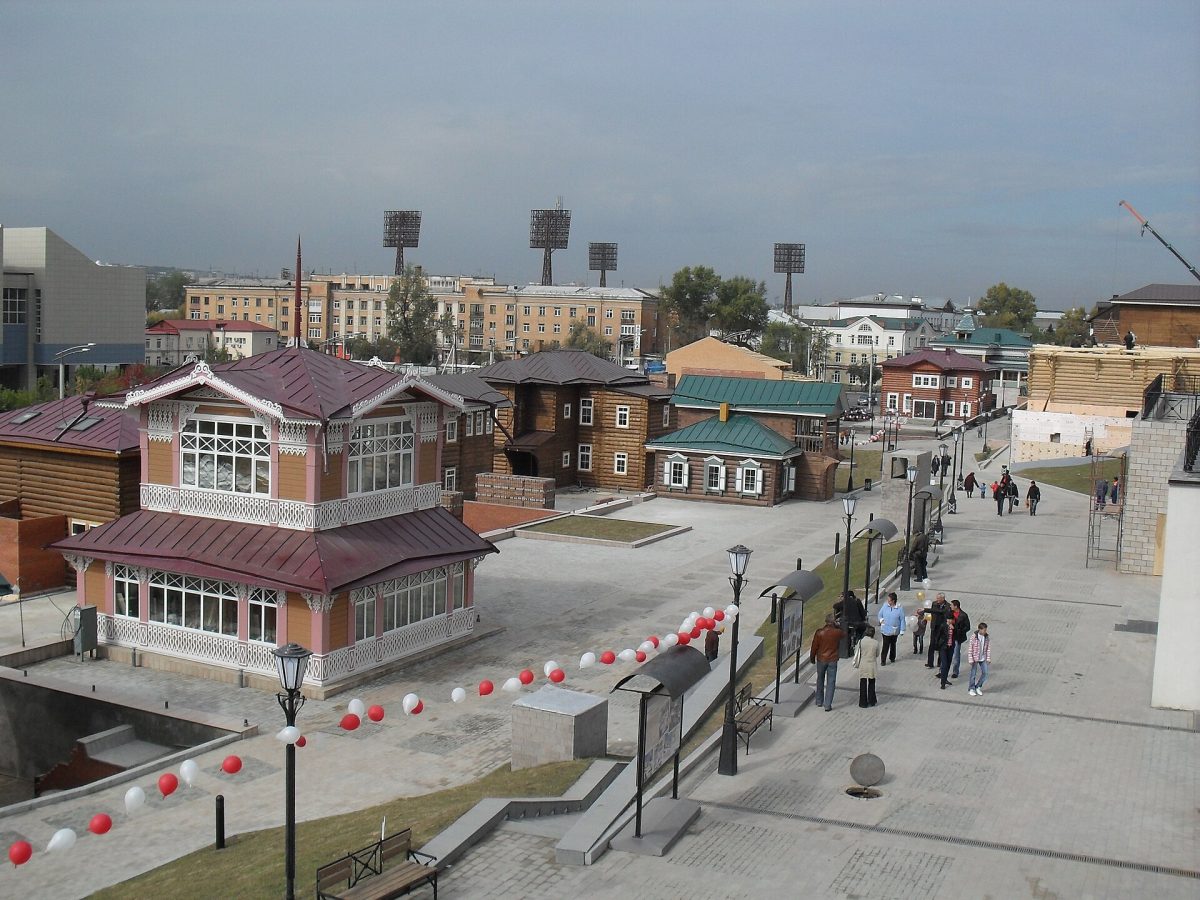
Inside the quarter there are many souvenir shops and cafes. If you are hungry, you can snack here, but prices in tourist places are usually higher than the city average. To save budget, it is better to postpone lunch until exiting the active trade zone. Walking along the wooden pavements, you will notice that the district is compact. It can be walked around in an hour if just looking around, or in three if entering every shop. I recommend choosing the middle. Buy one souvenir for memory, but leave the main part of gifts for later. Often in less crowded places the assortment is wider, and the cost is lower.
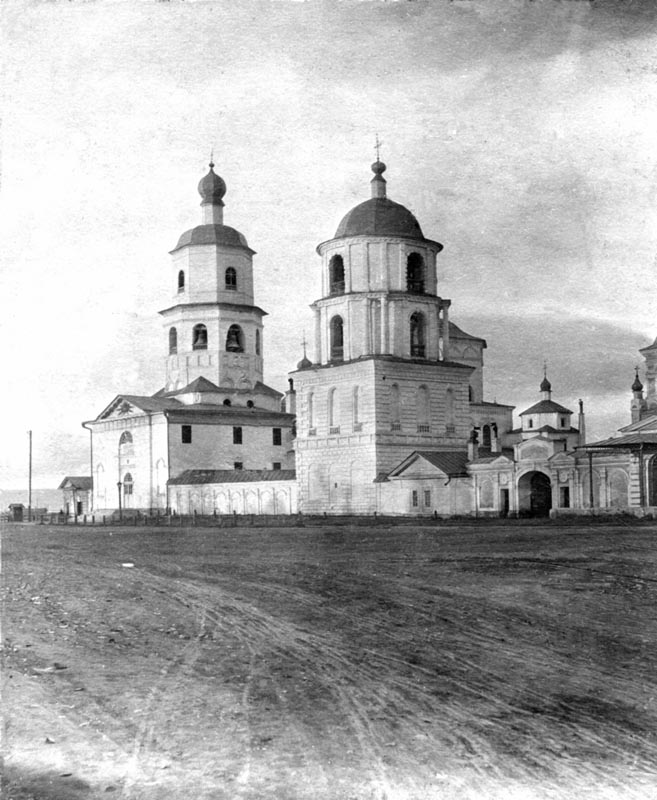
From the 130th Quarter it is logical to move towards the center. On the way you will meet the Epiphany Cathedral. This is a stone building that contrasts with the wooden development around. The temple is active, so inside you need to observe silence and appropriate dress code. The architecture of the structure belongs to a style characteristic of Siberian Baroque. Massive walls, green domes, high windows. Inside the space is filled with light if the day is clear. Icons are written in the traditional manner. Even if you do not plan to enter for the sake of prayer, it is worth inspecting the building from the outside. It serves as a good landmark on the ground.
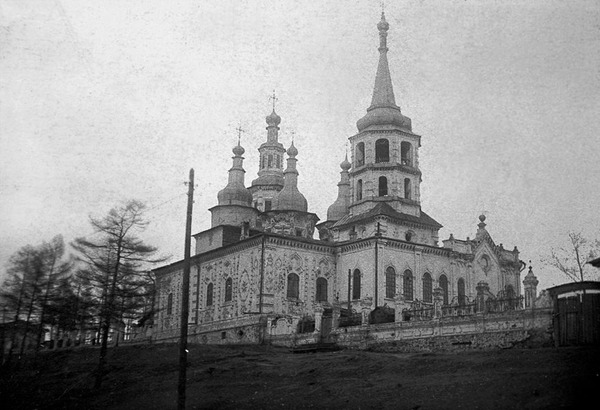
Nearby is the Exaltation of the Cross Church. This is one of the oldest stone temples of the city. The facade is decorated with tiles, which is rare for the region. Colored tiles are built into the masonry of the walls, creating a pattern that does not fade over time. Many tourists pass by, not noticing the details, because they look only at the domes. Approach closer to the walls. Examine the pattern on the tiles. This is hand work of masters of the past. The building is in good condition, which allows assessing the scale and proportions without scaffolding covering the view. Locals often stand nearby who can suggest the way if you get confused in the alleys.
Moving further, you will exit to Kirov Square. This is the center of public life. Events, festivities or fairs often take place here. If you land on a weekend, be ready for a crowd of people. The square is surrounded by administrative buildings of different eras. It is convenient to make a stop here to check the map. From here the main directions of movement are visible. You can go towards the embankment or deepen into residential quarters. For a pedestrian this is a convenient node. Benches allow resting. In winter a tree is put here, in summer fountains work. Depending on the season the view changes radically.
From the square it is convenient to move to Znamenskoye Predmestye. This is a historical district that has preserved the layout of past centuries. Narrow streets, low fences, old trees. There is less fuss here than in the center. The walk takes about an hour. You will see residential houses in which people live constantly, and not only work in souvenir shops. This gives an idea of the real life of the city. The architecture here is more modest than in the sloboda, but more authentic. There is no ostentatious restoration, there are traces of time on the walls and roofs.
In this district is located Park of the Paris Commune. A green zone intended for rest. Paths are sprinkled with gravel or paved with tiles. There are playgrounds. If you are traveling with family, children will find it easier to expend energy here than in a museum. Adults can sit on a bench in the shade of trees. The park is not huge, but sufficient for a short break. In the center of the park is the Memorial Complex "Eternal Flame". This is a place of memory. The fire burns constantly. Nearby military equipment is exhibited. Exhibits are under the open sky. You can approach closer, examine inscriptions on plates. The place is quiet, people speak in half-voice. This is an important point for understanding the history of the region, connected with war and memory of generations.
The evening of the first day is better dedicated to dinner in a calm place. After a long walk legs require rest. If there is still strength, you can peek into the Irkutsk State Circus. The circus building is noticeable from afar. A poster hangs at the entrance. The schedule of performances changes, so you need to check actual information on site or on the official resource. The show is calculated for different audiences. There are numbers with animals, there are acrobatic etudes. If you are traveling with children — skip this point if they are tired for the day. Noise and light may be extra. If the company is adult and there is a desire to entertain, a ticket is worth taking in advance, as good seats are taken quickly.
Second day: culture and art
The second day requires more concentration. Museums and theaters do not tolerate haste. Start with Irkutsk Regional Art Museum named after V.P. Sukachev. This is not one exposition, but a complex of buildings. The main collection is in a house that formerly belonged to a patron. Interiors are preserved. Stucco on ceilings, parquet on floor, high mirrors in frames. Paintings hang in halls with good lighting. The collection includes works of Russian artists of different periods. There are landscapes, portraits, still lifes. If you are not an art historian, just choose what catches the eye. Do not try to bypass all halls running. Better to look at five paintings carefully than fifty glanced.
Near the museum is Irkutsk Academic Drama Theater named after N.P. Okhlopkov. The theater building is an architecture monument. The facade is decorated with columns and statues. In the evening lighting turns on, which changes the look of the structure. If there is a play in the program that interests you, it is worth going. Acoustics in the hall are good, every word from the stage is heard. Seats are comfortable, view is not blocked by columns. Tickets are bought at the cashbox or online. Prices vary depending on the place in the hall and popularity of the production. If there are no tickets, do not worry. A walk around the theater also delivers pleasure. You can examine sculptures on the facade in details.
Lunch of the second day can be dedicated to local cuisine. In the city there are many places where dumplings and fish dishes are served. Look for establishments where there is a queue of locals. This is a sure sign of quality. Avoid places with beckoners at the entrance. Good food does not require advertising on the street. Order simple dishes. Complex names often hide a standard set of products. Herbal tea or tea with local berries warms well. This is important, even if summer weather is changeable.
After lunch there is time for a free walk. You can return to those places that liked yesterday, but in different lighting. Day light reveals details that are hidden in twilight. Shadows from trees lie differently. Photos turn out different. If you are a photographer, this is time for work. If not, just observe. The city lives its own life. Cars go, people hurry, dogs warm on asphalt. This observation helps understand the rhythm of the place better than any guide.
Third day: trip to water
The third day is dedicated to a trip to the lake. Baikal is located not far from the city, but the road takes time. Transport runs regularly. You can reach by bus or electric train. The schedule needs to be clarified in advance, as it changes depending on the season. In winter there are fewer flights, in summer more. On the way you will see a change of landscape. Forest approaches close to the road. Settlements with wooden houses are met. Windows look at the highway. Sometimes trucks with cargo pass by. The road is asphalted, but locally there are irregularities. Shaking depends on the type of transport and state of the canvas.
Arriving at the place, you will see water. Color depends on weather. In storm it is gray and muddy. In calm clear and blue. Approach the edge. Water is cold even in summer. Only prepared people can swim. An ordinary tourist is better off limiting themselves to wetting hands. Stones on the shore are different. There is smooth pebble, there are sharp slabs. Shoes must be comfortable. Flip-flops suit only for sand, which is little here. Better sneakers or boots. Wind from the lake is strong. Jacket with hood is mandatory. Hat won't hurt even in July if you plan to stand on the shore for long.
A walk along the shore takes several hours. Paths are trodden by people. Walking is easy. Places for picnic are met. Grills stand stationary. Wood needs to be brought with you or bought on site. Clean up trash after yourself. Containers exist, but they fill up quickly. A package with waste is better to take back to the city. Nature does not cope with such volume of waste. Cleanliness of the shore depends on each visitor.
Food on the shore is represented by cafes and kiosks. A popular dish is smoked fish. It is sold everywhere. The smell stands strong. Taste depends on freshness. Ask when the fish was smoked. If in the morning — take. If yesterday — risk poisoning. It is better to eat it immediately, do not take home on train or plane without special packaging. The smell will absorb into things. Tea with sagan-daily is sold at points. The grass invigorates. Do not drink much at night if you do not want insomnia. Taste is specific, bitter.
Practical tips and warnings
Transport in the city works stably. Taxi is called via apps. Cars arrive quickly. Price depends on demand. In rain or rush hour cost grows. Public transport runs on routes. Payment by cash or card. Conductors are not everywhere. Be ready to show ticket upon check. Stops are not always announced. Watch names on board or in navigator. Map helps not to get lost. Internet catches well in center, on shore signal may disappear. Download offline maps in advance.
Clothes must be layered. In morning cold, in day hot, in evening again cold. T-shirt, fleece, windbreaker — optimal set. Shoes on solid sole. Heels are uncomfortable for cobblestones and ground. Umbrella needs to be compact. Wind turns big umbrellas inside out. Raincoat is more reliable. Sunglasses are mandatory. Reflection from water hits eyes. Sunscreen is needed even in cloudy weather. Ultraviolet is active.
It is not worth buying souvenirs in the first random shop. Compare prices in three different places. The difference may be substantial. Magnets, mugs, figurines — standard set. More interesting things — items from birch bark or wood hand work. They cost more, but serve longer. Check seams and fasteners. Quality may be different. Packaging for fragile things must be reliable. Glass bottles with drinks are better to surrender to baggage if flying by plane. Rules for transport of liquid are strict.
There is an opinion that in winter it is not worth going. This is incorrect. In winter the lake freezes. Ice is transparent. Views are different. But clothes need to be serious. Thermal underwear, down jacket, warm boots. The car must be prepared. In summer it is simpler. But mosquitoes exist. Repellent is needed. In the city there are fewer, near water more. Spray apply on clothes, not only on skin. So effect is longer.
It is not worth expecting service level of capitals. Local service is simpler. Waiters may not smile, but will do the work. Taxi drivers may be silent all the way. This is not rudeness, this is norm. Do not demand extra. Be polite yourself. Response reaction will be better. Language is Russian. English is not known everywhere. Learn a pair of phrases or use translator. This will help in complex situations.
What not to do
Do not buy fish on the road without check. Appearance may be deceptive. Smell is sour — do not take. Stomach may hurt in an hour. You will spoil all rest. Do not go into forest without escorts. Taiga is close. Enter for hundred meters is easy. Exit back is difficult. Landmarks are lost. Mobile connection disappears. Inform someone where you are going. Do not leave things in car in view. Glass may be broken. Park on guarded parking lots. This costs money, but calmer.
Do not plan too much for one day. Distances seem small on map. Really path takes time. Traffic jams, traffic lights, transitions. Lay stock of time. If you miss train or plane, it will be offensive. Better to come in advance and wait, than run in last minute. Nerves are more expensive.
Do not ignore warnings of rescuers. If hangs sign "Swimming forbidden", means there is reason. Current, pits, cold water. Risk is not justified. Photo is not worth health. Listen to instructions of guides. They know locality. Their advice is based on experience. Amateurism in mountains or on water is dangerous.
In evening in center it is safe. Light is much, people much. In residential areas darker. Be more attentive. Wallets and phones keep in inner pockets. Crowd is place for work of pickpockets. In transport watch bag. Do not hang it on back of chair in cafe. Put on knees or under leg. Simple precaution measures help avoid problems.
Three days is little for full study of region. But enough for first acquaintance. You will see city, will see lake, will try food. This is base. If you like, you will come again. Return in winter, spring or autumn. Each season changes picture. Summer green, autumn yellow, winter white, spring gray. Choice is yours. Main thing — go prepared. Knowledge of rules saves time and money. Respect to place helps understand its essence.
City does not require feats from tourist. It requires attention. Notice details. Crack on asphalt, color of door, sound of tram. From this impression is folded. Dry facts are forgotten. Emotions remain. But emotions must be backed by comfort. Comfortable shoes, hearty meal, warm scarf. This is foundation of good travel. Without it any beauties pale. When legs hurt, looking at temple is not wanted. When cold, lake does not rejoice. Care for yourself in first place.
Route can be changed. If tired — rest. If liked museum — stay longer. Plan serves as guide, not as order. Flexibility saves in travels. Weather will change, transport will be late, museum will close for repair. Have backup option. Cafe instead of park, cinema instead of theater. Main thing — movement and interest. Stop kills impression. Even if just sit on shore and look at water — you are in process. You observe. You are here.


