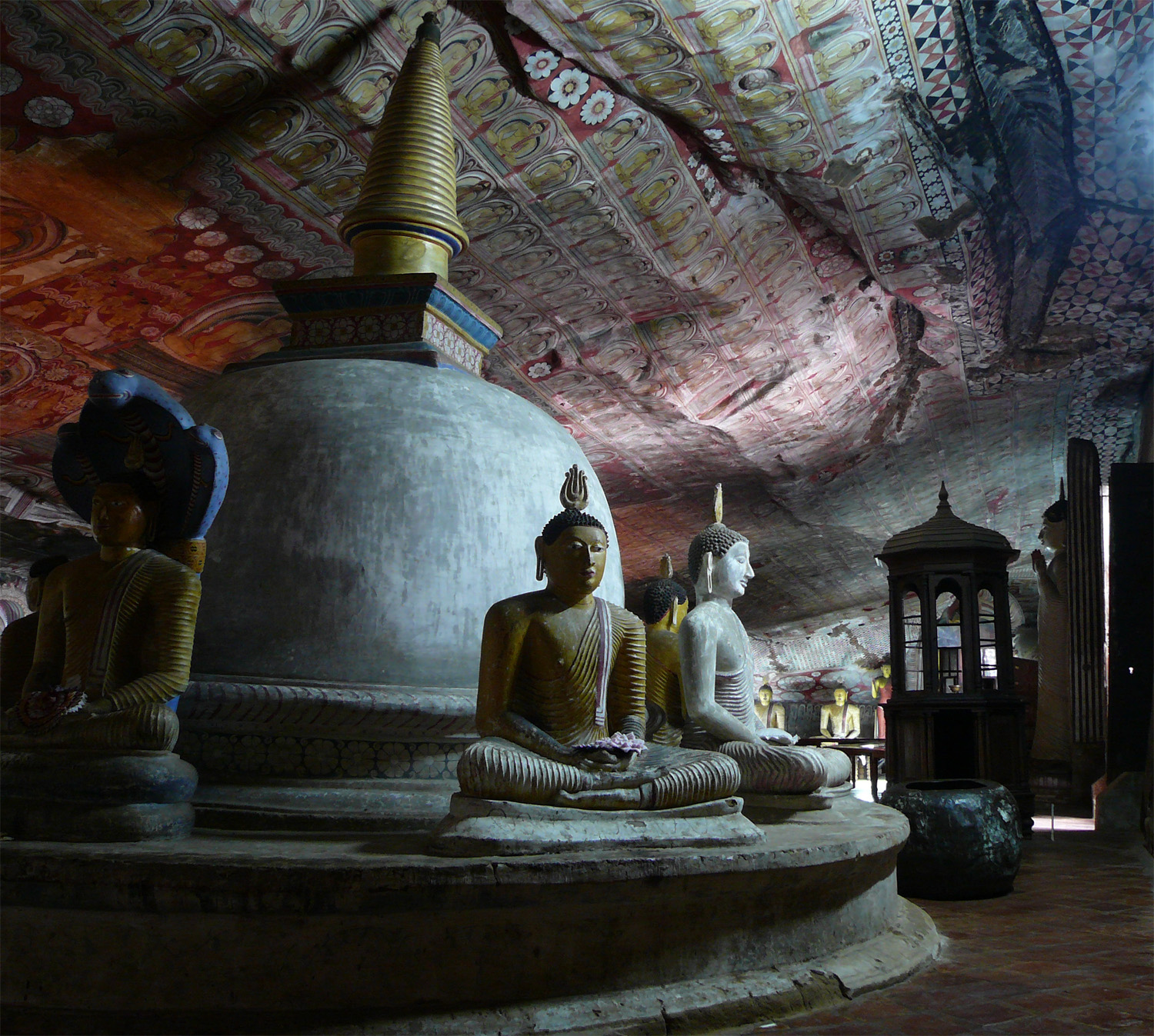
Dambulla’s Golden Temple feels like a place where time moves differently. Tucked among the rocky hills of Sri Lanka’s central highlands, this cave monastery has stood for over two thousand years, offering a quiet contrast to the island’s busier tourist spots. Unlike grand temples built to impress, Dambulla exists almost as it always has—unassuming, deeply rooted in the landscape, and shaped by the rhythms of Buddhist tradition. It doesn’t demand attention; it simply endures, drawing visitors not with spectacle, but with the quiet weight of its history.
The caves first became significant in the first century BCE, when they sheltered King Valagamba during his years of exile. According to legend, the king, driven from his throne, found refuge here among the monks. When he regained power, he transformed the caves into a temple complex in gratitude. Over the centuries, the walls were filled with murals and statues, turning the space into a visual chronicle of the Buddha’s life and Sri Lanka’s spiritual heritage. Today, the caves hold more than 150 statues, including a colossal reclining Buddha, its fifteen-meter form carved directly into the rock.
The temple’s architecture feels inseparable from the land itself. The caves weren’t carved by human hands—they formed naturally in the limestone, later expanded and reinforced to create the complex. A stone staircase winds through the greenery, each step revealing a little more of the surrounding countryside. Inside, the caves are low but spacious, their uneven walls and ceilings darkened by centuries of oil lamp smoke. Light filters through narrow openings, casting shifting shadows that make the Buddha statues seem almost alive. The air is cool and damp, carrying the faint scent of incense and earth.
The murals inside the caves are a defining feature of Dambulla’s artistic legacy. They cover nearly every surface, from walls to ceilings, painted with natural pigments in a style that has remained largely unchanged. The scenes depict key moments in Buddhist teachings—the Buddha’s birth, enlightenment, and final passing into nirvana—as well as jataka tales, stories of his past lives that illustrate virtues like compassion and wisdom. Some of the paintings were restored in the 18th century, but they retain a sense of age, their cracks and faded colors adding to their character rather than detracting from it.
Beyond its religious significance, the Golden Temple is a cultural landmark. UNESCO recognized its importance in 1991, designating it a World Heritage Site. Yet for locals, it remains a living spiritual center, not just a historical monument. Monks in saffron robes perform rituals that have continued for generations, their chants filling the caves at dawn and dusk. Visitors often linger longer than planned, perhaps because the temple’s stillness feels different from the noise of the outside world. The only sounds are the rustle of leaves, the distant call of birds, and the occasional murmur of prayer.
The view from the temple’s hilltop is as striking as the caves themselves. Below, tea plantations and rice paddies stretch toward the horizon, their green hues shifting with the light. On clear days, the distant mountains emerge like a faint blue silhouette. Nearby, Sigiriya’s iconic rock fortress offers a different kind of experience—one of grandeur and engineering marvel. But while Sigiriya impresses with its scale, Dambulla charms with its intimacy. It’s a place where the human and the sacred feel closely intertwined.
Visiting the temple requires a little preparation. The best times are early morning or late afternoon, when the heat is less intense and the crowds thinner. Inside the caves, the air is cool but humid, so lightweight clothing that covers the shoulders and knees is respectful. Photography is allowed, but without flash, to preserve the quiet atmosphere. Many visitors leave small offerings—a traditional way to support the monastery and its upkeep.
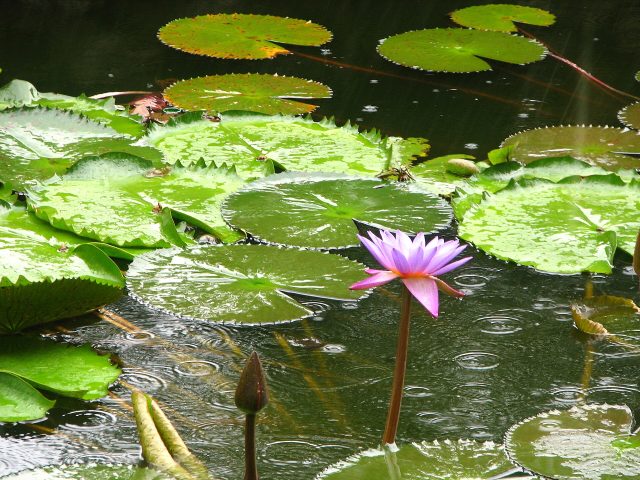
Dambulla is a place where the past and present coexist effortlessly. You can spend hours studying the ancient murals, listening to monks explain Buddhist traditions, or simply sitting on a stone bench, watching how the light moves across the cave walls. Pilgrims pass by with lotus flowers in hand, their footsteps soft against the rock. Somewhere in the distance, the faint chime of a bell marks the rhythm of prayer. In moments like these, it becomes clear that the Golden Temple is more than a tourist site—it’s a living part of Sri Lanka’s culture, one that continues to resonate with anyone who walks through its caves.