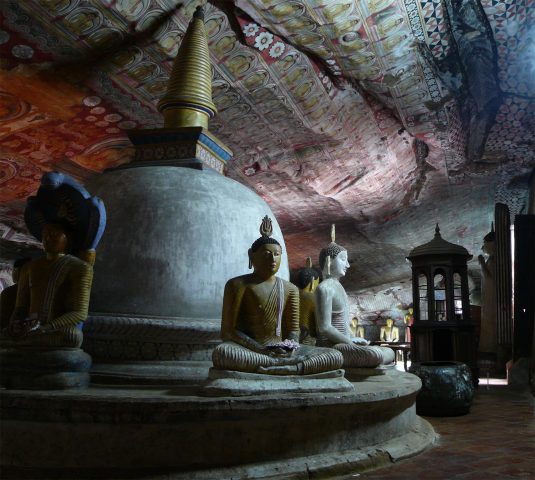
Dambulla’s market isn’t just a place where people buy and sell—it’s a living rhythm of daily life, woven into the fabric of the town. Nestled at the foot of the Golden Temple, where the steps leading to the cave shrines give way to rows of stalls, the market pulses with the unhurried energy of rural Sri Lanka. Here, vendors spread their goods on mats laid directly on the ground, shoppers pick through mangoes and bunches of bananas with deliberate care, and the air is thick with the scent of cinnamon, cardamom, and fresh coconut. Unlike the polished markets of Colombo or Galle, where everything is tailored for tourists, Dambulla’s market exists for the people who live here—farmers, locals, and pilgrims drawn to the nearby Buddhist relics.
The day begins long before dawn. By the time the first light touches the hills, farmers from surrounding villages have already arrived, pulling carts or balancing sacks of rice on motorbikes, their loads spilling over with green chilies, bundles of herbs, and whatever else the season has yielded. By six, the market is alive, the humid morning air mingling with the steam of hot tea poured into clay cups right there on the spot. There are no price tags, and haggling isn’t about greed—it’s part of the dance. A vendor names a price with a smile, a buyer feigns shock, and within minutes, both walk away satisfied. For many here, selling isn’t just a job; it’s a way to stay connected to the land and to each other, since most of what’s sold was grown or made by the hands of those selling it.
The market’s architecture is simple, built for function rather than beauty. Low corrugated iron roofs shelter wooden stalls, some draped with vines, while the earthen floor turns to mud after rain. When the monsoon comes, trade doesn’t stop—vendors either huddle under cover or stand their ground, shielding their goods with plastic sheets. At the heart of the market, a small open space serves as a gathering spot where elderly men cluster in the mornings, sipping tea, debating the price of rice, or playing cards. Laughter rises above the hum of conversation, and sometimes, if you listen closely, you’ll hear the clatter of dice or the murmur of a story being passed around. The market isn’t just a place to buy things; it’s where deals are struck, marriages are arranged, and the day’s news is shared over cups of strong, sweet tea.
Spices take center stage here. Sri Lanka is famous for its cinnamon, cardamom, cloves, and vanilla, and in Dambulla, you can see these plants in their raw form before they’re ground into powder. Cinnamon sticks are tied into bundles with twine, while sacks of dried vanilla pods release a rich, sweet fragrance. Vendors will tell you, with no small amount of pride, that Sri Lankan cinnamon is the finest in the world—true cinnamon, not the cheaper cassia often sold under the same name. Nearby, you’ll find sun-dried fish, its smoky scent sharp in the air, and sacks of black pepper grown on the hills around Kandy. Buying spices here, rather than from a tourist shop, means getting them fresh, unadulterated, and straight from the source.
Beyond food, the market offers everything a household might need. Clay pots, woven baskets, and plastic dishes share space with cheap Chinese lanterns and bolts of brightly colored fabric—saris, cotton shirts, and the traditional sarongs worn by men. Women from nearby villages come to buy cloth for weddings or everyday wear, and sometimes, a tailor will set up shop right there, taking measurements and promising a finished garment by evening. There are also stalls selling silver jewelry and semi-precious stones mined from Sri Lanka’s hills—simple bracelets, rings, and pendants that catch the light as they’re passed from hand to hand.
The market reflects the ebb and flow of rural life. After the rice harvest, sacks of grain dominate the stalls, while during the rainy season, hardy vegetables and fruits take over. Sometimes, farmers bring live chickens or goats, filling the air with clucks and bleats. In recent years, modern goods have crept in—Chinese smartphones, solar panels for off-grid villages, even motorbikes sold on installment plans. But these changes haven’t altered the market’s essence. It remains a place where people come not just to trade, but to connect, to share stories, and to be part of something larger than themselves.
For visitors, the market offers a glimpse of Sri Lanka without the gloss. There are no guided tours, no one pushing souvenirs or overpriced trinkets. You can wander the aisles, watching as vendors gut fish, women sort through piles of greens, or children help their parents arrange goods. Someone might offer you a cup of tea or a bunch of bananas—not because they want to sell you something, but because that’s how things are done here. If you’re lucky, you might hear the rhythmic beat of a *rabana* drum or a folk song drifting through the air. In moments like these, the market stops being just a place to shop and becomes something more—a stage where the same stories unfold day after day, each one unique in its own way.
By evening, the market begins to empty. Vendors pack up what’s left, loading their wares onto carts or motorbikes before heading home. The earthen floor is littered with leaves and husks, and birds circle overhead, scavenging for scraps. But even when the stalls are closed, life doesn’t stop. Nearby homes buzz with the sounds of dinner being prepared, children playing in the streets, and elders sitting on porches, recounting the day’s events. The market isn’t just a place—it’s a heartbeat, a vital part of the town’s existence. And if you return the next morning, as the sun begins to warm the air, you’ll see it come alive again, slow and steady, in the way it always has.