Nouadhibou’s railway station is one of those places that feels suspended in time, yet remains a living testament to Mauritania’s history and economic pulse. Perched on the edge of the Atlantic, in a city that straddles the line between desert and ocean, this modest transport hub is more than just a point of departure—it’s a lifeline. Nouadhibou itself was once a quiet fishing village, but it grew into the country’s most vital port, with the railway acting as its backbone. The station here isn’t just about trains; it’s about connection—the thread linking Mauritania’s interior to the wider world.
The station’s story is inseparable from the railway’s own history, built in the mid-20th century to haul iron ore from the mines of Zouerat in the north to Nouadhibou’s port. It was an engineering feat that reshaped the region’s economy, turning Mauritania into one of the world’s leading ore exporters. The station became the final stop for trains stretching kilometers long, unloading their cargo before turning back into the desert for another haul. Even now, these trains rank among the longest in the world, and their arrival on the horizon still commands attention.
The station’s architecture is unassuming, reflecting its mid-century origins far from any grand urban design. A low, single-story building with a flat roof and wide windows, it resembles a warehouse more than a traditional station. But there’s a quiet charm in its simplicity—no frills, just function. Inside, a small waiting area with wooden benches, a ticket counter, and a few offices make up the space. It’s modest, even sparse, yet strangely welcoming, especially in a city where the sun and ocean winds dictate the rhythm of life.
For locals, the station is woven into daily existence. Miners returning from shifts, traders moving goods from the port inland, and passengers traveling to visit family or seek work all pass through here. Trains run infrequently, but schedules are kept with precision; life in Nouadhibou moves to the railway’s beat. Waiting for a train becomes a small event—people chat, share news, sip tea from a nearby stall. The station is a meeting point where social divides blur, if only for a few hours.
For travelers, the station offers a rare glimpse of Mauritania beyond the usual tourist paths. There are no crowds, no souvenir shops, no cafes with inflated prices. Instead, there’s the raw energy of a working city, where the railway ties everything together. If you’re lucky, you might witness the arrival of an ore train—massive wagons, piled high, rolling toward the unloading terminals before heading back into the desert. The sight is mesmerizing in its scale and starkness.
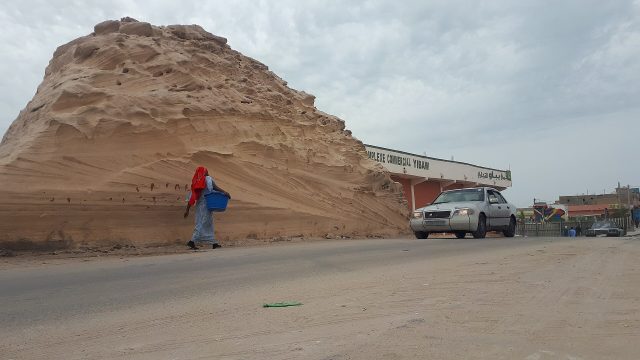
Nouadhibou itself sprawls around the station, a city that exists on its own terms, indifferent to visitors. Narrow streets lined with low buildings, fishing boats bobbing on the shore, the scent of salt and fish mingling with spices from the markets—it’s a place where African, Arab, and French colonial influences blend without pretense. There are no luxury hotels or fine-dining restaurants, just an atmosphere that feels authentic and unpolished. The station is the perfect starting point for exploring, a place where the city’s threads converge.
The Nouadhibou-Zouerat railway is one of the few in the world where passengers are an afterthought. The real purpose is freight, and people ride almost incidentally, crammed into shared cars or even on the roofs when space runs out. Tickets are cheap, but comfort is minimal—heat, dust, and long hours define the journey. Yet for those who take the trip, the rewards are unforgettable: endless Saharan dunes, scattered oases, distant mountains. The station in Nouadhibou is the gateway to this world, where time slows and distances are measured in hours, not kilometers.
Today, the station still serves its purpose, though Mauritania’s economy has shifted, and the railway’s dominance isn’t what it once was. But as long as ore is mined in Zouerat and shipped from Nouadhibou, the trains will keep running. The station remains a place where past and present intersect, where you can feel the country’s pulse in a way few other places allow. For some, it’s just a stop; for others, a symbol of resilience and continuity. Either way, it’s a place worth seeing if you want to understand Mauritania as it truly is.