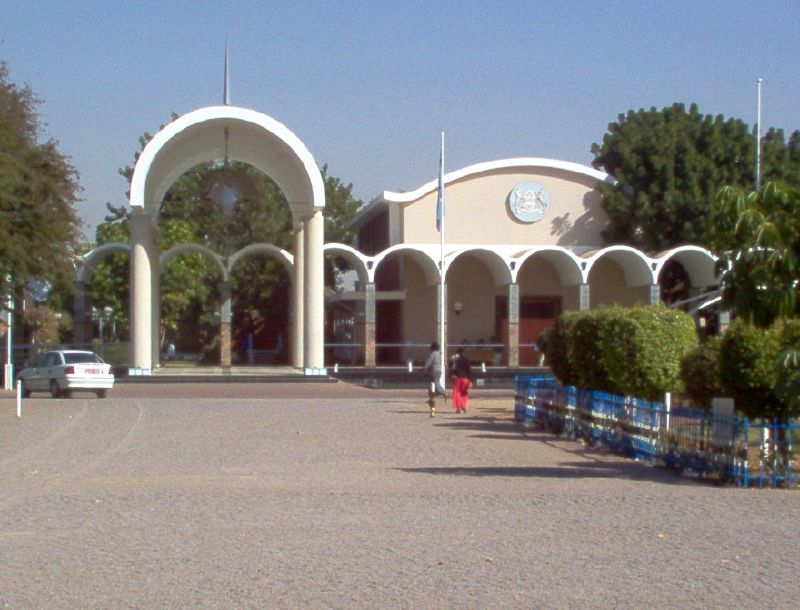
The Parliament Building of Botswana in Gaborone is more than just an administrative structure—it stands as a quiet testament to the country’s journey toward independence and self-governance. Constructed in the 1960s, shortly after Botswana gained sovereignty from Britain, it was one of the first major architectural projects of the newly formed nation. At the time, Gaborone was little more than a small settlement, and the parliament complex was designed to mark its transformation into a capital city. The building was built with the future in mind, its spacious halls and practical design reflecting the ambitions of a young democracy finding its footing.
The architecture strikes a balance between functionality and understated grandeur. The main structure leans toward brutalism, with its solid concrete forms and geometric lines, a style common in mid-20th-century government buildings. Yet there are subtle nods to local culture in the details—patterns on the facade echo traditional Tswana crafts, blending modernist design with indigenous influences. Inside, the layout is straightforward, designed to accommodate not just lawmakers but also visitors, reinforcing the idea that parliament should be accessible to the people it serves.
At the heart of the complex is the main chamber, where the National Assembly convenes to debate and pass laws. The room is simple and unadorned, with wooden panels, high ceilings, and large windows that fill the space with natural light. The seating is arranged in a semicircle, a deliberate choice that emphasizes equality and dialogue in the legislative process. There’s no opulence here, just a sense of purpose—every element serves the idea of public service, not spectacle.
Surrounding the building is a small park, a green oasis where locals often gather. It’s a place where official business and everyday life intersect—protests, cultural events, and even wedding photoshoots take place under the shade of its trees. On weekends, families picnic, children play, and elders sit on benches, watching the world go by. The atmosphere is relaxed, almost familial, a contrast to the formal nature of the building itself.
Beyond its political role, the parliament complex holds cultural significance for Botswana. School groups and students frequently visit on guided tours, learning about the country’s governance and history. For many Batswana, this is their first introduction to how their government functions. In recent years, the complex has also hosted exhibitions and lectures on national heritage, reinforcing its role as a center of education as much as governance.
Gaborone grew up around this building. In the 1960s, the area was little more than dusty roads and a handful of administrative structures. Today, it’s a bustling capital with modern high-rises and busy streets, but the parliament complex remains one of its defining landmarks—not because of architectural flourishes, but because of its place in the country’s story. For Batswana, it symbolizes stability and democratic traditions, values the nation has upheld even through challenging times.
Compared to the grand parliaments of other African capitals, Botswana’s may seem modest, but that’s precisely its strength. The country has always prioritized pragmatism over pomp, and the parliament building reflects that ethos. There are no excesses here, just a clear sense of purpose: to serve, not to impress. Decades after its construction, the building hasn’t lost its relevance—it still functions as the heart of the nation’s political life.
Visiting the Parliament Building isn’t just for those interested in politics. It’s a place where you can get a sense of Botswana beyond the usual tourist spots. There are no crowds, just an atmosphere of authenticity. Walking through the park or observing a session from the public gallery, you begin to understand what it means to be part of this country—its values, its struggles, and its quiet pride. It’s the kind of place that lingers in your memory long after you’ve left.