Penonomé’s municipal building is one of those quiet landmarks that carry a city’s story without fanfare. Tucked in the heart of this provincial capital, it doesn’t draw crowds like Panama’s famous canal or the capital’s towering skyline, yet for locals, it holds far more meaning. This is where the day-to-day work of the city happens—decisions are made, records are kept, and the slow, steady rhythm of local governance unfolds. From the outside, the building is unassuming: two stories tall, its neoclassical facade a familiar sight in early 20th-century Latin American civic architecture. Whitewashed walls, tall windows with wooden shutters, and a small balcony above the entrance give it an air of permanence, though the structure itself is likely younger than it appears.
The history of Penonomé’s municipal government is woven into the broader story of Coclé Province, of which the city has long been the center. Founded in 1581, Penonomé didn’t take on its modern character until much later, during Panama’s economic boom in the late 19th and early 20th centuries. That was when the first stone buildings began replacing the wooden structures of the colonial era. The municipal building probably dates to the 1920s or 1930s, a time when Penonomé thrived on coffee trade and cattle ranching. Back then, the city was a key stop on the route between the Pacific coast and the country’s interior, and local officials needed a building that reflected its growing importance.
Architecturally, the municipal building makes no grand statements, but its design has a quiet logic. The facade is divided into three sections, with the central portion—housing the main entrance—slightly protruding. Symmetrical wings flank it on either side. Above the entrance, a small pediment once may have displayed the city or national coat of arms, though time has likely worn away the details. The second-floor windows are taller than those below, giving the building a sense of lightness despite its solid construction. Inside, the layout likely follows the conventions of its time: a spacious hall with a staircase leading to the upper floor, offices lining the perimeter, and a central meeting room. High ceilings, wooden floors, and large windows would have created an airy feel, though today the interiors might show their age.
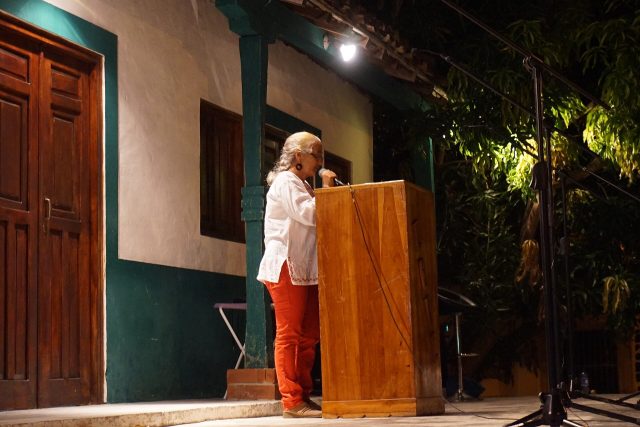
For Penonomé’s residents, the municipal building is more than just an office—it’s part of daily life. People come here to handle paperwork, settle disputes, or catch up on local news. On holidays, the square in front often hosts concerts or rallies, and during elections, the place buzzes with activity: lines form, campaigners hand out flyers, and neighbors debate the latest developments. In those moments, the building becomes more than an administrative hub—it’s a gathering place where people exchange stories, opinions, and time. On ordinary days, it’s quieter, with only the occasional sound of footsteps on the stairs or muffled voices from the offices.
Though modest, the building plays a key role in preserving the city’s history. Its walls might hold traces of the past—plaques honoring former mayors, old photographs of Penonomé’s streets, or documents chronicling the city’s growth. The municipal archives likely contain records of land deeds, building permits, and tax rolls, offering a window into how the city has changed over the decades. For historians and local researchers, these materials are invaluable, though access is usually restricted. Occasionally, school groups visit for tours, learning how local government works and why knowing a city’s history matters.
The atmosphere around the municipal building shifts with the time of day. In the early morning, when the city is just waking up, the area is quiet—only a few people hurry past, and a small line forms at the entrance for those who arrived early. By midday, life picks up: vendors set up stalls selling fruit and pastries, children play in the shade of the trees, and elderly residents sit on benches, watching the world go by. As the evening cools, the square becomes a meeting place again—couples stroll, friends catch up, and families linger. On holidays, the building is draped in flags and lights, and the square transforms into an open-air stage for local performers.
Penonomé moves at its own pace, and the municipal building is one of the places where that’s most evident. While Panama City races ahead with skyscrapers and modern infrastructure, here, things stay much the same—unhurried rhythms, conversations on benches, familiar routines. The municipal building feels like an anchor, keeping the city grounded in its traditions. It doesn’t need grandeur or cutting-edge technology because its value lies elsewhere. For locals, it’s a symbol of stability, a place where problems get solved without fear of upheaval. Maybe that’s why it’s rarely renovated—why change something that works just fine?
To first-time visitors, the municipal building might seem like just another government office, the kind found in any town. But if you look closer, you’ll notice the details that make it special: the old clock above the entrance, frozen in time but still marking the hours; the faint bullet scars on the walls, remnants of Panama’s turbulent political past; the trees in the square, witnesses to generations of city life. These small things add up to a bigger picture—the character of Penonomé, its people, and the quiet stories embedded in its streets. The building won’t tell those stories itself, but it holds them within its walls, waiting for those who take the time to listen.