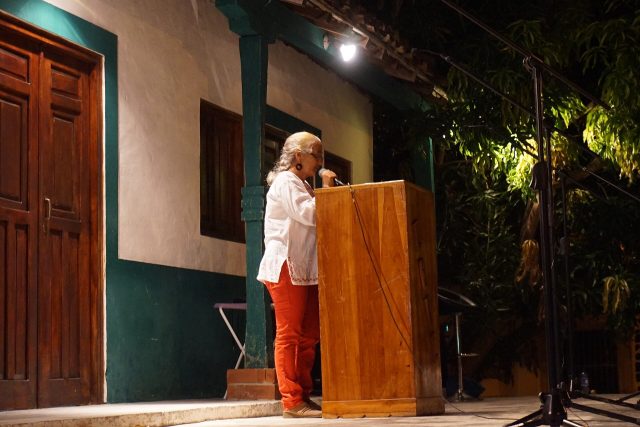
Santo Domingo Church in Penonomé is one of those quiet places where time seems to have paused, leaving behind the unmistakable imprint of Panama’s colonial past. Built in the 17th century, it stands at the heart of the town, on a square that once bustled with the lives of early Spanish settlers. Today, it’s more than just a religious landmark—it’s a bridge between eras, a structure that has witnessed the slow unfolding of history without ever losing its essence. The whitewashed walls, sturdy wooden doors, and understated facade carry the simplicity and austerity of the period, a reminder of how architecture once served both practical and spiritual needs in equal measure.
Step inside, and the atmosphere shifts. The dim interior, pierced by slender shafts of light filtering through tall, narrow windows, feels like a sanctuary of calm. The altar, adorned with delicate gilded details, stands in contrast to the otherwise unadorned walls, a nod to the deep faith of the people who settled this land. There are no grand frescoes or marble columns here—just the quiet authenticity of wooden pews, aged candelabras, and the faint rustle of prayer books. It’s a space that doesn’t try to impress but instead invites reflection, a place where the past lingers in the details.
Penonomé itself is a town steeped in history, founded in 1581 as a crucial stop between Panama City and the western provinces. Santo Domingo Church wasn’t just a place of worship; it was the center of community life, where decisions were made and stories shared. In colonial times, churches often doubled as meeting halls, and this one was no exception. Its walls have absorbed more than just prayers—they’ve heard the voices of people shaping their world, debating local matters, and marking the milestones of their lives. Even now, the church remains a gathering point, a place where the town’s rhythm slows just enough to remember what came before.
The architecture is a textbook example of the colonial style that spread across Central America. Thick clay-and-stone walls, small windows designed to keep out the heat, and a simple gabled roof—all practical choices for the climate and available materials. Yet there’s also a subtle European influence, particularly in the altar’s design and a few decorative touches. Over the centuries, the building has been restored, but its original character remains intact. It’s a rare survivor, a structure that has resisted the urge to modernize, preserving instead the craftsmanship and sensibilities of another time.
Today, Santo Domingo Church is still an active place of worship, its doors open to anyone who wishes to step inside. Visitors can attend a service or explore the quiet interior when the building is empty. The square outside is where the town’s daily life unfolds—on weekends, vendors set up stalls selling fresh fruit, handmade crafts, and local dishes. It’s a place where history and the present coexist effortlessly, where the past isn’t something confined to plaques or guided tours but something alive in the way people move through the space.
For those drawn to Panama’s history, this church is a must-see, though it lacks the fame of the cathedrals in Panama City. That’s part of its charm. There are no crowds here, no tour groups rushing through—just the chance to experience colonial architecture as it was meant to be seen: unpolished, unhurried, and deeply rooted in its surroundings. Penonomé is a small town, and the church is one of its defining features, a quiet testament to the fact that some of the most meaningful places aren’t the ones that make it into guidebooks but the ones that have simply endured.
Time moves differently in Penonomé than it does in the capital. Mornings here are slow, the air warming gradually as the sun rises. The church’s white walls glow in the early light, while the shadows of palm trees stretch across the square in shifting patterns. By evening, when the streetlamps flicker on, the scene takes on a softer, almost dreamlike quality. The locals treat the church with respect, but not reverence—it’s a part of their lives, a place to pray, to chat with neighbors, or to sit in silence for a while. There’s no sense of performance here, just the easy familiarity of a place that has always been there.
What makes Santo Domingo Church special is that it’s not a museum piece. It’s a living part of the town, one that has weathered earthquakes, political shifts, and social change without losing its soul. There’s nothing flashy about it, no grand claims to fame—just the quiet persistence of something real. For travelers passing through Penonomé, it offers more than just a photo opportunity. It’s a chance to step into a story that’s still being written, one where the past isn’t just remembered but still felt in the creak of a pew or the echo of footsteps on the stone floor.