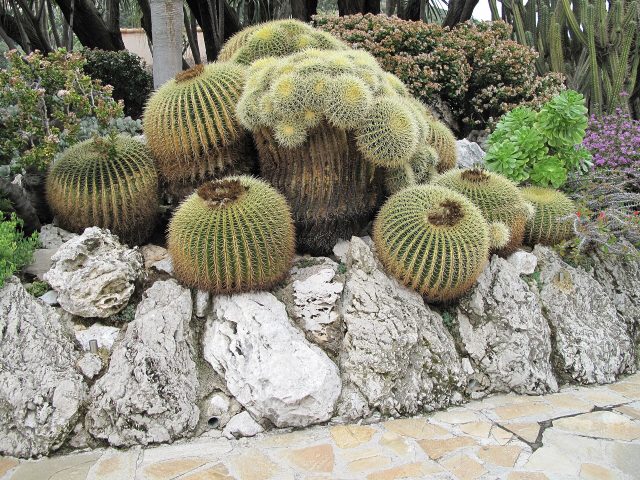
Perched on the edge of a sheer cliff overlooking the Mediterranean, Jardin Exotique feels like a secret tucked away in one of the world’s most densely packed corners. Monaco is a place where space is measured in square meters, yet here, against all odds, thousands of plants from distant deserts and arid landscapes thrive on a narrow ledge of rock. The garden clings to the slope as if defying gravity, its terraces cascading down toward the sea in a way that makes the bustle of the city below feel distant and unreal. From this height, the view stretches across the water, a quiet reminder that even in a principality known for its opulence, nature still finds a way to command attention.
The idea for the garden took root in the late 19th century, when Prince Albert I, a man of science as much as of state, developed a fascination with succulents and cacti. But it wasn’t until the 1930s that the vision truly took shape, thanks to engineer Louis Notari. He saw potential in the natural caves and limestone formations of the cliffside, proposing a way to cultivate plants in a place where soil was scarce and the terrain unforgiving. The result was a feat of both botany and engineering—retaining walls and terraces built to hold the earth in place, now so seamlessly integrated into the landscape that they appear as natural as the rock itself.
Walking the winding paths, it’s easy to forget you’re in Monaco. The air carries the faint scent of warm stone and dry earth, while towering cacti from Mexico stand beside spiky aloes from South Africa and sprawling agaves from Central America. Some plants stretch several meters high, their thick, waxy skins or sharp spines a testament to their resilience in harsh climates. The effect is surreal, as if the garden has borrowed pieces of deserts and savannas from around the world and reassembled them here, where the Mediterranean sun coaxes them into an unlikely harmony.
Beneath the garden lies another world entirely. The caves, formed millions of years ago when this land was submerged under ancient seas, offer a cool respite from the sun. Inside, the air is damp and still, the walls adorned with stalactites and stalagmites that glisten under the soft light. Fossils embedded in the rock tell stories of long-extinct sea creatures, a quiet reminder of the slow, patient work of time. Exploring these grottos feels like stepping into a different era, one where human presence is barely a flicker in the grand sweep of history.
Beyond its beauty, the garden serves a purpose that extends far beyond Monaco’s borders. Researchers here study how plants adapt to drought, a question that grows more urgent with each passing year. The collection is always expanding, with new species added and some plants flowering out of season, tricked by Monaco’s mild winters into blooming when they normally wouldn’t. It’s a living laboratory, one where the lessons learned might one day help ecosystems far beyond this tiny principality.
There’s a stillness to Jardin Exotique that sets it apart from the rest of Monaco. While the streets below hum with activity, here the only sounds are the distant crash of waves and the occasional rustle of wind through the spines of a cactus. The best times to visit are early morning or late afternoon, when the light softens, turning the rocks and plants golden. In those moments, the garden feels suspended in time, a place where it’s possible to simply stand and watch the sea stretch endlessly toward the horizon.
What makes the garden remarkable is how effortlessly it blends human ingenuity with the natural world. There are no manicured flowerbeds or ornate fountains here—just plants and stone, arranged in a way that feels organic, as if the garden grew this way on its own. Even the paths and retaining walls are made from local limestone, their rough texture echoing the cliffs around them. It’s a rare example of a place where people have shaped the land without erasing its character.
For many, the garden comes as a surprise. Monaco is synonymous with luxury, with grand casinos and gleaming yachts, but Jardin Exotique offers something quieter, something that feels almost hidden in plain sight. It’s a place where you can spend hours wandering the terraces, pausing to admire a particularly striking plant or simply sitting on a bench with the sea at your feet. There’s no rush here, no agenda—just the slow, steady rhythm of a garden that has found its own way to thrive.
In the end, Jardin Exotique is more than just a collection of plants. It’s a testament to the resilience of nature, a reminder that beauty can take root even in the most unlikely places. In a world where wild spaces are shrinking, this garden stands as proof that it’s still possible to create something extraordinary—if you’re willing to listen to the land and work with it, rather than against it.