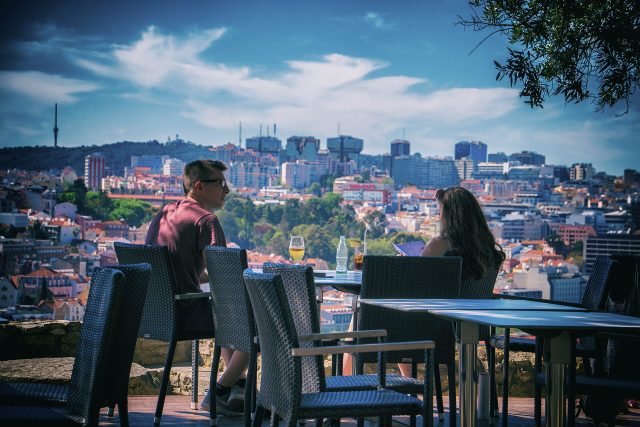
Perched atop one of Lisbon’s highest hills, the Castle of São Jorge watches over the city like an old guardian who has seen it all. Its walls have stood through centuries of change—Moorish rule, Christian conquest, the rise and fall of empires, and the devastating earthquake that reshaped the city below. Today, the castle’s viewing terrace isn’t just a place to admire the view; it’s where history and the present day intersect so seamlessly that time itself seems to soften, as if the past isn’t quite ready to let go.
The hill has been a strategic stronghold since the Moorish era, when Lisbon was part of Al-Andalus. Back then, the fortress was known as Castelo de São Jorge, serving as both a military outpost and a royal residence. After the Reconquista, when the city came under Portuguese control, the castle became a symbol of the new order. Kings were crowned within its walls, pivotal decisions were made, and in the 16th century, it even housed the first royal library. The earthquake of 1755 destroyed much of the original structure, but the stones that remain still carry the weight of those moments, even if only in fragments.
What stands today is less a fortress and more a monument, carefully restored in the 20th century to preserve its essence while making it accessible. The viewing terrace on the southern side offers a sweeping panorama of Lisbon. From here, the Tagus River unfolds like a wide ribbon, its waters reflecting the sunlight as it winds toward the ocean. The city’s red-tiled roofs cascade down the hills, punctuated by church spires and the occasional dome. On clear days, the view stretches all the way to the distant hills across the river, where the city’s outskirts begin to blur into the countryside.
The walk up to the castle is part of the experience. The narrow, winding streets of Alfama, with their whitewashed houses and balconies draped in flowers, gradually give way to broader terraces. The air feels different here—quieter, with only the cries of seagulls breaking the stillness, a reminder of the ocean’s proximity. The viewing terrace itself is more than just a railed platform; it’s part of the original battlements, where you can walk along the crenellations, peer down at the city below, and feel the weight of history beneath your feet.
Sunset is the best time to visit. As the sun dips toward the horizon, the city takes on a golden hue, and the shadows of the towers stretch long across the walls. Locals often gather here too—some with friends, others walking their dogs, as if the castle isn’t just a relic but a shared space, a place where the past and present coexist. The atmosphere becomes intimate, almost familial, as if the castle belongs not just to history but to the people who live in its shadow.
Inside the castle walls, a few points of interest remain. The small archaeological museum displays artifacts from different eras—Roman coins, Moorish pottery—each piece a quiet testament to the layers of history buried beneath the city. There’s also a garden with orange trees, where visitors can sit in the shade and listen to the rustling leaves. But the real draw isn’t the exhibits; it’s the chance to walk where kings and soldiers once stood, to touch the same stones they did. Every tower, every corner of the fortress has a story, and if you listen closely, you might hear the echoes of the past whispering through the wind.
The Castle of São Jorge isn’t just a landmark; it’s a place where Lisbon reveals itself in a different light. From this height, the city below feels both distant and immediate—the hum of trams, the bustle of people, the river flowing toward the sea. Up here, those sounds fade into the background, and for a moment, it’s as if you’re standing at the edge of two worlds. That’s why people keep coming back, not just to see the view, but to feel the pull of a place that refuses to let go of its magic, no matter how much time passes.