Perched on Lisbon’s highest hill, the Castle of São Jorge has watched over the city for centuries, its walls bearing the marks of time and the hands of those who shaped Portugal’s history. The site was first fortified by the Visigoths, then expanded by the Moors in the 11th century, who built a fortress that would become a symbol of their rule. In 1147, Afonso Henriques, the kingdom’s first king, seized the castle after a fierce siege, claiming it as a cornerstone of the newly established Portuguese nation. For centuries, it served as a royal residence, a place where monarchs held court and made decisions that would steer the country’s fate.
By the 16th century, the royal court had moved closer to the river, leaving the castle to take on new roles—as a military barracks, a prison, and eventually a ruin. The devastating earthquake of 1755 left much of it in disrepair, its once-grand halls reduced to crumbling stone. What stands today is largely the result of 20th-century restoration, a careful reconstruction of its walls, eleven towers, and courtyards. The work aimed to preserve the castle’s medieval character while making it accessible to visitors, though some might argue that the modern touches have softened its ancient edges.
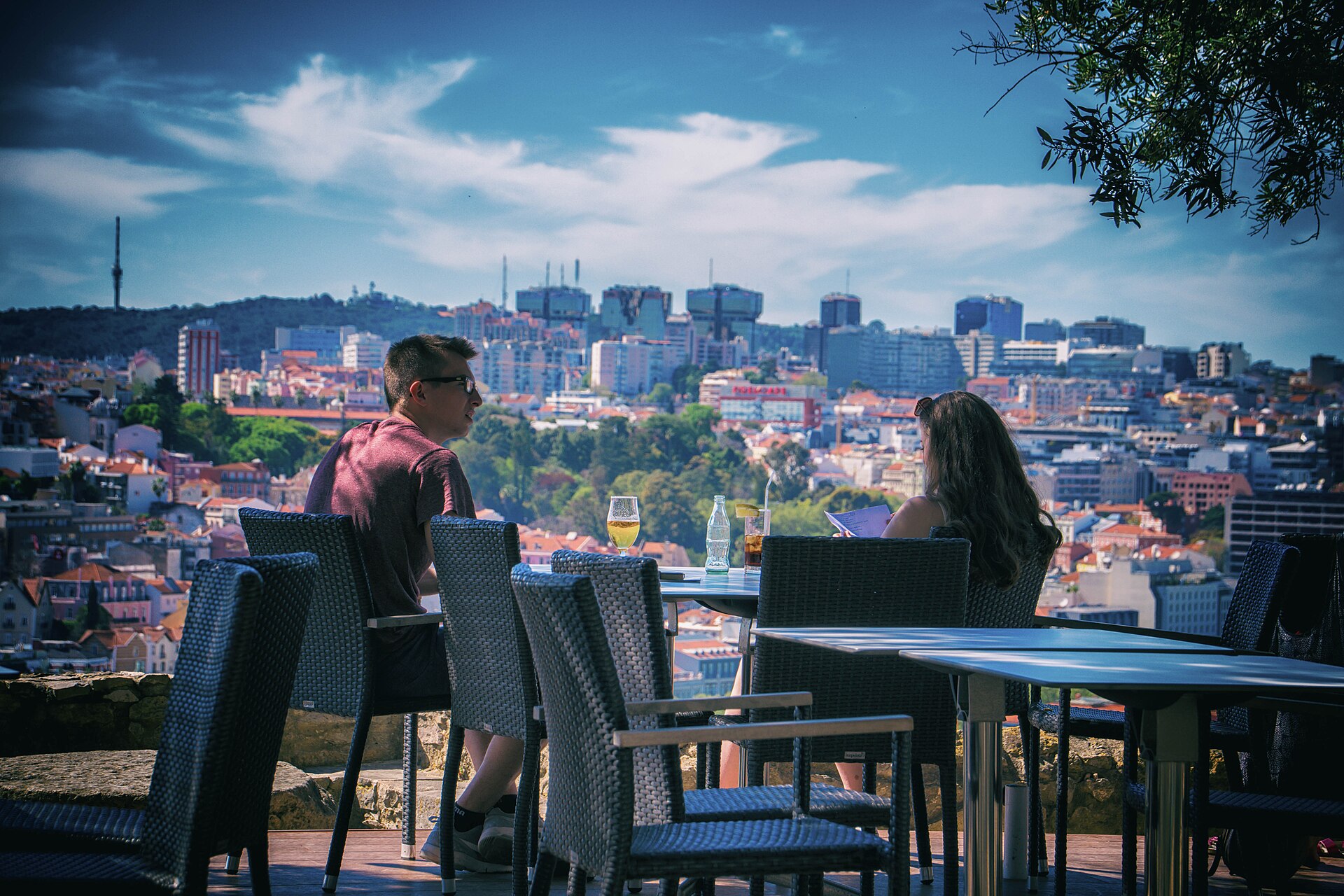
The real draw here isn’t just the architecture but the view. From the terraces and ramparts, Lisbon unfolds in every direction—the red-tiled roofs of Alfama cascading down the hillside, the broad expanse of the Tagus River stretching toward the horizon, and the 25 de Abril Bridge cutting a steel line across the water. On clear days, the city seems to breathe, its layers of history visible in the mix of old and new. The best time to take it in is late afternoon, when the light turns golden and the crowds thin out, leaving the space to those who’ve climbed the hill for the quiet reward of a sunset.
One of the castle’s more unusual features is the *câmara escura*, a periscope-like device housed in one of the towers. Using a system of lenses and mirrors, it projects a live, panoramic image of the city onto a white table inside a darkened room. A guide narrates the scene, pointing out landmarks and sharing snippets of Lisbon’s past. The experience is oddly intimate, as if the city has been distilled into a moving painting. It’s worth timing your visit to coincide with a session, though the device only works in good weather.
The castle grounds are home to a small flock of peacocks, their iridescent feathers a flash of color against the stone. They roam freely, perching on walls and strutting along pathways, though signs politely remind visitors not to feed them. The gardens, while modest, offer a place to rest, with benches tucked beneath the shade of trees. Nearby, a small archaeological exhibit displays fragments of the site’s past—tiles, pottery, and remnants of the structures that once stood here. It’s a quiet corner, often overlooked, but a reminder of how much history lies beneath the surface.
Getting to the castle is part of the experience. The streets of Alfama wind steeply upward, a labyrinth of narrow alleys and staircases that can leave even the fittest visitors breathless. The iconic Tram 28 rumbles past on its way up, offering a scenic but crowded alternative. For those who prefer to avoid the climb, buses and elevators tucked into the hillside provide easier access. Once inside, the ticket grants same-day entry, though there’s no need to rush—there’s plenty to see, from the ramparts to the small café serving coffee and pastries.
The castle isn’t without its challenges. The walls are low in places, with few barriers, so it’s worth keeping an eye on children. In summer, the heat can be intense, with little shade to offer relief, while winter brings biting winds that sweep across the exposed hilltop. The crowds, too, can be overwhelming, especially in peak season, when lines form at the ticket booths. Arriving early or visiting in the late afternoon can make the experience more pleasant, allowing time to wander without the press of other visitors.
From the castle, the descent into Alfama is gentler than the climb. The stairs lead past crumbling facades and hidden courtyards, where laundry hangs from balconies and the scent of grilled sardines drifts from open windows. The route eventually brings you to the Sé Cathedral, its twin towers a landmark in the lower city, and from there, it’s a short walk to the riverfront. At night, the castle is illuminated, its silhouette glowing against the dark sky, a beacon visible from across Lisbon. It’s a reminder that some places aren’t just about what you see when you’re there, but what they represent when you look back.