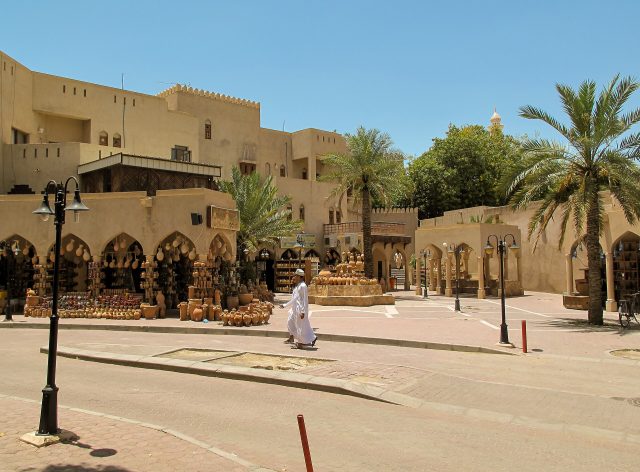
Perched on a gentle rise in the heart of the Bahla Oasis, the fortress feels like a place where time has settled into stillness. The surrounding palm groves and the earthen walls that once guarded the settlement create a sense of quiet resilience, as if the land itself has learned to endure the desert’s extremes. Bahla was more than just a town—it was the seat of the Nabhani dynasty, a powerful ruling family that shaped the region’s history during the medieval period. The fortress wasn’t merely a military stronghold; it was a statement of authority, a hub of trade, and a center of craftsmanship, particularly renowned for its pottery, which traveled across the Arabian Peninsula.
The architecture here tells a story of practicality meeting artistry. The fortress is built primarily from *lahm* or *tabya*—unfired mud bricks mixed with straw and clay, a material perfectly suited to the harsh climate. These thick walls, some several meters deep, acted as natural insulators, keeping interiors cool during the scorching days and retaining warmth through the chilly nights. Inside, the layout is a maze of courtyards, narrow passageways, and hidden chambers, with remnants of ancient ventilation systems that once circulated air through the structure. The design reflects a deep understanding of the environment, where every element served a purpose, from defense to daily comfort.
Over the centuries, the fortress evolved, absorbing influences from different eras. The oldest sections date back to the 13th century, but much of what stands today was constructed between the 17th and 18th centuries, when Bahla thrived as a commercial and cultural hub. The fortress wasn’t just a military installation—it was a self-contained world. Within its walls were living quarters, storage rooms, workshops, a mosque, and even a prison. The central courtyard, in particular, offers a sweeping view of the surrounding landscape, where the stark contrast between the endless dunes and the lush greenery of the oasis underscores the delicate balance of life in the desert.
The fortifications are among the most striking features of the fortress. Massive walls, reinforced with towers, once served as lookout points, while the main entrance was protected by heavy wooden gates reinforced with metal. Local lore suggests that a moat once encircled the structure, though little evidence of it remains today. Inside, traces of defensive mechanisms—hidden passages, traps, and strategic blind spots—hint at the ingenuity of its builders. Walking through these spaces, it’s easy to imagine the fortress as it once was: a place of vigilance, where every stone played a role in its survival.
Like many ancient sites, Bahla Fortress is steeped in legend. One tale claims that the fortress was built overnight by djinn, summoned by a local ruler who demanded its completion before dawn. Another story speaks of a well within the fortress walls, its water said to possess healing properties—a belief that persists among some locals even today. While these stories are likely more fable than fact, they capture the awe the fortress has inspired for generations. They also reflect the deep connection between the people of Bahla and their history, where the past feels alive in the very air.
In 1987, Bahla Fortress was designated a UNESCO World Heritage Site, a recognition of its significance not just to Oman but to the broader story of human ingenuity. Restoration efforts have been ongoing for decades, carefully preserving the structure while acknowledging the challenges of maintaining a site built from such fragile materials. Some areas remain off-limits due to safety concerns, but what is accessible offers a powerful glimpse into the past. The worn surfaces of the walls, the intricate carvings on wooden beams, and the faint remnants of Arabic inscriptions all speak to a time when this place was the heart of a thriving community.
The best time to visit is during the cooler hours of early morning or late afternoon, when the light softens the harsh edges of the desert and the heat becomes more bearable. The fortress is quieter then, with only the occasional rustle of palm fronds or the distant murmur of locals going about their day. Wandering through the courtyards and corridors, it’s easy to lose track of time, as if the fortress itself is whispering stories of the caravans that once passed through, the merchants who traded here, and the rulers who called it home. Sunset is particularly atmospheric, casting the walls in warm hues and stretching shadows across the ancient stones.
Beyond the fortress, the Bahla Oasis offers a glimpse into a way of life that has changed little over the centuries. The surrounding palm groves are still tended by local farmers, who cultivate dates, pomegranates, and citrus using traditional methods. Nearby, the old market bustles with activity, selling everything from handmade pottery to woven palm fiber goods and spices. The *aflaj*—ancient irrigation channels that have sustained the oasis for generations—are still in use, a testament to the enduring relationship between the people and their land. Together, these elements create a sense of continuity, as if Bahla is not just a relic of the past but a living, breathing community.
What makes Bahla Fortress special is its unpretentious authenticity. Unlike some of Oman’s more polished historical sites, it hasn’t been sanitized for mass tourism. There are no crowds, no souvenir stalls, no guided tours rushing visitors from one highlight to the next. Instead, there’s space to wander, to sit quietly in a corner of the courtyard, and to let the weight of history settle in. It’s a place that rewards patience, where the details—the texture of the walls, the play of light through an arched window, the faint scent of earth and old wood—tell their own stories. For those who take the time to listen, Bahla Fortress offers something rare: a connection to the past that feels personal, intimate, and utterly real.