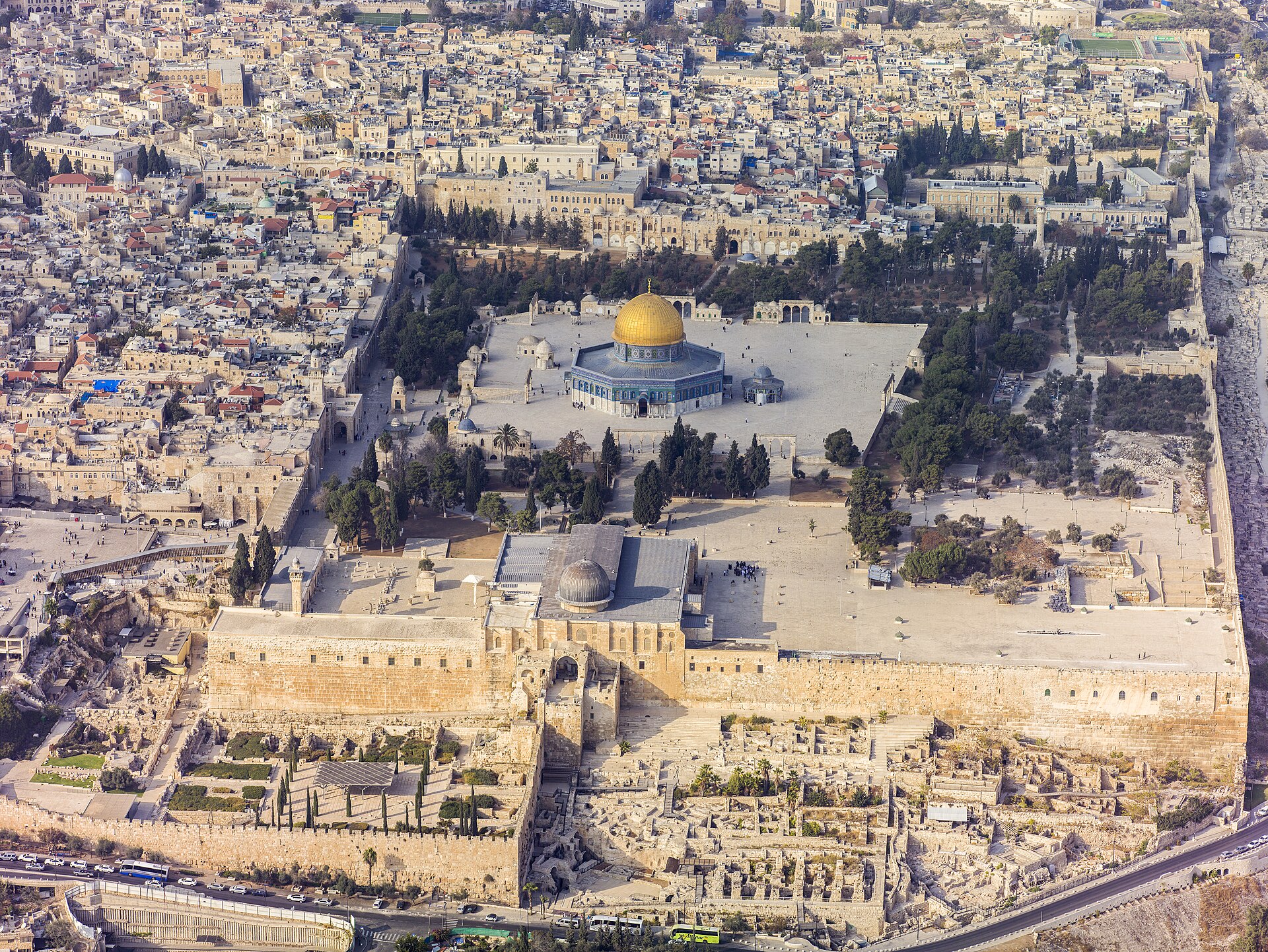
The Temple Mount is one of Jerusalem’s most layered and complex places, where history, faith, and politics intersect in ways that have shaped civilizations. This modest plateau within the Old City’s ancient walls has drawn millions over millennia, its stones bearing witness to events that became foundational to Judaism, Christianity, and Islam. Today, it remains both a sacred site and a symbol—revered by some, contested by others, and impossible to ignore for anyone who walks the streets of Jerusalem.
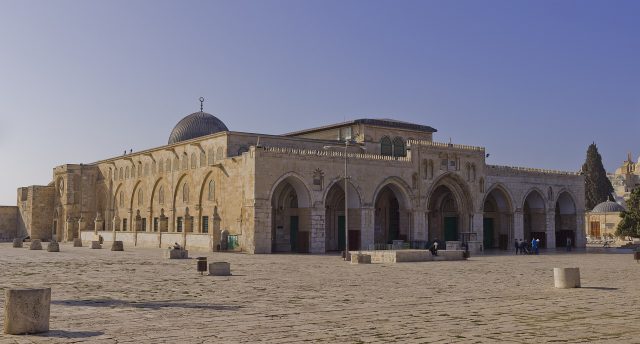
The architecture of the Temple Mount tells a story of empires and beliefs. After the Romans destroyed the Second Temple in the first century, the site lay largely bare for centuries. It was only in the seventh century, following the Arab conquest, that two of its most iconic structures took shape: the Dome of the Rock and Al-Aqsa Mosque. The Dome, with its gleaming golden cupola and intricate mosaics, dominates the skyline, blending Byzantine and Persian influences into a form that feels both timeless and distinctly Islamic. Al-Aqsa, situated at the southern edge of the plateau, is less ornate but no less significant, revered as the third-holiest site in Islam. Together, they transformed the mount into a spiritual and architectural landmark.
For Jews, the Temple Mount is the holiest site in their faith, the place where the First and Second Temples once stood. According to tradition, it was here that Abraham prepared to sacrifice his son Isaac, and where King Solomon built the First Temple, a center of worship and governance for ancient Israel. The Second Temple, later destroyed by the Romans, was equally pivotal, and though no temple stands today, the site retains its sacredness. Many Jews pray at the Western Wall, the last remaining section of the Temple Mount’s retaining wall, a place of quiet reflection and collective memory.
Muslims know the site as Haram al-Sharif, or the Noble Sanctuary. It is here, they believe, that the Prophet Muhammad began his Night Journey to the heavens, ascending from the very rock now enclosed by the Dome. Al-Aqsa Mosque, at the southern end of the mount, was the first qibla—the direction Muslims faced during prayer—before it shifted toward Mecca. Today, the site is second only to Mecca and Medina in its spiritual importance, drawing pilgrims and worshippers from across the world.
Christians, too, hold the Temple Mount in reverence, though their connection to it is often quieter. The New Testament recounts Jesus preaching in the Temple, driving out money changers, and gathering with his disciples after the Resurrection. For many Christians, the mount is a stop along the path of Christ’s final days, a place where prophecy and history converge. Yet unlike the Western Wall or the Dome of the Rock, the Christian presence here is less visible, woven into the broader tapestry of the site’s significance rather than defining it.
The atmosphere on the Temple Mount shifts with the hours. In the early morning, when the first light touches the Dome’s gold, the plateau is still and almost empty. By midday, it fills with the murmur of prayers, the shuffle of footsteps, and the occasional call to worship. Inside the Dome of the Rock, the air is cool and dim, the only light filtering through stained glass. The sacred rock at its center, encircled by a wooden railing, is the focal point, its surface worn smooth by centuries of touch. Al-Aqsa, with its vast courtyard and rows of columns, feels more open, its simplicity a contrast to the Dome’s opulence.
Visiting the Temple Mount is not like visiting other historical sites. Access is tightly controlled, with different rules for different people. Muslims may enter freely at any time, while non-Muslims are restricted to specific hours and must use designated gates. Tourists are allowed to walk the grounds but not to enter the mosques. Photography is permitted, though some areas are considered too sacred for cameras. Security is ever-present, and tensions—whether political or religious—can sometimes close the site without warning.
More than a tourist attraction, the Temple Mount is a place where the past feels alive. Every stone seems to remember the footsteps of kings, prophets, and conquerors. It is a site of devotion, but also of unresolved questions, where the weight of history presses against the realities of the present. For some, it is a place of prayer; for others, a symbol of loss or longing. Yet no matter how it is perceived, the Temple Mount remains at the heart of Jerusalem, a space where time moves differently, and where the echoes of the past are never far away.