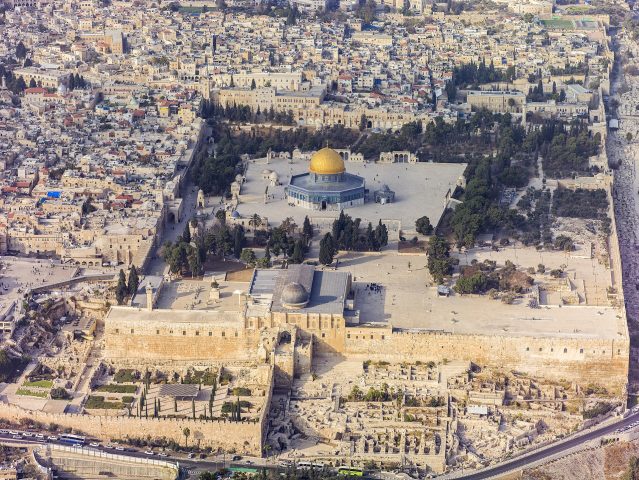
The Western Wall, often called the Wailing Wall, is one of those rare places that lingers in the mind long after you’ve left. Standing at the foot of the Temple Mount in Jerusalem’s Old City, it isn’t just a relic of ancient architecture—it’s a living connection to history, faith, and the unspoken hopes of countless people. The stones themselves seem to carry the weight of centuries, and even those who arrive as casual visitors often find themselves pausing, drawn into the quiet intensity of the moment. Time feels different here, as if the past and present exist side by side in the same breath.
This wall is all that remains of the Second Jewish Temple’s western retaining structure, destroyed by the Romans in 70 CE. The Temple had been the heart of Jewish religious and communal life, and its loss was a profound tragedy. For nearly two thousand years, the Western Wall has stood as a symbol of mourning, yet also as a place where people continue to turn toward something greater than themselves. The stones, fitted together without mortar, have endured through sheer force of time, their uneven surfaces worn smooth by the touch of generations. Each crack and crevice tells a story, though the details have long since faded into the silence of history.
Today, the Western Wall is the most sacred site in Judaism, a place of pilgrimage for Jews from around the world. People come to pray, to press written prayers into the gaps between the stones, or simply to stand in quiet reflection. The tradition of leaving notes is relatively recent, but it has become deeply ingrained—there’s a sense that words left here carry a particular weight. On the eve of major holidays like Yom Kippur and Passover, the plaza fills with worshippers, and the air hums with a mix of solemnity and anticipation. Even on ordinary days, the wall is never empty. Some read from the Torah, others weep, and some just sit, staring at the stones as if searching for answers in their ancient patterns.
The site is divided into two sections: a large open plaza for men and a smaller, separated area for women. This division reflects traditional Jewish practice, where men and women pray separately. The wall itself is composed of multiple layers, with the lowest courses dating back to the time of Herod the Great. The stones in these lower rows are massive, some weighing several tons, their surfaces polished by the hands of millions over the centuries. The upper layers were added later, including during the Ottoman period, but the oldest stones remain the most striking, their sheer scale a reminder of the engineering prowess of the past.
For many, the Western Wall is more than a religious site—it’s a national symbol. Israeli soldiers take their oaths here, and world leaders visit to pay their respects. One of the most emotional moments in modern Israeli history came in 1967, after the Six-Day War, when Israeli troops reached the wall for the first time in decades. The images of soldiers weeping as they touched the stones became iconic, a moment of reunification after years of separation. Since then, the wall has been accessible to all, though the political tensions surrounding it remain complex.
The atmosphere at the Western Wall is unlike anywhere else. There’s a sense of both sorrow and hope, of ancient traditions meeting the present day. In the shadow of the stones, you might see elderly men rocking in prayer, young couples taking photos, tourists trying to make sense of it all, and locals for whom this place is part of everyday life. At night, when the lights cast long shadows across the wall, the scene takes on a particular grandeur. The notes tucked into the crevices catch the light, as if the prayers themselves are glowing, a quiet reminder of the countless voices that have passed through this place.
This isn’t a museum or a tourist attraction in the usual sense. It’s a place where history is still unfolding, where each visitor becomes part of something larger than themselves. The wall doesn’t just preserve the past—it absorbs the present, the hopes and sorrows of those who come here. You might arrive as an outsider, but it’s hard to leave without feeling that you’ve touched something deeply human. That, perhaps, is why the Western Wall continues to draw people in, no matter how much the world around it changes. The stones don’t speak, but they don’t need to—they’ve been listening for centuries.