Nalanda Gedige
Nalanda Gedige is one of those quiet places in Sri Lanka where the past doesn’t just linger—it settles into your bones. Tucked away in the rolling hills near Dambulla, the temple feels like a pause in time. Unlike the island’s famous cave shrines or towering stupas, this modest Buddhist complex rarely draws crowds. There’s no rush here, no need to do anything but stand still and listen to the silence.
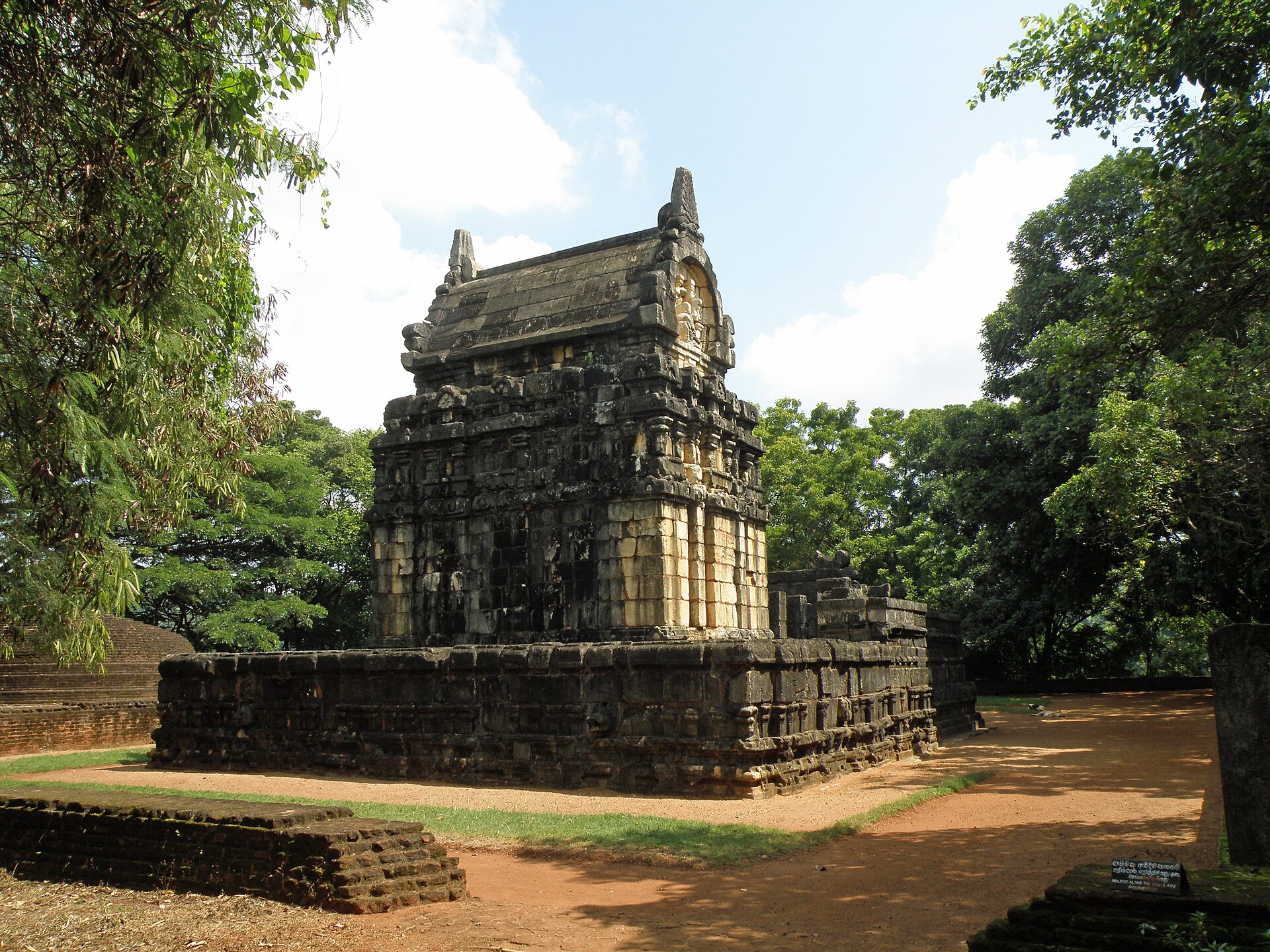
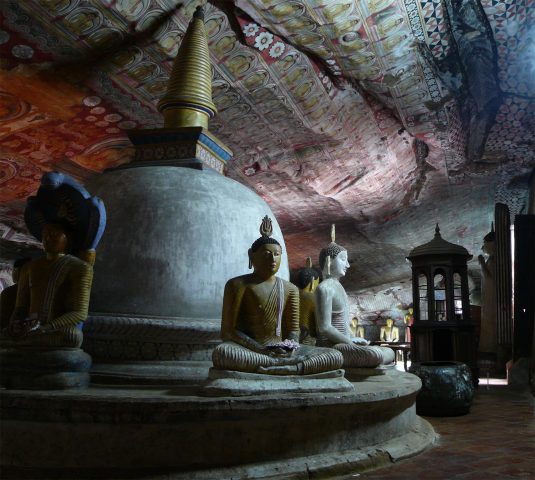
The architecture of Nalanda Gedige has a quiet elegance. Built in the traditional Sinhalese style, the temple’s curved roofs and carved wooden details are unmistakably Sri Lankan. A low stone wall encircles the main building, sheltering a small courtyard where the only sounds are the rustle of leaves and the call of birds. The walls, made of clay and stone, bear the marks of time. Inside, the prayer hall is simple—columns supporting a high ceiling, a Buddha statue at its center, its features softened by dim light. The space feels lived-in, as if the monks who tend it have merely stepped away.
Who built Nalanda Gedige? Some say King Valagamba, the first-century BCE ruler who fled Anuradhapura when Tamil invaders overran his kingdom. Legend claims this was one of the places where he sought refuge. After reclaiming his throne, he repaid the monks who had sheltered him by constructing the temple. The exact truth may never be known, but the stories cling to the stones like moss.
Today, the temple remains an active place of worship. Monks in orange robes move quietly through its halls, while devotees arrive with offerings—flowers, oil for lamps, coins left at the feet of statues. The walls are darkened by the smoke of oil lamps, the plaster cracked, the wooden carvings worn smooth by touch. There’s no gilded opulence here, just the quiet dignity of something that has endured.
You might find an old monk sweeping the courtyard, his broom made of twigs.
The landscape around Nalanda Gedige is as compelling as the temple itself. The hills near Dambulla are a patchwork of dry savanna and scattered trees. Ancient ruins dot the area—crumbling stupas, fragments of stone walls, weathered statues half-buried in the grass. Local herders pass through with their cattle, their bells ringing softly in the still air.
Visiting Nalanda Gedige isn’t about ticking off a tourist checklist. There are no guided tours, no vendors, no crowds. Instead, there’s space to sit on a sun-warmed stone bench, to watch the light shift across the hills, to let your thoughts drift. The temple doesn’t demand attention; it simply exists, as it has for centuries.
If you’re lucky, you might arrive when the monks are chanting, their voices rising and falling in a language that has echoed through these halls for generations.
For those who seek Sri Lanka’s history, Nalanda Gedige is a quiet revelation. It’s not one of the island’s headline attractions, and that’s why it feels authentic. There are no modern distractions here—just stone, wood, and the slow accumulation of time. It’s a place for travelers who prefer depth over spectacle, who are willing to sit with the past rather than snap a photo and move on.
If you find yourself in this part of Sri Lanka, don’t hurry past. Spend an hour at Nalanda Gedige. Walk the paths that wind through the hills, where the grass brushes against your ankles and the air smells of earth. If the monks aren’t occupied, they might share a few words. There’s no grand epiphany waiting here—just the quiet realization that some places don’t need to shout to be heard.