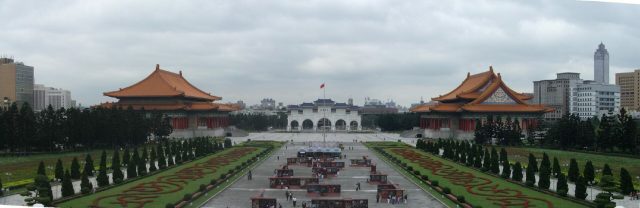
Lungshan Temple in Taipei’s Daan District is one of those places that lingers in your memory long after you’ve left. It doesn’t demand attention like some of Taiwan’s grander temples, nor is it overrun with tourists, despite sitting at the heart of the city. Instead, it carries a quiet presence—its weathered walls darkened by time, its intricate rooflines bearing the marks of craftsmen who shaped them centuries ago, and the soft murmur of prayers blending with the rustle of banyan leaves in the courtyard.
The temple’s origins trace back to the mid-18th century, when settlers from Fujian brought with them a statue of Guanyin, the goddess of mercy. They established themselves along the Danshui River, and soon after, a small shrine was built to safeguard the community. Over the years, Lungshan grew, surviving earthquakes, fires, and wars, each time rebuilt not as a relic but as a living part of the city. Today, it stands as both a place of worship and a testament to Taiwan’s layered history, where the past feels tangible, like the pages of a well-worn book.
The architecture is classic southern Chinese temple design, adapted with local touches. The main hall, with its sturdy columns and carved beams, manages to feel both grand and intimate. The roof is adorned with traditional dragons and phoenixes, while mythical creatures perch at the corners, meant to ward off evil spirits. The wooden panels inside are particularly striking, their intricate carvings depicting scenes from Chinese legends, Buddhist parables, and even glimpses of everyday life—almost as if the ordinary and the divine were meant to coexist. Inside, the dim light from candles and incense casts a warm glow on the statues, giving them an almost lifelike presence.
Beyond its religious role, Lungshan Temple is a place where different facets of Taiwanese culture intersect. Here, elderly devotees recite sutras, young couples seek blessings, and vendors from the nearby market leave offerings at the altars. On festival days, the temple transforms—its courtyard fills with people, gongs echo through the air, and the scent of roasted chestnuts and incense mingles with the chatter of lottery ticket sellers and sweet vendors. The Lantern Festival and Guanyin’s birthday are especially vibrant, with thousands of lights illuminating the night and offerings of flowers and fruit honoring the goddess of compassion.
What makes Lungshan particularly compelling is its deep connection to the surrounding neighborhood. Unlike some temples that feel removed from daily life, this one is woven into the fabric of the area. Just outside its gates, a bustling market sprawls, selling everything from fresh produce to antique coins, while nearby alleys hide tiny shops peddling traditional remedies and charms. Locals come here not just to pray but to sit under the trees, catch up on news, or enjoy a cup of tea. For many, the temple is a landmark, a place where the day begins and ends.
Despite its age, Lungshan doesn’t feel frozen in time. Restorations refresh old murals, altars are updated, and statues are occasionally rearranged to make room for new offerings. Yet the temple retains its atmosphere—calm, slightly mysterious, as if time moves to its own rhythm. That might be why people keep returning, not just for spiritual solace but for the sense of belonging to something larger than the everyday.
If you find yourself in Taipei, take a moment to step inside. Wander the courtyard, listen to the sounds, breathe in the scent of sandalwood and incense, and watch sunlight filter through the lattice windows. You may not understand all the rituals or symbols, but you’ll feel the life here—the kind that comes not just from the people who pray but from the invisible thread connecting past and present. Lungshan Temple doesn’t need grand descriptions; it speaks for itself.