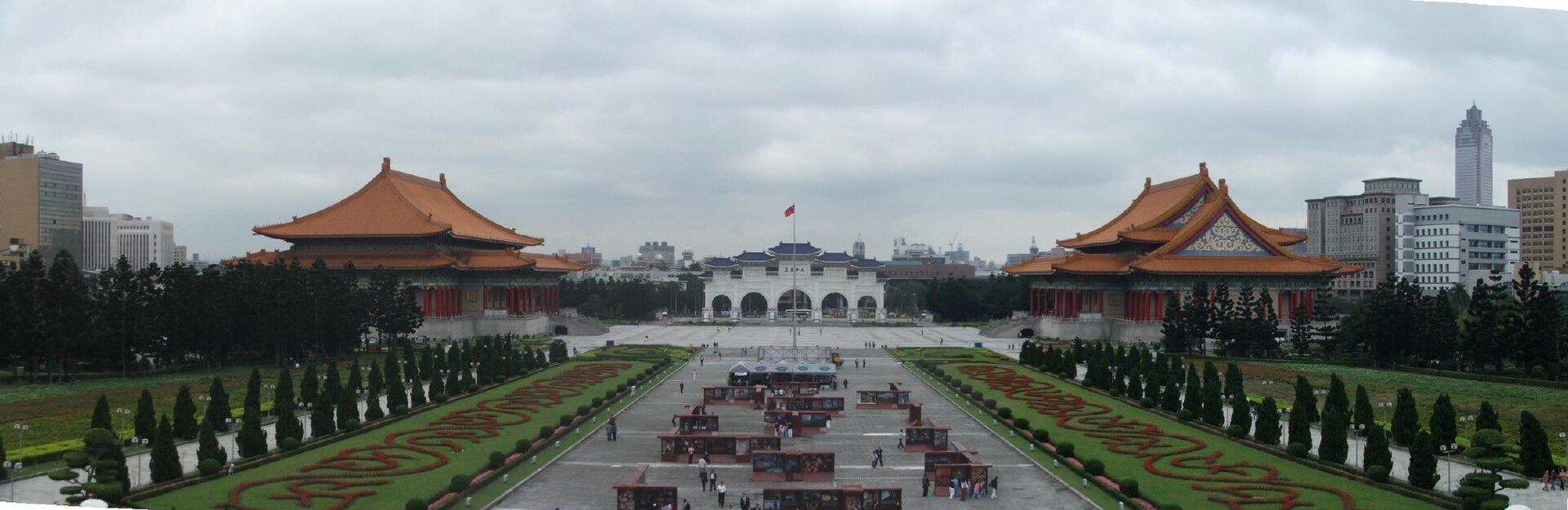
The National Theater and Concert Hall in Taipei is one of those rare places where tradition and modernity coexist without effort, where architecture doesn’t just stand apart from the city but becomes part of its rhythm. Nestled in Daan Park, at the heart of Taiwan’s capital, the complex has been a cornerstone of the island’s cultural life for decades. When it opened in the late 1980s, it marked a turning point—not just as a venue for world-class performances, but as a space that nurtured local artists and brought international art to Taiwanese audiences for the first time.
The buildings themselves are a striking blend of old and new. Their design pays homage to classical Chinese architecture, with sweeping roofs and upturned eaves reminiscent of ancient pagodas. Yet the lines are softer, the proportions more fluid, as if the structures have grown organically from the park around them. Inside, every detail serves a purpose: the acoustics in the concert hall are so precise that musicians often compare it to the finest venues in Europe, while the theater’s stage is designed to accommodate everything from experimental works to traditional Chinese opera. The main hall seats over two thousand people, yet it never feels overwhelming—just intimate enough to make every performance feel personal.
The story of this place is deeply tied to Taiwan’s own evolution. The 1980s were a time of political and social change, as the island moved toward democracy. The government envisioned the theater and concert hall as a symbol of this new era, a cultural landmark that would reflect Taiwan’s growing confidence. Local architects were entrusted with the project, and what emerged was more than just a performance space—it became a gathering place for the city. Today, the complex hosts not only concerts and plays but also festivals, lectures, and even weddings, proving that art here is as much about community as it is about spectacle.
The atmosphere shifts with the time of day. In the morning, the area is quiet, with visitors taking photos against the backdrop of the buildings and locals strolling through the park or sitting on the steps, enjoying the shade. As evening falls, the space transforms. The illuminated facades reflect in the nearby pond, and the sound of music spills from the halls, blending with the hum of the city. It’s in these moments that the place feels most alive, drawing people in not just as an audience, but as participants in something larger.
Daan Park, which surrounds the complex, is a world of its own. In a city where green spaces can feel scarce, it offers a rare escape without leaving the center. In summer, the park hosts open-air film screenings and concerts; in winter, festive markets take over the lawns. Families come here with children, dog walkers linger on the paths, and students sprawl on the grass with books. The park doesn’t just complement the theater and concert hall—it extends their spirit, making art feel like a natural part of everyday life.
For first-time visitors to Taipei, the National Theater and Concert Hall is more than a landmark—it’s a way to understand how Taiwanese people engage with culture. There’s no pretension here, no pressure to perform appreciation. You don’t need to buy a ticket to experience it; just walking through the grounds, stopping by one of the cafes, or sitting on the steps outside can be enough. The place has a rhythm of its own, one that invites you to slow down and listen.
Over the years, the complex has become more than just a cultural hub—it’s a symbol of Taiwan itself. You’ll see its image on postcards and in guidebooks, but no photograph can capture the feeling of standing in front of these buildings. There’s no grandiosity, no forced opulence, just a quiet harmony between architecture, nature, and art. That’s why it remains one of Taipei’s most beloved spots, a place that doesn’t just host performances but creates moments worth returning to. Whether you come for a concert, a walk in the park, or just to sit and watch the city go by, it leaves an impression that lingers long after you’ve left.