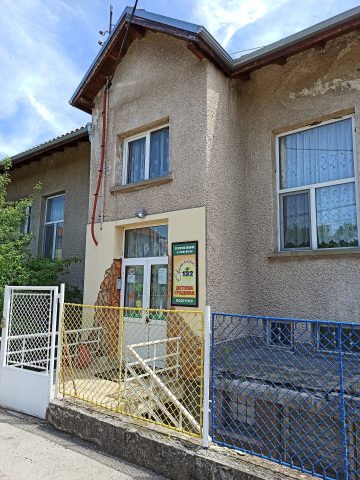
Villa Ferdinand in Bankya is one of those rare places that seem frozen in time, preserving the spirit of an era when Bulgaria was a young kingdom and its rulers sought refuge in the quiet corners of the country. Built in the early 20th century, this residence served as a summer retreat for Tsar Ferdinand I, a figure deeply intertwined with Bulgaria’s history during that period. Unlike the grand royal palaces, this villa was never an official seat of power but rather a private escape where the monarch could step away from the capital’s bustle and enjoy the healing waters and natural beauty of Bankya.
The architecture of the villa reflects the tastes of its original owner, blending elements of neoclassicism and Art Nouveau in a style typical of European country estates of the time. The façade is adorned with decorative details, and though the interiors have been altered over the years, historical accounts suggest they were once lavish and refined. The surrounding park was a particular point of pride, designed with rare plants, winding paths, and a landscape carefully crafted to evoke tranquility and seclusion.
Bankya had already established itself as a resort town by the time Ferdinand chose it as his retreat. Known for its mineral springs, the area attracted aristocrats and wealthy city dwellers seeking relaxation and health benefits. Ferdinand, who had a keen interest in botany and medicine, saw potential in Bankya beyond mere leisure. He played an active role in developing the town, supporting the construction of new sanatoriums and improving its infrastructure. The villa became a symbol of his vision for Bankya—a place where natural healing properties met European comfort.
Today, the villa looks different from how it did in Ferdinand’s time. After his abdication in 1918, the building changed hands multiple times, serving as a sanatorium and later a museum. The interiors were renovated to suit these new purposes, but the exterior retains much of its historical character. The park, though no longer as botanically diverse as it once was, remains one of the most well-maintained green spaces in Bankya. A stroll through its paths, especially in warmer months, offers a sense of calm, with the lush greenery providing shade and a quiet escape from the outside world.
For those interested in Bulgarian history, Villa Ferdinand is more than just an architectural landmark—it’s a window into an era when the decisions of one man shaped the nation’s path. Unlike many royal residences, this place lacks the grandeur and formality often associated with monarchy. It feels more like a home than a palace, and that intimacy is part of its charm. Even now, long after the villa ceased to belong to Ferdinand’s descendants, it retains a sense of warmth and privacy that must have drawn the tsar here in the first place.
Bankya itself is a quiet town where life moves at a slower pace than in Sofia or along the Black Sea coast. The villa fits seamlessly into its surroundings, a reminder of a time when not just monarchs but European elites came here to unwind. While the town’s resort infrastructure has evolved, its mineral springs continue to attract visitors, and the villa remains one of its most notable landmarks. Visiting it offers a chance to connect with history without stepping entirely out of the present, as Bankya still serves as a place for rest and rejuvenation.
It’s worth noting that the villa isn’t a museum in the traditional sense. There’s no permanent exhibition dedicated to Ferdinand or his era, but the building and its park tell their own story. Occasionally, temporary exhibitions or cultural events are held here, though more often, the villa simply exists as part of the town’s fabric, a quiet testament to the past. For travelers in Bankya, it serves as a starting point for understanding how this resort town developed and what role it played in Bulgaria’s history.
If you find yourself in Bankya, the villa is worth a visit, if only to see how effortlessly history and modernity coexist here. The town doesn’t strive to be a tourist hotspot, and that’s part of its appeal. There are no crowds, no souvenir stalls, no pushy vendors—just quiet streets, parks, and mineral springs that have offered healing and peace for over a century. The villa acts as a bridge between past and present, a reminder that even in a rapidly changing world, some places still feel timeless.