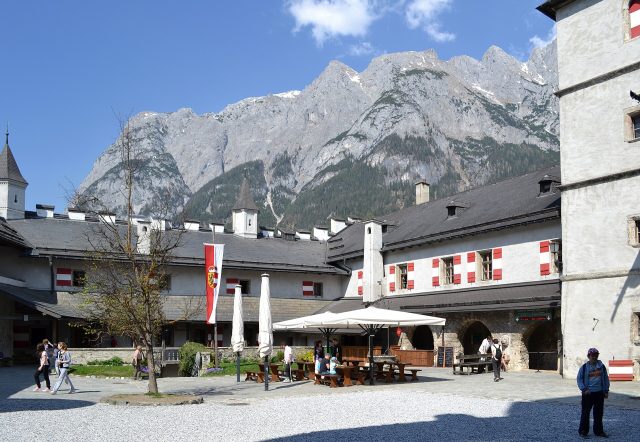
Werfen’s local history museum is one of those quiet places where the past doesn’t just sit behind glass—it lingers in the air, in the creak of floorboards, in the way sunlight falls through small, old windows. Housed in a traditional alpine building that has stood in the town center for generations, the museum feels less like an institution and more like a home where time has paused. There are no grand halls or flashy displays here, just the honest, unvarnished story of a mountain community shaped by the land and the people who worked it.
The exhibits span several centuries, tracing Werfen’s evolution from a medieval settlement to the close-knit village it is today. Much of the collection focuses on the crafts and trades that sustained the region for hundreds of years. Blacksmithing, weaving, and woodworking tools fill the rooms, their worn surfaces hinting at the skill and resourcefulness of the artisans who used them. These weren’t just jobs; they were lifelines in a place where every resource had to be carefully managed. A separate section is devoted to agriculture, with plows, scythes, and dairy equipment that speak to the challenges of farming in the Alps. Even now, when tourism and modern industry have changed the local economy, many of these traditions endure, particularly in the high pastures where cattle still graze in summer.
One of the museum’s most compelling sections is dedicated to Werfen’s salt mines, which lie just outside the town. Salt mining has been part of the region’s identity since ancient times, and for centuries, it was the backbone of the local economy. The exhibits include chunks of raw salt, miner’s tools, and yellowed documents detailing the grueling work of extracting the mineral from deep underground. But the displays also reveal how salt shaped the culture of the area—there are festival costumes, folk tales, and even superstitions tied to the mines. It’s a reminder that this wasn’t just an industry; it was a way of life, one that left its mark on everything from the town’s architecture to its social customs.
The building itself is as much a part of the story as the items inside. Constructed in the sturdy, unpretentious style typical of the region, it was once the home of a prosperous family. Thick stone walls, heavy wooden beams, and a massive stone hearth all hint at the practical needs of alpine living—keeping out the cold, making the most of limited space. The interior has been preserved with care, so walking through the rooms feels like stepping into the past. The low ceilings, the uneven floors, the way the light filters through small panes of glass—it all adds to the sense that this place has seen generations come and go.
What makes Werfen’s museum different from larger, more polished institutions is its intimacy. There are no crowds here, no rush to move from one exhibit to the next. Visitors often remark on the quiet, almost meditative atmosphere, as if the building itself is inviting you to slow down and really look. The displays aren’t arranged to impress; they’re arranged to tell a story. A spinning wheel isn’t just an artifact—it’s a link to the women who once sat by the fire, turning wool into thread. A miner’s helmet isn’t just a piece of equipment—it’s a testament to the men who spent their lives in the dark, damp tunnels beneath the mountains.
For those who have already explored Werfen’s salt mines or wandered the town’s narrow streets, the museum offers a deeper layer of understanding. After seeing the cramped tunnels where miners once worked or the ornate balconies of the old town houses, the everyday objects in the museum take on new meaning. A wooden butter churn isn’t just a tool—it’s a connection to the families who relied on dairy farming to survive. A ledger from the 18th century isn’t just a document—it’s a record of the trade that built the town. Even locals sometimes visit, pointing out familiar names in old photographs or explaining to their children how their ancestors lived.
The museum is small enough that you can see everything in under an hour, but it’s the kind of place where time doesn’t matter. There’s no need to hurry. You can linger over a display of hand-carved pipes, flip through a book of handwritten recipes, or study a map of the valley from a century ago. Occasionally, the museum hosts small temporary exhibits—perhaps a collection of old postcards or a showcase of traditional clothing—but even without them, the permanent displays are enough to leave a lasting impression.
What stays with you isn’t the scale of the collection or the rarity of the items, but the sense of continuity. Werfen’s museum doesn’t try to be comprehensive; it doesn’t need to. Instead, it offers something more valuable: a glimpse into the lives of ordinary people who shaped this place, one generation at a time. There’s no grand narrative here, just the quiet accumulation of stories—of farmers, miners, craftsmen, and families who called this valley home. When you leave, Werfen doesn’t feel like just another stop on a map. It feels like a place with roots, where the past isn’t just remembered—it’s still alive.