St. Cyriacus Church in Werfen is a place where the Middle Ages linger in the quiet stone and mountain air. The church sits in a small town at the foot of the Alps—its narrow windows, weathered walls, and slender spire rise against the Salzach Valley. Unlike Salzburg or Innsbruck, Werfen moves at its own pace, and the church does too. It doesn’t demand attention; it stands as a quiet witness to centuries of local life.
The first records of the church date to the 8th century, when this region was part of the Bavarian duchy. Werfen was a stop along the Alpine trade routes, and the church served as a spiritual refuge and gathering place for travelers and villagers. Originally built of wood, it was dedicated to St. Cyriacus, an early Christian martyr. That wooden church burned, but in the 12th century, a stone replacement rose in its place. The new building followed the Romanesque style, and traces of that early architecture remain in the lower walls and the arched portal.
Over the centuries, the church changed. The Romanesque foundation is still visible, but later additions mark shifts in style. In the 15th century, the church took on Gothic elements—ceilings grew taller, windows stretched into pointed arches. The late-Gothic altar stands out, its carvings and saintly figures emerging in the dim light of the nave. The rest of the interior is spare: faded frescoes cling to the walls, wooden pews bear marks of generations, and the air smells of aged wood and candle wax.
St. Cyriacus was never meant to be a grand cathedral. It has always been a parish church for the people of Werfen. On Sundays, the organ plays, and the congregation sings hymns, just as they have for centuries.
The small cemetery around the church holds gravestones from the 17th century. Some inscriptions are worn but legible, bearing names still found in Werfen today. The oldest stones lean, while newer ones stand straighter. Under the linden trees, you can sit and listen to the wind, imagining the lives that have passed through here—prayers whispered, tears shed, moments of quiet shared.
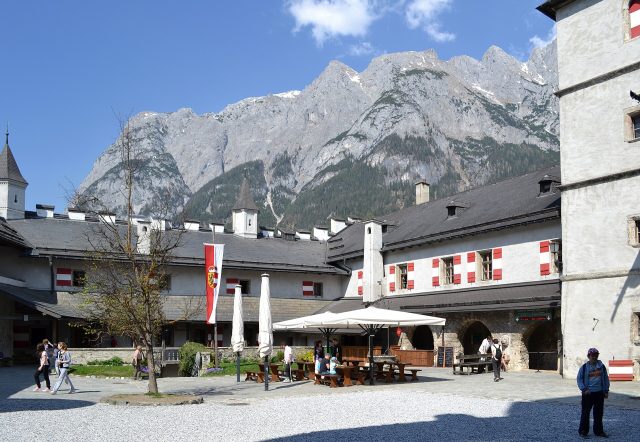
Werfen moves to the rhythm of the seasons. Most visitors come for Hohenwerfen Fortress, but the church is the town’s quiet heart. In summer, festivals and organ concerts fill the nave with music. Winter changes the scene: snow blankets the churchyard, and the spire dissolves into mist. On cold days, the town feels suspended in time, and only the church bell reminds you that life goes on.
St. Cyriacus doesn’t overwhelm you with grandeur. Its beauty is subtle, like a story unfolding in layers. It has stood through wars, plagues, and centuries. It doesn’t try to impress; it endures. That’s why those who know it value it—not for what it displays, but for what it holds: faith, memory, and the quiet resilience of a community that has called this place home for generations.