Perched on a jagged cliff above the Salzach Valley, Hohenwerfen Fortress feels like a place time forgot. Its thick stone walls and towers have watched over the small town of Werfen for nearly a thousand years, standing guard over one of the most strategically important passages through the Alps. The fortress wasn’t just built for defense—it was a statement of power, a physical manifestation of the Salzburg archbishops’ influence over the region. From this height, the entire valley unfolds below, a patchwork of forests, villages, and winding roads that once carried merchants, soldiers, and pilgrims through the mountains.
The first records of Hohenwerfen date back to the 11th century, when Archbishop Gebhard ordered its construction to protect his lands from Bavarian raids. At the time, the Salzburg archbishopric was more than a religious institution; it was a political force, and the fortress became one of its most critical strongholds. Over the centuries, it weathered sieges, fires, and reconstructions, each layer of its history etched into the stone. The peasant uprisings of the 16th century tested its defenses like never before, but the fortress held firm, its walls too thick, its position too commanding for the rebels to breach.
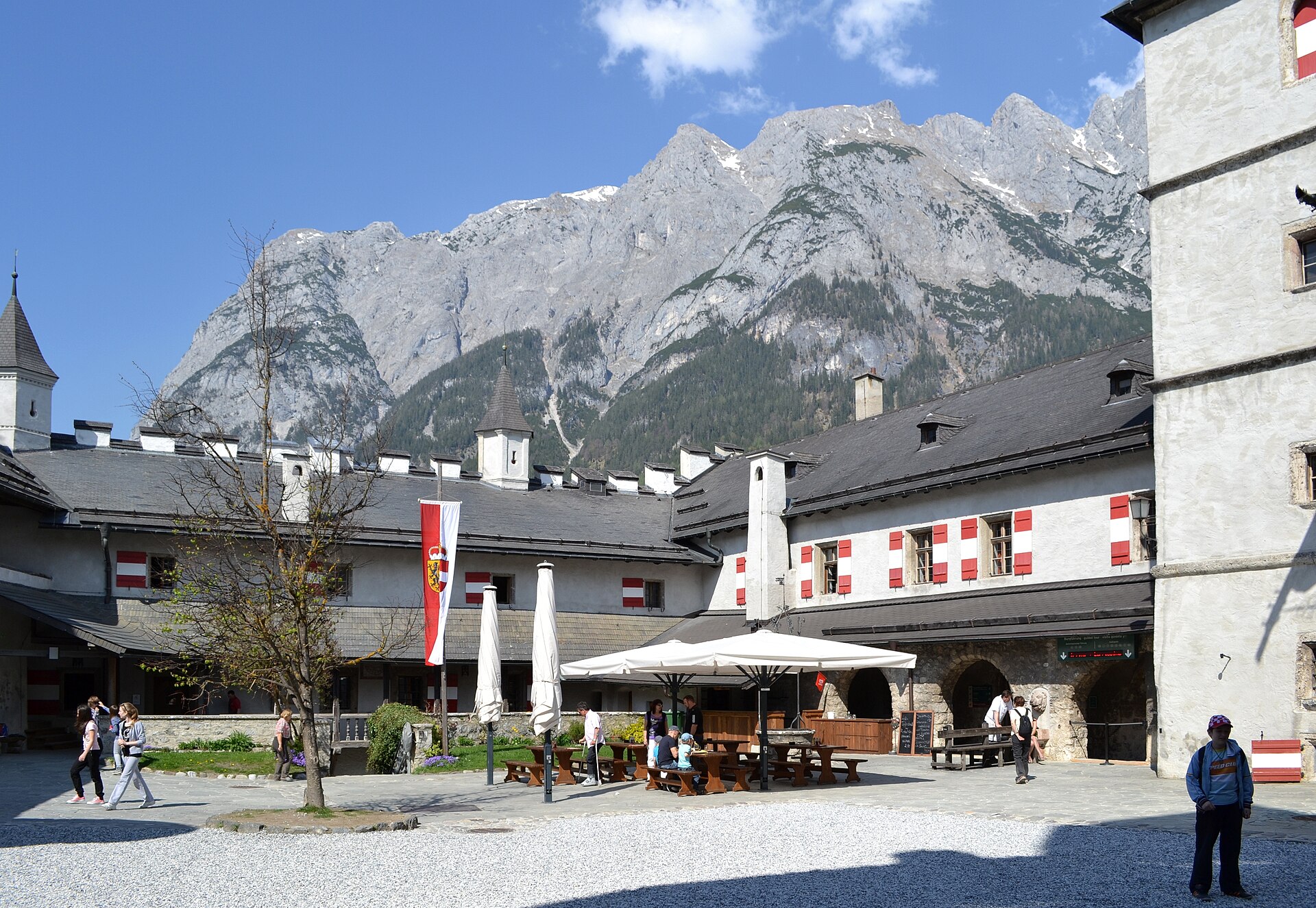
Walking through Hohenwerfen today is like stepping through different eras of history. The central keep, with its massive Romanesque tower, is the oldest part, while the living quarters and chapel were later rebuilt in the Gothic style. The inner courtyard, centered around a well carved directly into the rock, is surrounded by buildings that once housed soldiers, supplies, and prisoners. The Chapel of St. Sigismund is particularly striking—a small but elegant space adorned with 15th-century frescoes and the coats of arms of long-dead archbishops. It’s easy to imagine the echoes of prayers and footsteps that have filled this space over the centuries.
For a time, Hohenwerfen served as a prison, and not just for common criminals. In the 18th century, it held political prisoners, including Archbishop Hieronymus von Colloredo, who fell from grace after the secularization of the Salzburg archbishopric in the early 1800s. Life here wasn’t as harsh as one might expect—prisoners could walk the courtyard, and some even received visitors. The fortress’s role as a prison ended when its military importance faded, and it gradually became the museum it is today, filled with artifacts that tell its story.
One of the most fascinating parts of a visit is the armory, where rows of swords, suits of armor, and crossbows are displayed as if waiting for their owners to return. Nearby, the torture chamber offers a grim reminder of the fortress’s darker past, with instruments that were once used to extract confessions. In the summer, the courtyard comes alive with medieval festivals and jousting tournaments, where knights in full regalia reenact battles and craftsmen demonstrate ancient trades. Winter transforms the fortress into something even more atmospheric, its walls dusted with snow, the air crisp and still.
Reaching Hohenwerfen is part of the experience. The steep footpath from Werfen takes about half an hour, winding through forests and past rocky outcrops, with the fortress growing larger with every step. The views along the way are worth the climb—the Salzach Valley stretches out below, framed by the jagged peaks of the Tennengebirge. For those who prefer not to walk, a funicular whisks visitors up the mountainside in minutes, though the journey on foot feels more rewarding, as if you’re approaching the fortress the way travelers did centuries ago.
Hohenwerfen’s significance goes beyond its military history. It was a witness to the rise and fall of the Salzburg archbishopric, a silent observer of wars, power struggles, and the slow march of time. Today, it stands as a reminder of how fragile civilization can be, and how important it is to preserve the stories of the past. Visiting the fortress isn’t just about seeing a historic site—it’s about stepping into a place where history feels alive, where the wind carries whispers of the past, and where the mountains themselves seem to hold their breath.